

Some dive sites are worth ticking off once. But the USAT Liberty Wreck in Tulamben, Bali? I’ve dived it over 30 times across three separate trips, and I’d go back tomorrow.
My Verdict:
I have a very high bar for what makes a “great” wreck dive. Most shipwrecks are just rusty hulls sitting in a dark, silty patch of sand. The Liberty is different. It’s an explosion of life that feels more like a vertical reef than a shipwreck.
Sitting just 30 meters from shore, it is hands down the best wreck dive in Bali. It’s covered in soft corals, packed with massive schools of fish, and – thanks to its position on a sandy slope – it’s accessible to everyone from total beginners to seasoned tech divers.
Sounds like a dive that should be on your bucket list, right?
The only downside is the crowd. Because it’s so accessible, it can turn into “diver soup” by mid-morning. To see the wreck at its best, you have to nail the timing and know how to handle the shore entry, which is a bit more work than the average beach walk.
The Dive Briefing: USAT Liberty at a Glance
| Category | Details |
|---|---|
| Location | Tulamben, Bali, Indonesia (GPS: -8.273051, 115.593186) |
| Depth Range | 5–30 meters |
| Dive Type | Wreck, Shore Entry |
| Experience Level | Beginner to Technical Diver |
| Marine Life Highlights | Bumphead parrotfish, jackfish, barracudas, pygmy seahorses, nudibranchs, moray eels, flashlight fish |
| Water Temperature | 27–30°C |
| Visibility | 15–25 meters |
| Current Strength | Mild to moderate |
| Best Time to Dive | April–November (dry season) |
While the USAT Liberty is the most famous site here, it’s actually just one piece of a much larger underwater landscape. If you’re planning a full diving trip, start with my detailed guide to scuba diving in Tulamben to see how the Liberty fits into the rest of the bay’s world-class sites.

The Story of the USAT Liberty Wreck
The Liberty was built in 1918 for the United States Army and spent decades transporting supplies across the Pacific. Then in January 1942, during World War II, it was torpedoed by the Japanese submarine I-166 while sailing through the Lombok Strait. The blast tore into the hull, but the ship didn’t sink immediately. The U.S. and Dutch navies tried to tow it to Singaraja for repairs, but the damage was too severe. The crew had no choice but to beach the Liberty in Tulamben, where it sat on the shore, slowly deteriorating, for the next 21 years.
Then in 1963, Mount Agung erupted. The tremors were so powerful that they shook the massive ship off the beach, sending it sliding down the sandy slope into the ocean. It came to rest just 30 meters from shore, and lying between 5 and 30 meters deep it is now a wreck perfectly positioned for divers of all levels.
The Wreck Today: A Living, Collapsing History
Having dived the Liberty over 30 times across several years, I’ve realized that the story of this ship is still being written. Unlike some wrecks that stay frozen in time, the Liberty is actively transitioning from a ship into a reef.
- Structural Decay: The wreck is steadily collapsing under its own weight. If you haven’t dived here in a few years, you’ll notice the midship is significantly flatter and “messier” than it used to be. The Liberty is slowly breaking apart, but that only makes it more interesting to explore again and again.
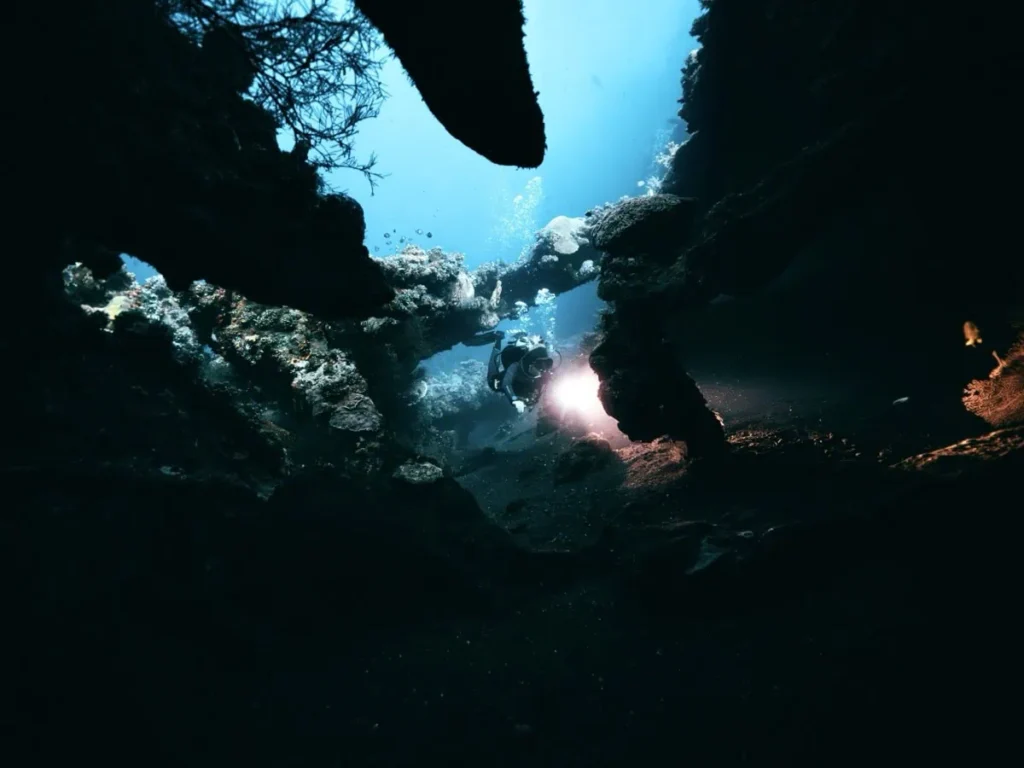
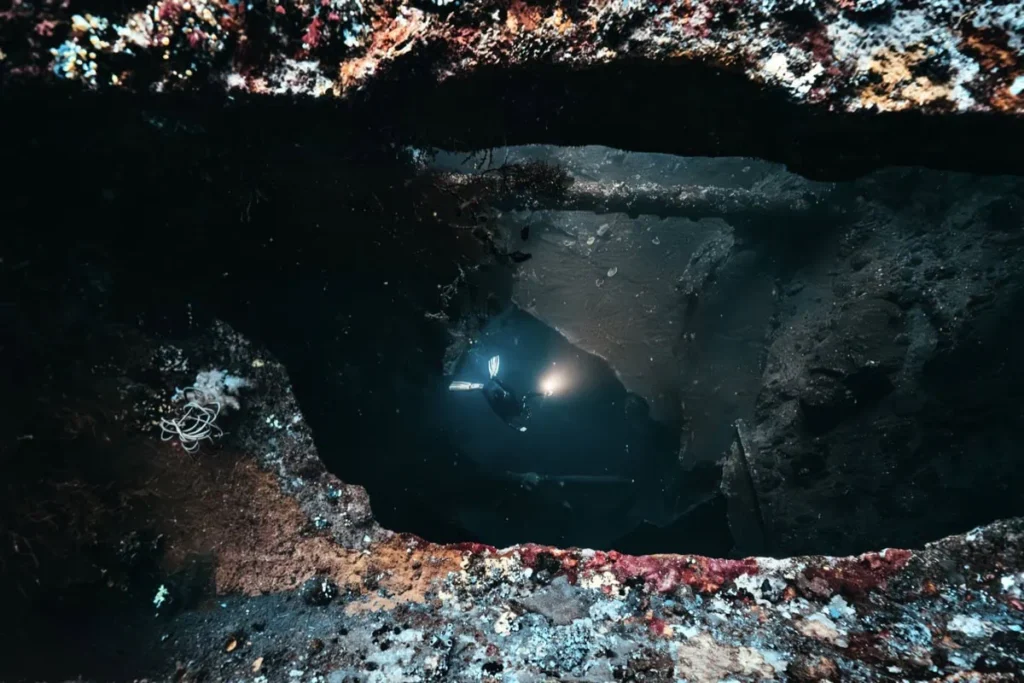
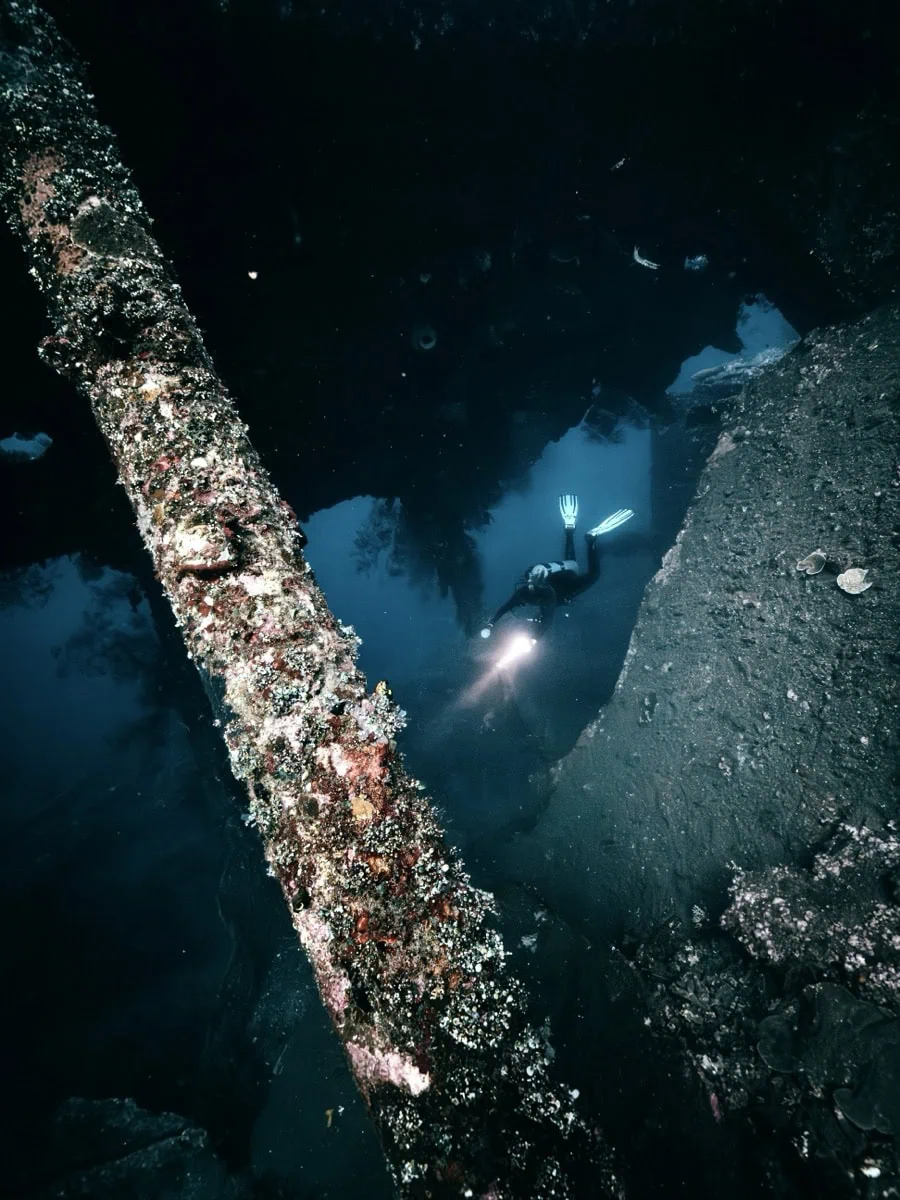
- Changing Swim-throughs: Many of the iconic interior passages are now unstable or completely blocked off by fallen beams. The cargo holds, which once carried railway parts from Australia to the Philippines, are now a maze of twisted metal and coral. Its structure is full of swim-throughs and hidden corners.
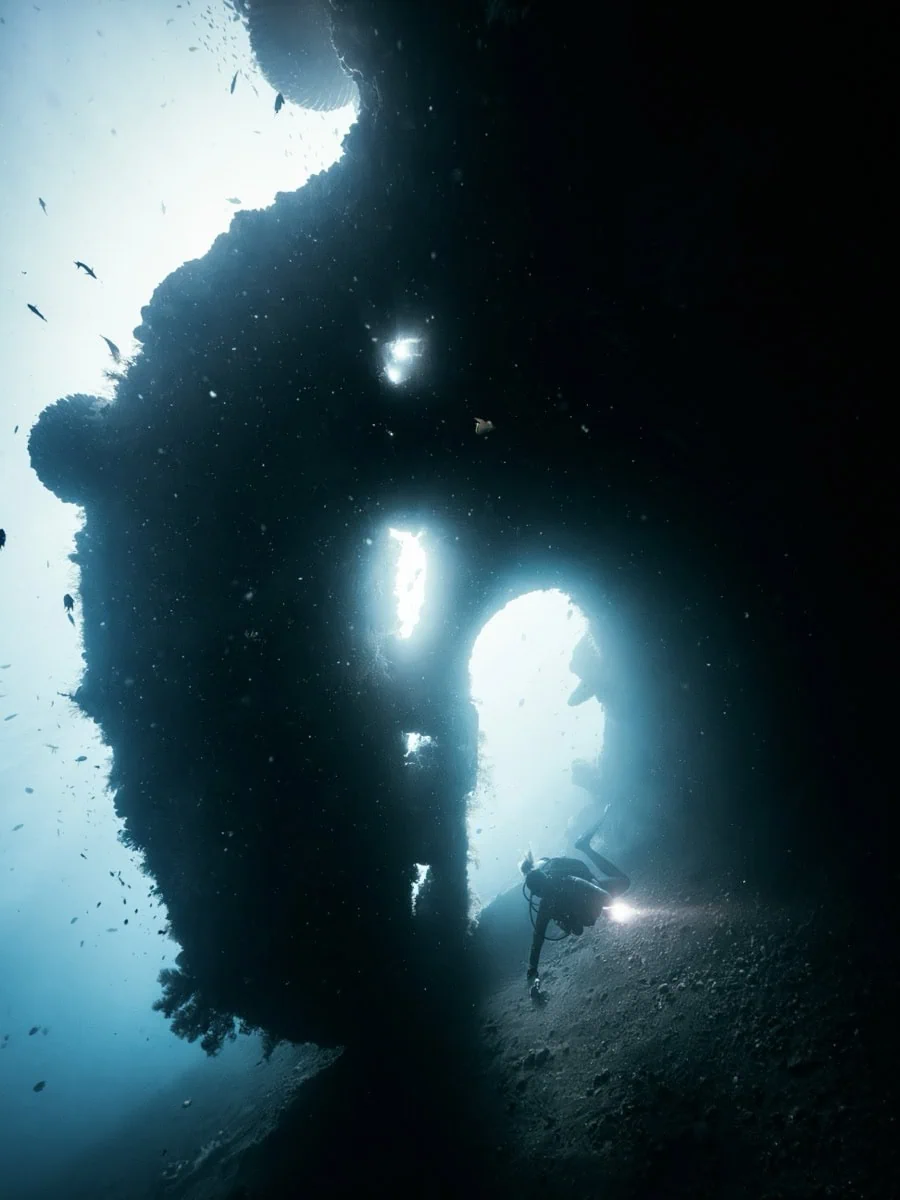
- The Marine Integration: This WWII shipwreck in Bali has become a thriving artificial reef. It’s hard to tell where the ship ends and the reef begins. Massive barrel sponges and sea fans have fused with the hull, creating a structure that feels entirely organic, with schools of fish moving through its open structures.
Some wrecks are deep, dark, and difficult to access, but the Liberty is the complete opposite. Thanks to its shallow depth, easy shore entry, and incredible marine life, it has become one of the best and most accessible wreck dives in the world. If you’re into wreck diving in Bali, the Liberty should be at the top of your list.

Why Dive the USAT Liberty?
- There’s no wreck like it – I’ve dived plenty of wrecks, but the Liberty is something else. It’s not just a sunken ship – it’s a fully established reef. The first time I saw it, I couldn’t believe how much soft coral, sea fans, and sponges had taken over. Some wrecks are just rusty metal with fish passing through. The Liberty is alive.
- It’s one of the easiest wreck dives in the world – No boats, no long surface swims. Gear up on the beach, step into the water, and descend straight onto a 120-meter WWII wreck. It’s that simple.
- It’s full of marine life – If you love big schools of fish, you’ll find them here. The jackfish tornado in the midship, the bumphead parrotfish at sunrise, the barracudas cruising near the stern, the wreck is always busy. And if you’re into macro, take your time because nudibranchs, pygmy seahorses, and ghost pipefish are all here too.
- It’s perfect for all levels – Whether you’re a new diver or have hundreds of dives, there’s something for you here. The shallows are stunning and beginner-friendly, while the deeper sections and swim-throughs keep things interesting for experienced divers.
- Photography heaven – The Liberty is a dream for photographers. Want wide-angle wreck shots? You got it. Prefer hunting for tiny critters? They’re everywhere. I’ve surfaced from entire dives without moving more than a few meters because there was just so much to capture.
- The best night dive in Bali – Night dives here are next level. Turn off your torch and watch flashlight fish flickering in the dark. Look closer, and you’ll see eels hunting along the wreck, and if you’re lucky, a Spanish dancer nudibranch floating through the water.
- You’ll want to dive it more than once – I’ve done over 30 dives on the Liberty, and I never get bored. Every time I surface, I find myself thinking, “I need to go again”.
How to Dive the USAT Liberty & Recommended Dive Route
Entry & Exit: Mastering the “Tulamben Shuffle”
- Shore entry: The Liberty sits just 30 meters offshore, making it a classic Tulamben shore dive, gear up on the beach and walk straight into the water, no boats needed.
- The Terrain: Forget soft sand. The beach is made of fist-sized volcanic stones that are incredibly slippery. When the surge comes in, these rocks roll under your feet.
- The Gear (Non-Negotiable): This is not the place for thin-soled “beach socks” or flimsy rental booties. You need 5mm hard-sole booties. If you wear thin boots, you will feel every jagged edge, and the risk of a rolled ankle goes up significantly.
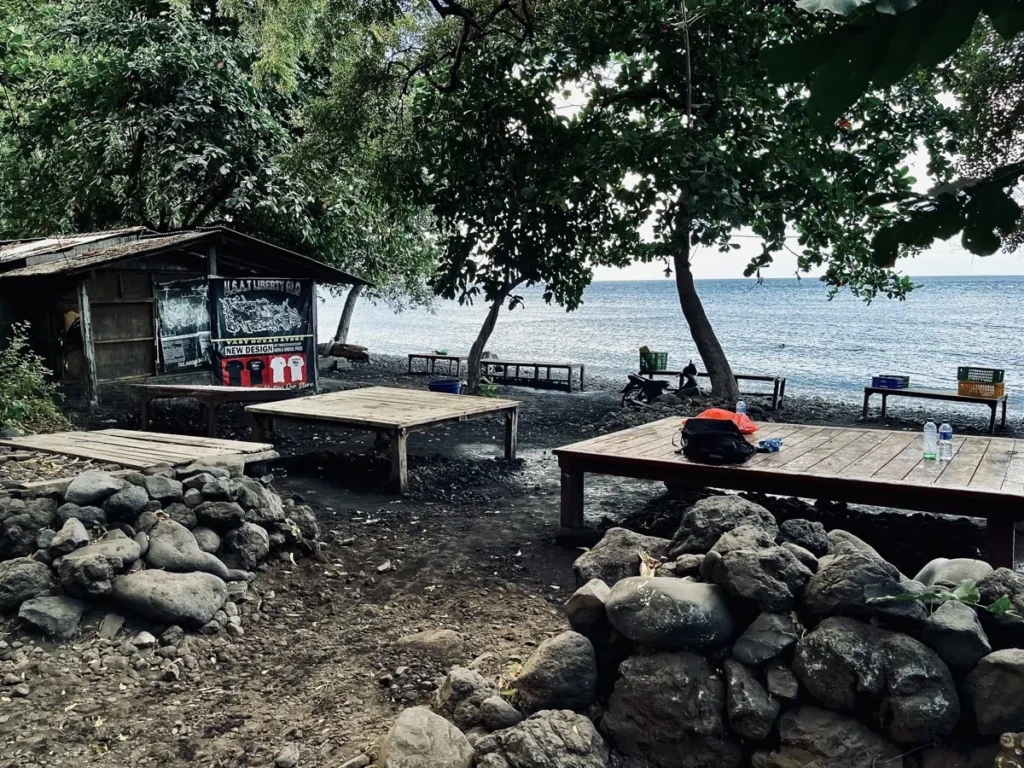
- The Local Porters: You’ll notice local village women waiting by the staging area. They are the backbone of Tulamben. They carry the tanks (often two at a time on their heads!) down to the water’s edge for you.
- The Entry: Timing is everything. Gear up at the staging area, but wait to put your fins on. Walk into the water with your BCD partially inflated and your regulator in your mouth. Once you are chest-deep and past the “break” of the pebbles, then you can put your fins on and descend.
- No surface swim needed: Once you’re in, descend and follow the black sand slope, it leads you right to the wreck.
Tip: Even if you like being self-sufficient, use the porters. It is a vital part of the local economy and ensures the village benefits directly from your visit. It also saves your back and your balance for the actual entry.
Start Your Descent at the Bow (5–10m)
As soon as you enter the water, descend straight down and follow the black sand slope. The first part of the wreck you’ll see is the bow, which rests in the shallows at around 5 meters. This area is fully encrusted in coral, sponges, and sea fans, making it an easy and visually stunning starting point. Schools of fusiliers, butterflyfish, and angelfish hover near the wreck, and you might even spot a turtle resting on the structure.
Although the ship is broken apart, you can still recognize some of its original framework. The bow’s metal beams and railings are still visible under layers of coral growth, and if you look closely, you’ll find old ladders and handrails, now serving as a home for nudibranchs and shrimp.
Explore the Midship (10–20m)
Moving deeper along the structure, you’ll reach the midship, where the wreck is most broken apart. This section features large beams, crisscrossing metal sheets, and twisted supports that have now become home to an incredible variety of marine life.
This section has some of the best swim-throughs, you’ll find open hatches and fallen beams creating natural passages through the wreck. It’s also a macro goldmine, with nudibranchs, frogfish, and ghost pipefish blending into the coral-covered wreckage.
If you know where to look, you’ll find some of the ship’s original mechanical parts still intact. The massive boilers are still recognizable, and nearby you’ll see pipes, valves, and even parts of the ship’s ladders. The Liberty was transporting railway parts from Australia to the Philippines when it was hit, and while most of the cargo has been overtaken by coral, some railway pieces are still hidden in the wreckage. Unless you have a trained eye, or a good guide, it’s easy to miss them.
The engine room area is also located here, though it’s not intact. Instead, you’ll see large, open spaces where the structure has caved in, creating natural overhangs and hiding spots for marine life. This is a good place to look for moray eels, which often lurk inside the wreckage.
This section is also where you’ll find one of the most famous schools of fish on the wreck: hundreds of jackfish that often form a swirling tornado right in the middle of the wreck.
If you enjoy swim-throughs, this is a good place to go for it. Some of the broken cargo holds and fallen beams create open passages where you can carefully pass through.
Head Toward the Stern (20–28m)
The stern is the deepest part of the wreck, sitting at around 28 meters. Here, you’ll find some of the Liberty’s most iconic features, including the stern gun and rudder.
The stern gun mount is one of the few remaining identifiable parts of the ship’s weaponry. Although it’s fully encrusted with coral, the outline of the gun is still visible. It’s one of the few recognizable pieces of the ship’s original weaponry.
The rudder sits just below this, and it’s a good area to look for larger fish, such as barracudas, giant trevallies, and sometimes reef sharks. Since this section is deeper, you won’t have much time down here diving on air. If you want to explore this section longer, it’s best to use Nitrox.
Ascend Through the Midship
Once you’ve explored the stern, start working your way back through the midship, gradually ascending as you go. This is a great chance to take a second look at areas you passed earlier—you might spot macro critters you missed the first time around.
One of the best areas to check again is the remains of the deck, now a messy area with twisted metal plates, fallen beams, and coral-covered supports. These sections create little caves and crevices, which are perfect hiding spots for octopuses, ribbon eels, and moray eels.
Finish in the Shallows (5–10m)
Before surfacing, spend some time in the shallower sections of the wreck or along the black sand slope. This is the perfect spot to do your safety stop while still having plenty to see. You can find garden eels, ribbon eels, and juvenile cuttlefish in the sand. The shallows here are also great for photographers, with better lighting and vibrant coral on the upper parts of the wreck.
Because the wreck starts so shallow, it’s a magnet for snorkelers. If you’re traveling with non-divers or just want to spend your surface interval in the shallows, many beautiful snorkeling spots in Tulamben are worth a visit if you have a spare afternoon.

Marine Life at the USAT Liberty
The USAT Liberty isn’t just a wreck, it’s full of life of all sizes. From massive schools of fish to well-camouflaged macro critters, there’s a lot to take in on every dive.
Larger Marine Life & Predators
You won’t see mantas or whale sharks here, but plenty of predators and large fish make the wreck their hunting ground.
- Bumphead parrotfish – These guys are massive. If you want to see them, I recommend being at the water’s edge by 5:15 AM. If you aren’t underwater by 5:30 AM, you’ve already missed the best light and the quietest window. They gather at the wreck, chomping loudly on coral (like someone crunching through a bag of chips).
- Trevally and barracudas – You’ll often spot them in the deeper sections near the stern and midship, hunting smaller fish.
- Reef sharks – Not an everyday sighting, but I’ve seen white-tip and black-tip reef sharks passing through, especially in the early morning or late afternoon.
Macro Life & Critters
If you love macro as much as I do, the Liberty doesn’t disappoint. The black sand and coral-covered wreckage are packed with tiny, well-camouflaged critters. You just have to take your time to find them.
- Nudibranchs everywhere – There’s no shortage of nudis here. I’ve spotted Bullock’s hypselodoris, blue chromodoris, and dusky nembrotha tucked into coral, crawling along beams, and hiding in plain sight.
- Pygmy seahorses – I would have never found one on my own, but my guide pointed out a tiny pygmy seahorse clinging to a gorgonian sea fan. If you’re not great at spotting them (like me), a guide makes all the difference.
- Ghost pipefish and frogfish – Both are incredibly well-camouflaged. Frogfish love blending into sponges, while ghost pipefish float near crinoids and soft corals, perfectly mimicking their surroundings. You’ll only notice them if they move.
Coral Growth & Artificial Reef
The Liberty is more reef than wreck at this point. Sea fans, barrel sponges, and coral have taken over, and it’s hard to tell where the wreck ends and the reef begins.
- Coral, fans, and sponges – Huge barrel sponges, bright soft corals, and massive sea fans now cover the wreck from bow to stern. In some spots, you wouldn’t even know there’s a ship underneath.
- Anemones and clownfish – The shallower sections are full of large anemone patches, packed with clownfish, shrimp, and porcelain crabs.
- More reef than wreck – It’s not just a sunken ship, it’s a fully established reef. Every surface is covered in coral, sponges, and marine life, making it feel more like a natural dive site than a wreck.
Fascinating Marine Life Behavior
Seeing marine life is one thing, watching how it moves and interacts with the wreck is another. Spend a little time paying attention, and you’ll notice how much is really going on.
- Schooling jackfish – One of the wreck’s most iconic sights. These jackfish form massive tornado-like schools, usually around the midship section. If you move slowly and stay relaxed, they might even swirl around you.
- Trevally and barracudas hunting – Keep an eye on the deeper sections of the wreck. Trevallies and barracudas hang in the blue, waiting for the perfect moment to dart in and grab a meal. If you see smaller fish suddenly change direction, there’s probably a predator nearby.
- Territorial damselfish – Look inside the barrel sponges, and you’ll see tiny damselfish darting in and out. They’re not shy about defending their home, if you get too close, they’ll charge right at your mask – super cute!
- Flashlight fish at night – One of the coolest things about a Liberty night dive. If you turn off your torch for a moment, you’ll see tiny bioluminescent flashlight fish flickering in the darkness inside the wreck, like underwater fireflies.
Diving Conditions & Best Time to Dive
The Liberty is a year-round dive site, but conditions change depending on the season, time of day, and even recent weather. Here’s what you need to know before planning your dive.
Best Time of the Year
- Dry Season (May–November): This is the best time to dive, with calm seas and visibility around 15–25 meters. The water is usually clear, and conditions are more predictable.
- Rainy Season (December–April): You can still dive, but heavy rain can reduce visibility to around 10 meters, especially if there’s runoff from the shore. The upside? Fewer divers and quieter dive sites.
Best Time of Day
- Early morning is the best time to dive the Liberty. Visibility is at its best, and if you’re in the water before 6 AM, you’ll catch the bumphead parrotfish while they’re still hanging around the wreck.
- Avoid dives after 10 AM, day-trippers start arriving, and it gets pretty crowded. Late afternoon is less crowded again.
- Night dives at the Liberty are absolutely amazing! If you like night dives, this might be your favourite time of the day to dive the wreck.
Water Temperature, Visibility & Currents
- Water temperature stays around 27–29°C most of the year. You won’t need more than a 3mm wetsuit unless you are like me and get cold easily. I brought my 5mm wetsuit and was happy with it.
- Visibility is best from July to October but usually stays between 15–25 meters year-round. During the rainy season, it can drop to around 10 meters.
- The Liberty is a sheltered shore dive, so currents are usually mild or nonexistent. Occasionally, there’s a bit of surge in the shallows, but it’s nothing major.
Cost of Diving the Liberty Wreck
Diving the Liberty is affordable and flexible, with prices depending on where you’re staying. If you’re already in Tulamben, it’s one of the cheapest places to dive in Bali since everything is done from shore. If you’re staying somewhere else in Bali, plenty of dive shops run day trips to the wreck.
- Fun Dives in Tulamben: A single shore dive costs IDR 450,000–500,000 (€27–€30), including guide, tanks, and weights. Most dive centers offer discounts for multiple dives.
- Courses: The Liberty is often used for Open Water and Advanced Open Water training dives, with no extra charge if you’re doing your course in Tulamben.
- Equipment Rental: Most dive centers include gear rental in their fun dive prices. If renting separately, a full set costs IDR 200,000 (€12 / $13) per day. Some shops offer discounts if you bring your own gear.
- Tank Rentals for Independent Diving: Some dive centers rent out tanks for divers without a guide. Tank rental, including porter fees, is IDR 150,000–200,000 (€9–€12) per dive.
- Day Trips from South Bali: Many dive shops offer two-dive packages including round-trip transport, dives, gear rental, and lunch. Prices range from IDR 1,600,000–2,400,000 (€100–€150 / $110–$165) per person.
Best Dive Centers for the Liberty Wreck
Not all dive shops are the same, and when it comes to diving the Liberty, you want one that knows the site inside out. Here are three dive centers I have personally dived with and would recommend to friend:
- Matahari Tulamben Resort, Dive & Spa: Perfect if you want to dive the Liberty wreck without a guide. Just rent a tank, gear up, and go at your own pace.
- Scuba Tribe Bali: A small, well-run dive center with great guides and top-notch customer service. They keep group sizes small, so if you prefer a more personalized experience, this is a great choice.
- Puri Madha Dive Resort: You can’t get much closer to the Liberty than this. Located right in front of the wreck, it’s ideal if you want to do back-to-back dives without worrying about transport.
Getting to the Liberty in Tulamben
The Liberty sits just off the beach in Tulamben, so getting there is easy, once you’ve made it to town. Here’s how to get to the wreck, whether you’re coming from the Airport, South Bali, or nearby areas.
Getting to Tulamben
- Private Car & Driver: The easiest way to get to Tulamben from Denpasar, Ubud, or Canggu is by private car. A one-way transfer costs around IDR 600,000–800,000 (€35–€50 / $40–$55).
- Scooter Rental: If you’re comfortable riding long distances, renting a scooter is a cheap and flexible way to get to Tulamben. Prices range from IDR 80,000–150,000 (€5–€9 / $6–$10) per day. The ride from Amed takes about 25 minutes, while from Candidasa, it’s around 45 minutes.
- Taxi or Ride-Share: Grab and Gojek don’t operate in Tulamben, so a fixed-fare taxi is your only option. Your dive resort can help arrange this.
I usually ask my dive center or resort to handle my transfer, which keeps things simple. Last time, I paid IDR 650,000 (€38 / $42) from the airport to Tulamben.
Getting to the Liberty Wreck
Once in Tulamben, reaching the Liberty Wreck is straightforward:
- If you’re staying near the wreck, it’s a short walk from most dive resorts. You won’t even have to carry your own gear, local porters will take your tanks and equipment down to the water for you.
- If you’re diving with a center farther away you might have free transport within Tulamben or they might charge a small pickup/drop-off fee for dives outside their immediate area.
Whenever you’re ready to explore Tulamben on land, I’ve also put together a list of what to do in Tulamben between dives, including quick half-day trips for when you’re waiting for your nitrogen levels to drop.
Safety Considerations: What to Know Before You Dive
The Liberty is an easy and accessible dive, but Tulamben is still a remote location, and help isn’t just around the corner. A little extra caution goes a long way.
- Nearest Hyperbaric Chamber: The closest recompression chamber is at Kasih Ibu Hospital in Saba (Gianyar), about 1.5 to 2 hours away.
- Remote Location: Tulamben is far from major hospitals, so emergency transport can take time. Make sure your dive shop has oxygen and first aid on-site.
- Surge in the Shallows: The Liberty is usually a calm dive, but timing your entry with the waves is key. The rocky beach isn’t great for balancing with full gear, so let the porters carry your gear to avoid slipping on the rocky shore.
My Verdict: Is the USAT Liberty Still Worth the Crowds?
After 30+ dives here, I’m often asked: Is the Liberty still worth it, or has it just become a victim of its own fame?
The short answer: Yes, but only if you do it right.
If you take a day-trip van from Sanur or Ubud, you’ll likely arrive at 10:00 AM. By then, the visibility has dropped, the Bumphead Parrotfish have left, and you’ll be sharing the wreck with 50 other divers. In that scenario, it’s a 3/10 experience at best.
To get the 10/10 version of the Liberty, do this instead:
- Stay in Tulamben: Do not day-trip. Spend at least one or two nights in the village. This allows you to be at the water’s edge at 5:15 AM while the day-trippers are still asleep in South Bali.
- Dive it at Night: The wreck transforms after dark. This is when the Flashlight Fish come out, watching them flicker in the dark like underwater fireflies is one of the coolest things I’ve seen in my diving career.
- Respect the Structure: Remember that the wreck is collapsing. Don’t push into tight swim-throughs just for a photo, and keep your buoyancy tight to avoid a scrape with rusted WWII steel.
There are very few places in the world where you can walk off a beach and onto a 120-meter piece of history encrusted in world-class coral. Despite the crowds, the USAT Liberty shipwreck remains a bucket-list site for a reason. Just set your alarm early, the extra sleep isn’t worth missing that sunrise crunch.
To help you find a spot that actually understands diver logistics, here is my guide to where to stay in Tulamben, featuring the best dive resorts and local homestays I’ve vetted over the years.
Get More Tips for Your Time in Tulamben
If you’re planning a dive trip to Tulamben or want to understand how it fits into a bigger Bali itinerary, these guides will help you plan the details around diving, accommodation, and nearby sites.
- Complete Diving Guide to Tulamben – everything you need to plan your trip, including dive sites, conditions, water temperatures, and practical logistics
- USAT Liberty Wreck guide – the best route through the wreck, marine life highlights, and why I keep coming back
- Snorkeling in Tulamben – the easiest spots to access from shore and what you can realistically see without scuba gear
- Where to stay in Tulamben – the best areas to base yourself and my recommendations for dive resorts and beachfront stays
- Things to Do in Tulamben – what to explore between dives, including nearby temples, rice fields, and day trips
- Best Places to Dive in Bali – how Tulamben compares to other dive areas around the island and where to go next
Already dived the Liberty? Drop a comment and let me know what you think! And if this guide helped you, share it with your dive buddies, they might just end up booking a trip with you.
Did you know that by booking through links on this site, you support this blog at no additional cost to you. Thank you!
