

Most people think you need a tank and a BCD to see the best of Tulamben. But after spending 30 days here across three separate trips, exploring the deep parts of the wreck and hunting macro in the shallows, I can tell you that the view from the surface is just as spectacular as the deep.
Tulamben isn’t your typical postcard beach. You’re trading white sand for volcanic stones and boat engines for the quietest shore entries in Bali. While the USAT Liberty gets all the fame, the entire bay is lined with coral gardens and macro life that start in just a few meters of water.
If you’re here to see the resident school of Jackfish or explore the shallowest ribs of the shipwreck, you don’t need scuba gear, you just need a bit of a strategy for those rocks. This is the reality of snorkeling Tulamben, from the gear that actually saves your feet to the entry points where the reef starts at your knees.
Best Snorkeling Spots in Tulamben
Tulamben’s best snorkeling spots are all accessible from shore, with no need for a boat or guide. But that’s only one reason why I enjoy snorkeling in Tulamben so much. Some sit right in front of dive resorts, while others take a bit more walking, but they’re all easy to reach if you know where to look.
01 – Liberty Wreck
If you’ve always wanted to see a shipwreck but aren’t diving, this is one of the few places where you actually can. The Liberty sits just offshore, and parts of it come up shallow enough to see from the surface, especially near the bow and midship. You won’t get the full wreck experience, but in the right conditions, it’s still seriously cool.
Snorkeling the Liberty wreck is hands down one of the best snorkeling experiences in Bali.
Info for Snorkeling the Liberty Wreck
| Entry type | Rocky beach, reef shoes recommended |
| Distance | ~20 meters from shore |
| Depth | Wreck starts at ~3–5 meters |
| Conditions | Best in the morning, can get surgey or full of bubble clouds from divers later |
| Rental gear | Available at Puri Madha and warungs along the beach |
What Makes It Good
You don’t often get to snorkel a full-size WWII shipwreck.
What makes the Liberty wreck so good for snorkeling is how close it sits to shore. You don’t need a boat, just walk in, swim out a few meters, and you’re already above the wreck. Parts of the structure come up really shallow, especially around the bow and midship, so even from the surface you can make out the coral-covered beams and schools of fish weaving through.
Most wrecks sit far too deep, but here the top is only three to five meters down, which means you get a proper look without needing dive gear. Add in the reef fish, nudibranchs, and the occasional turtle or bumphead parrotfish, and it’s easy to see why this is one of the highlights of Tulamben.
How to Get There
Enter the water in front of Puri Madha. The wreck is marked by buoys and runs parallel to the shore. Aim for the bow (the end closest to the “Drop Off” side of the bay) if you want the clearest surface view.
Marine Life Highlights
- Bumphead Parrotfish: These giants usually arrive in a “herd” right at sunrise to crunch on the wreck’s coral.
- The “Silver Tornado”: A massive resident school of Bigeye Trevally (Jackfish) that often hangs out right at the surface near the bow.
- Reef fish like sweetlips, groupers, and angelfish
- Nemos in the Ribs: Look for anemones tucked directly into the wreckage beams in the shallows.
- Nudibranchs and macro life along the beams
- Occasional turtles resting on the wreck
When to Go
Go at 6:30 AM. Sunrise to mid-morning usually has the best conditions. Once the dive groups arrive around 9:00 AM, the bubble clouds from 20+ divers below can actually blur your visibility from the surface.
Snorkeling Tips for Liberty Wreck
- Time your entry with the waves, watch the rhythm before stepping in
- Wear 5mm neoprene booties for stability on the loose rocks
- Stay near the bow and midship area for the best surface views
- Don’t touch or stand on the wreck, it’s fragile and protected
- If surge picks up, head back to the shallows or move on to Coral Garden
If you’d rather have a guide with you, you can join this Liberty Wreck snorkeling tour. It’s a great way to learn more about the site and spot marine life you might otherwise miss. If you find yourself constantly surface-diving to see the boilers or the stern, it’s a sign you’re ready for a tank. You can see the full deep-water layout in my complete guide to diving the USAT Liberty.
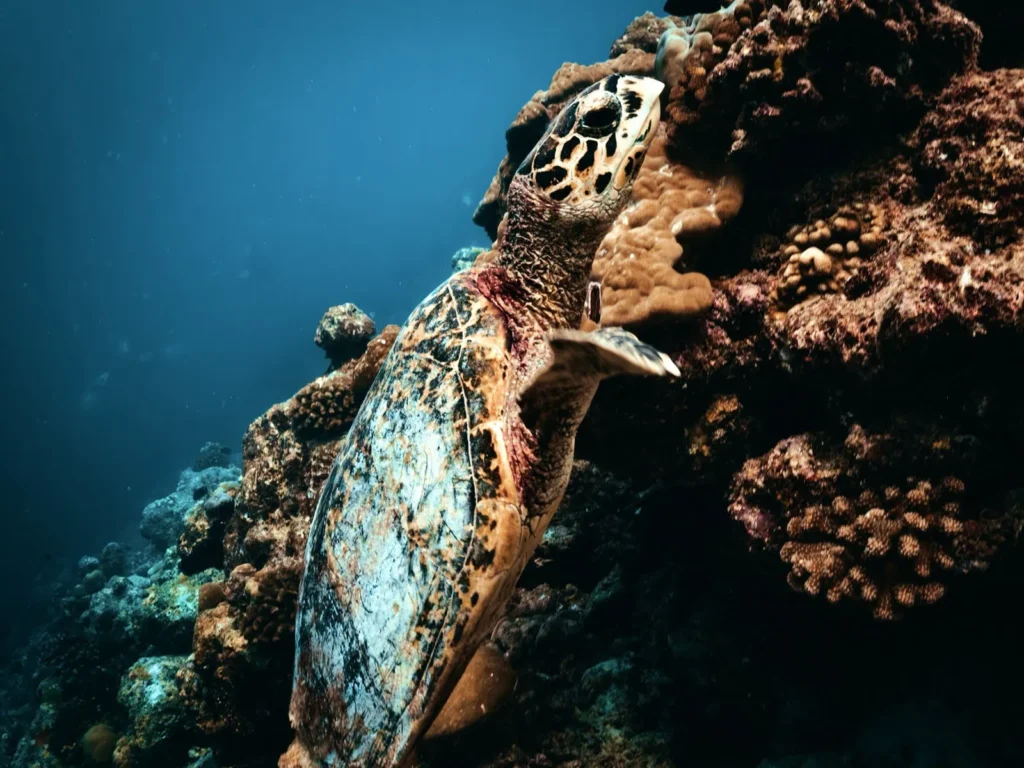
02 – Coral Garden
Just a few minutes’ swim east of the Liberty, Coral Garden is one of the easiest and most beginner-friendly snorkeling sites in Tulamben. The reef is shallow, there’s usually less surge here, and it’s packed with reef fish. Perfect for beginners or anyone who just wants to float and watch fish.
Info for Snorkeling Coral Garden
| Entry type | Shore entry over rocks (same beach as Liberty) |
| Distance | ~30–50 meters from shore |
| Depth | Reef starts around 2 meters, drops gradually |
| Conditions | Usually calmer than the wreck, especially in the morning |
| Rental gear | Available at dive centers and warungs nearby |
What Makes It Good
Coral Garden is the easiest spot in Tulamben if you just want a relaxed snorkel. The reef sits shallow and close to shore, so you can float above bright coral heads and watch the fish without diving down. It’s usually calmer here than at the Liberty wreck, which makes it a great choice for beginners or if you’re snorkeling with kids.
The reef itself is colorful and lively, think clownfish in their anemones, butterflyfish swimming between corals, and the occasional ribbon eel poking out from the sand. You don’t need to swim far or deep to see action, it’s all happening just below the surface.
How to Get There
From the Liberty entry, walk east along the beach. Once you pass the main entry crowds, you’ll be near Coral Garden. Ask a local or watch where snorkelers and divers are heading in. You can also swim over from the wreck if conditions are calm.
Marine Life Highlights
- Sergeant major and damsel fish
- Clownfish in anemones
- Lionfish, butterflyfish, and angelfish
- Ribbon eels and sometimes cuttlefish
- Nudibranchs on rubble patches near the slope
When to Go
Best in the early morning for visibility and light. Still decent later in the morning if wind and surge stay low.
Snorkeling Tips for Coral Garden
- Enter the same way as for the Liberty, boots or reef shoes still essential
- Stay shallow and move slowly, this site is great for fish watching
- If surge picks up at the wreck, head here instead, it’s often calmer
My favourite part: Swim about 15 meters to the left of the main entry path. There is a shallow plateau where the anemones are so thick it looks like a carpet. You’ll see at least 4 different species of “Nemo” (Clownfish) here in water so shallow you could stand up (but don’t!).
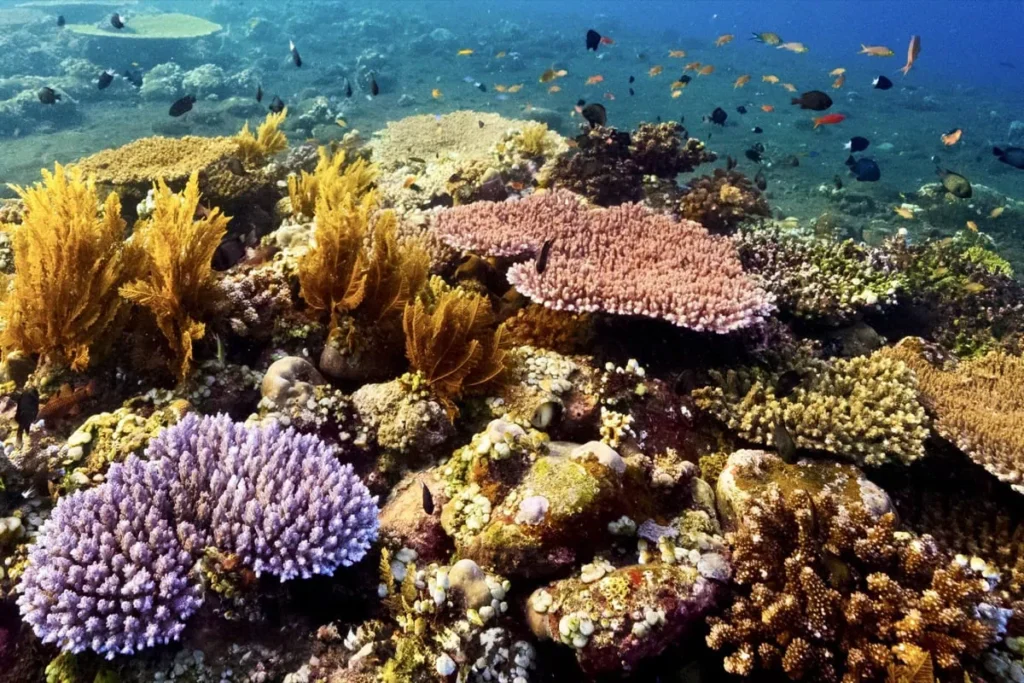
03 – Suci Place
Right in front of Matahari Dive Resort, Suci Place is one of those spots that surprises you. Most people only mention the underwater statues, but the shallow reef here is full of life. Hard coral, anemones, and juvenile fish are everywhere, and it’s an easy place to spend a bit more time in the water, especially after snorkeling the Liberty.
Info for Snorkeling Suci Place
| Entry type | Shore entry over rocks (same beach as Liberty) |
| Distance | ~20 meters from shore |
| Depth | Statues and reef around 3–5 meters |
| Conditions | Calmest in the morning, can get surgey in the afternoon |
| Rental gear | Available at Matahari Dive Resort and nearby spots |
What Makes It Good
Suci Place is more than just the underwater statues it’s known for. The shallow reef here is surprisingly full of life, with hard corals, anemones, and plenty of small fish around. Because it’s right in front of Matahari Dive Resort, it’s easy to access and you don’t need to swim far to see something interesting.
What I really liked about Suci Place is how much you can spot without diving down. Clownfish in their anemones, juvenile sweetlips dancing under ledges, butterflyfish and damselfish cruising around the reef, all show up in just a few meters of water. It’s an easy place to take your time, float slowly, and notice the details.
Since this site is right in front of the resorts, it’s the most convenient area to base yourself. Check out my top recommendations for accommodation in Tulamben to be steps away from the coral.
How to Get There
Enter the water directly in front of Matahari Dive Resort. You’ll see the first coral heads almost immediately. Swim out slowly and the statues will be on your right, maybe 20–30 meters from shore.
Marine Life Highlights
- Clownfish in anemones
- Juvenile sweetlips under coral ledges
- Ribbon eels hiding in rubble
- Angelfish, butterflyfish, and lionfish
- Occasional nudibranchs and pufferfish
When to Go
Morning is best, before the wind picks up. The light’s better for spotting detail and for photos if you’re bringing a camera.
Snorkeling Tips for Suci Place
- Go slow, there’s a lot happening in the shallowest part
- Keep your fins off the coral, it’s very shallow in some spots
- Combine it with Liberty or Coral Garden if you want a longer session
If the surge picks up and you’re done with the water for the day, there are plenty of other things to do in Tulamben to keep you busy.
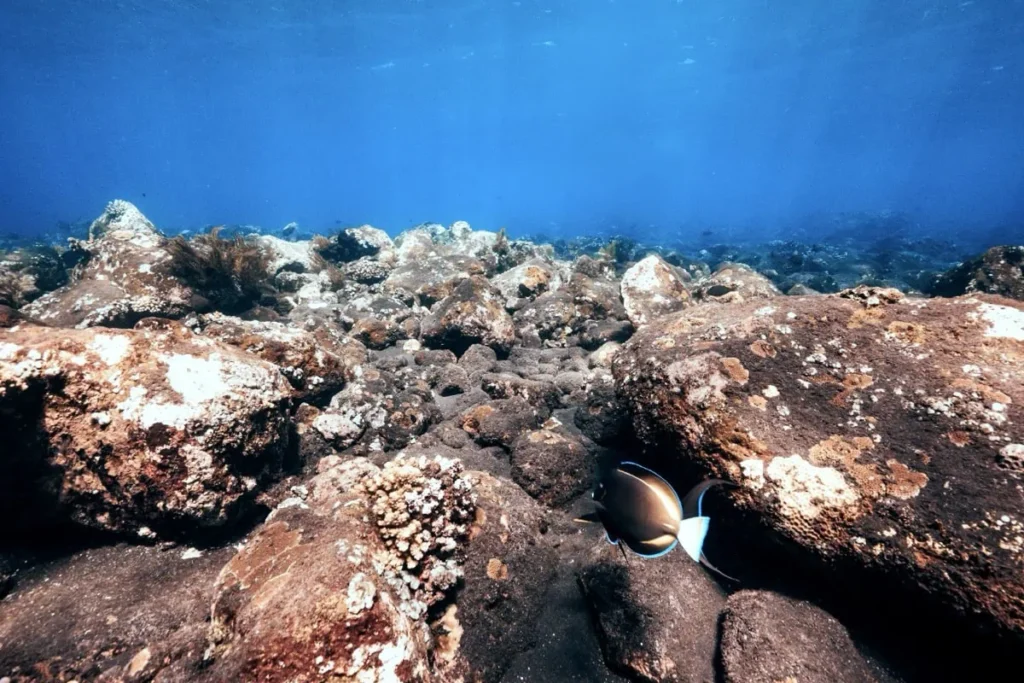
04 – The Drop-Off (Tulamben Wall)
If the Liberty wreck is the “star” of the bay, the Drop-Off is the wild card. Created by the same 1963 lava flow from Mount Agung that pushed the wreck into the sea, this site features a dramatic underwater cliff that plunges from the shallows down to over 70 meters. For a snorkeler, it’s the best place to feel the “Big Blue” energy of the ocean.
Info for Snorkeling the Drop-Off
| Entry type | Rocky beach (long walk over loose stones) |
| Distance | ~15-minute walk east from the main parking |
| Depth | Plateau starts at ~3 meters, then drops to 70m+ |
| Conditions | Usually calm, but can have a mild current |
| Rental gear | Best to rent at the main car park before walking down |
What Makes It Good
What makes the Drop-Off so good for snorkeling is the “Aquarium Section” at the top. Before the wall falls away, there is a shallow coral plateau in just 3–5 meters of water that is absolutely teeming with life.
Unlike the wreck, which can feel crowded, the Drop-Off feels vast. It’s one of the few places in Bali where you can float in safety while looking over the edge of a massive vertical cliff into the deep dark blue.
How to Get There
Walk all the way to the eastern end of the bay (to the right if you are facing the water). You’ll see a Hindu Temple (Pura Tegeh) perched on the cliff. Enter the water directly below the temple. The wall starts almost immediately.
Marine Life Highlights
- Thousands of purple and orange Anthias hover right at the edge of the drop, looking like confetti in the water.
- Keep an eye on the deep blue for Blacktip Reef Sharks or a massive Napoleon Wrasse cruising the wall.
- Look for the Giant Barrel Sponges clinging to the upper edge of the wall.
When to Go
Morning is best for visibility, but if you want to see the Lionfish out and hunting, the late afternoon (around 4:00 PM) is when I have seen them the most. They move out of the crevices and sit proudly on the wall ledges.
Snorkeling Tips for the Drop-Off
- It’s a long walk. This is the furthest site from the main “hub.” Because of the distance over loose rocks, the 5mm bootie rule is non-negotiable here unless you want blistered feet.
- Be aware of currents. If you feel a mild pull toward the east, stay closer to the wall on your swim back to make the return easier.
- The wall is tempting to free-dive, but remember that the “Aquarium Section” at the top actually has the best light and color for photos.
The most famous feature here is a massive Purple Gorgonian Fan at 30 meters. If you want to see it plus the sharks cruising around here, check out my complete guide to scuba diving in Tulamben.
Tulamben Logistics: Navigating the Rocks
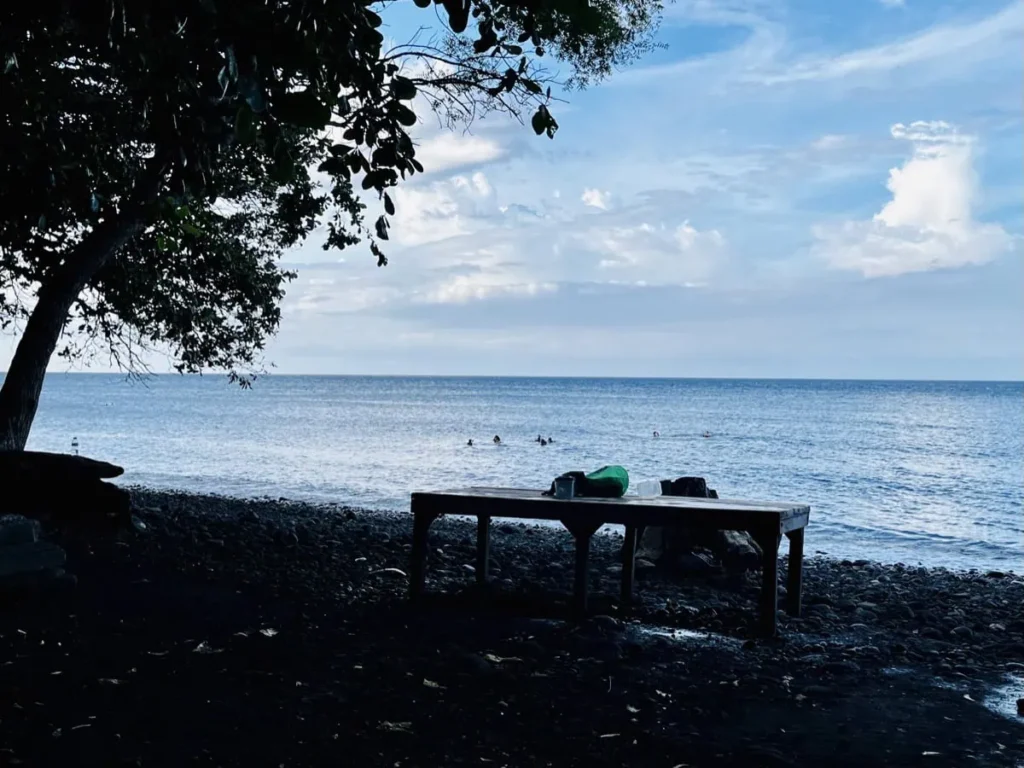
The biggest surprise for first-timers in Tulamben isn’t the wreck, it’s the beach. After spending 30 days here over several trips, I’ve seen that the entry is usually the part people get most wrong. Instead of sand, you’re dealing with moving pebbles, smooth volcanic stones that shift under your weight as the waves come in.
If you’ve only ever snorkeled from a boat or a sandy beach, the shore entry here is quite different.
- The Bootie Rule: Do not try to do this in flip-flops or bare feet. You’ll hurt yourself. You need 5mm neoprene dive booties with a hard rubber sole and open-heel fins. This lets you walk somewhat comfortably all the way into knee-deep water before you have to worry about putting your fins on.
- Timing the Surge: Don’t just rush in. Stand at the water’s edge for a minute and watch the rhythm. The stones “roll” most aggressively when the waves retreat. Wait for the lull, walk in briskly until you’re waist-deep, and then let the water take your weight.
A Note on the Shallows: It’s not just the rocks you have to watch out for. Lionfish love the volcanic crevices in Tulamben and often hang out in the shallows, sometimes right between the stones where you’d naturally want to put a hand or knee to steady yourself. Their spines are venomous and will ruin your trip faster than a sunburn. Once you’re deep enough to float, float.
Snorkeling Tours vs. Going Independently
One of the best things about Tulamben is that you don’t need a boat or a tour to see the best sites, I snorkeled all the sites in this guide on my own and it was super easy. However, depending on your comfort level, there are two ways to do this:
Option A: The Independent Way (My Choice)
If you have your own transport and gear, you can simply park at the beach and walk in.
- The Cost: You’ll only pay for parking (5,000–20,000 IDR / €0.30–1.20 / $0.35–1.30) and a small village maintenance fee at certain sites (around 30,000 IDR / €1.80 / $2.00).
- Best for: Confident swimmers and those who want to go at their own pace.
Option B: Hiring a Local Guide
If you’re not as confident in the water or prefer having someone with you, hiring a local guide is a great way to support the village.
- The Cost: Expect to pay around 200,000–350,000 IDR (€12–21 / $13–23) for a guided session (usually 1–2 hours).
- What’s included: They will carry your gear, guide you through the slippery entry, and most importantly, point out the macro life (nudibranchs and eels) you’d likely swim right over.
You can book this Liberty Wreck snorkeling tour to explore the famous shipwreck with a local guide, or take this Coral Garden snorkeling experience if you’d rather stick to the shallows and enjoy the reef. Both include gear and transport, so you can just show up and snorkel.
Gear Tips for a Successful Snorkeling Session
I snorkeled Tulamben with my own gear, but if you don’t have any, that’s not a problem. You can rent a mask, snorkel, and fins from pretty much any dive center or beach warung. The gear’s basic but does the job and prices are reasonable.
A few things to keep in mind:
- Wear 5mm neoprene booties. The beach isn’t sandy, it’s full of loose, round rocks that roll under your feet. You’ll want something with grip so you don’t wipe out walking in or out.
- Fins are optional, but I recommend using open-heel fins with your boots, especially if there’s a bit of surge or you want to swim out to the wreck.
- Wear a rash guard or use reef-safe sunscreen. You’ll be floating face-down for a while.
- Bring a dry bag if you want to keep your phone or key with you, just make sure it floats.
There are no specific rules here, fins are allowed, and no one’s checking what sunscreen you use. Just be mindful of the reef and don’t kick the coral.
Safety Tips for Snorkeling in Tulamben
Snorkeling in Tulamben is generally easy and beginner-friendly, but it’s still the ocean. A few small things make the difference between a fun snorkel and a sketchy one.
- Wear 5mm neoprene booties. You will cut your feet or twist your ankle trying to walk barefoot over the pebbles
- Watch the surge. Conditions can change fast. If the surface feels rough or you’re getting pushed around, head back in – visibility usually drops anyway.
- Stay aware of divers. Tulamben is first and foremost a dive destination. Don’t float right over bubbles, you won’t see much and divers might ascend there.
- Don’t touch anything. Coral is fragile, lionfish hang out in the shallows, and stonefish look like rocks. Keep your fins up and your hands off.
- Never stand or kneel in the shallows. Stonefish and Lionfish are masters of camouflage among the volcanic rocks. If you need to adjust your mask, float on your back.
- Know your limits. The wreck looks close, but if you’re not confident in the water, stick to Coral Garden or Suci Place where the reef starts right off the beach.
- Stay hydrated: The Bali sun hits harder on the east coast. Between your morning sessions at the Wreck and the Coral Garden, drink twice as much water as you think you need.
FAQ: Snorkeling in Tulamben
Get More Tips for Your Time in Tulamben
If you’re planning a dive trip to Tulamben or want to understand how it fits into a bigger Bali itinerary, these guides will help you plan the details around diving, accommodation, and nearby sites.
- Complete Diving Guide to Tulamben – everything you need to plan your trip, including dive sites, conditions, water temperatures, and practical logistics
- USAT Liberty Wreck guide – the best route through the wreck, marine life highlights, and why I keep coming back
- Snorkeling in Tulamben – the easiest spots to access from shore and what you can realistically see without scuba gear
- Where to stay in Tulamben – the best areas to base yourself and my recommendations for dive resorts and beachfront stays
- Things to Do in Tulamben – what to explore between dives, including nearby temples, rice fields, and day trips
- Best Places to Dive in Bali – how Tulamben compares to other dive areas around the island and where to go next
Did you know that by booking through links on this site, you support this blog at no additional cost to you. Thank you!
