
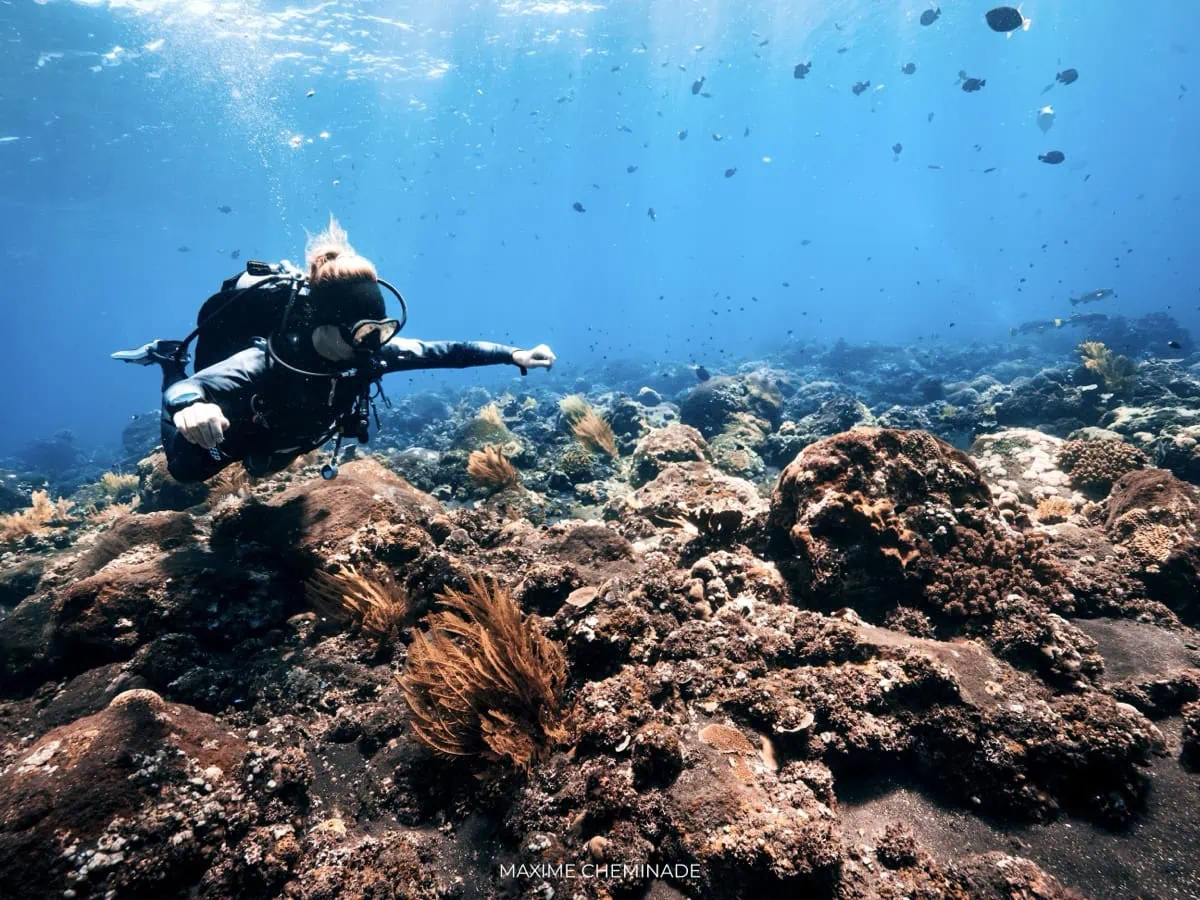
I’ve been to Tulamben three times and spent a total of 30 days diving here. Most people just come for a day to see the USAT Liberty and leave, but staying here longer changed how I look at the diving.
Diving in Tulamben has everything I like: an incredible wreck, tons of macro life, and the total freedom of shore diving. You don’t have to worry about boat schedules or long transits, you just gear up and walk into the water.
The diving here is unique because it is almost entirely shore-based and revolves around the black volcanic sand. It’s a very relaxed style of diving, but there are a few logistical realities to keep in mind before you get in the water.
After three trips, I’ve put together the practical details you actually need, from the best times to avoid the crowds at the wreck to the reality of navigating those rocky entries.
What to Expect When Diving Tulamben
| Best Time to Dive | May – November |
| Difficulty Level | Beginner to Advanced |
| Top Marine Life | Bumphead parrotfish, barracudas, pygmy seahorses, nudibranchs, ghost pipefish, frogfish, reef sharks |
| Best Dive Sites | USAT Liberty Wreck, Drop-Off, Batu Niti |
| Diving Conditions | Visibility: 15–25m (50–82 ft) Currents: Mild |
| Nearest Airport | Ngurah Rai International Airport, Denpasar (DPS), ~3-hour drive |
Why You’ll Love Diving in Tulamben
- Dive my favourite wreck, the USAT Liberty – No boats needed, just walk in and dive. It’s huge, covered in coral, and full of marine life.
- A paradise for macro lovers – The black sand slopes are packed with all sorts of tiny critters and nudibranchs.
- No long boat rides – Most sites are shore dives, meaning quick and easy access.
- Easy diving conditions – Warm water, mild currents, and great visibility year-round.
- A dream for underwater photographers – Incredible wide-angle wreck shots and endless macro subjects.
- Perfect for all experience levels – Calm conditions for beginners, deeper wreck sections and critter hunting for advanced divers.
The Realities of Shore Diving
Unlike other parts of Bali where you’re jumping off a boat, Tulamben requires walking over loose, fist-sized volcanic rocks to get to the dive sites. It’s not difficult once you’re used to it, but you definitely need 5mm hard-sole booties. Thinner reef shoes or socks aren’t enough to protect your feet during the entry.
Best Dive Sites in Tulamben
Every time I come back to Tulamben, I end up diving the same sites again, not because there’s nothing new, but because they’re that good. Most sites are shore dives, so it’s easy to rack up a lot of bottom time without dealing with boats or big groups.
Here are the Tulamben dive sites I think are worth your time.
01 – USAT Liberty Wreck
- Type: Shipwreck
- Depth: 5–30m (16–100 ft)
- Best For: All levels, wreck lovers, wide-angle photography
- Marine Life: Bumphead parrotfish, barracudas, jackfish, flashlight fish, pygmy seahorses
- Notable Features: A massive WWII wreck, now a thriving artificial reef
- Conditions: Easy shore entry, mild currents, great visibility
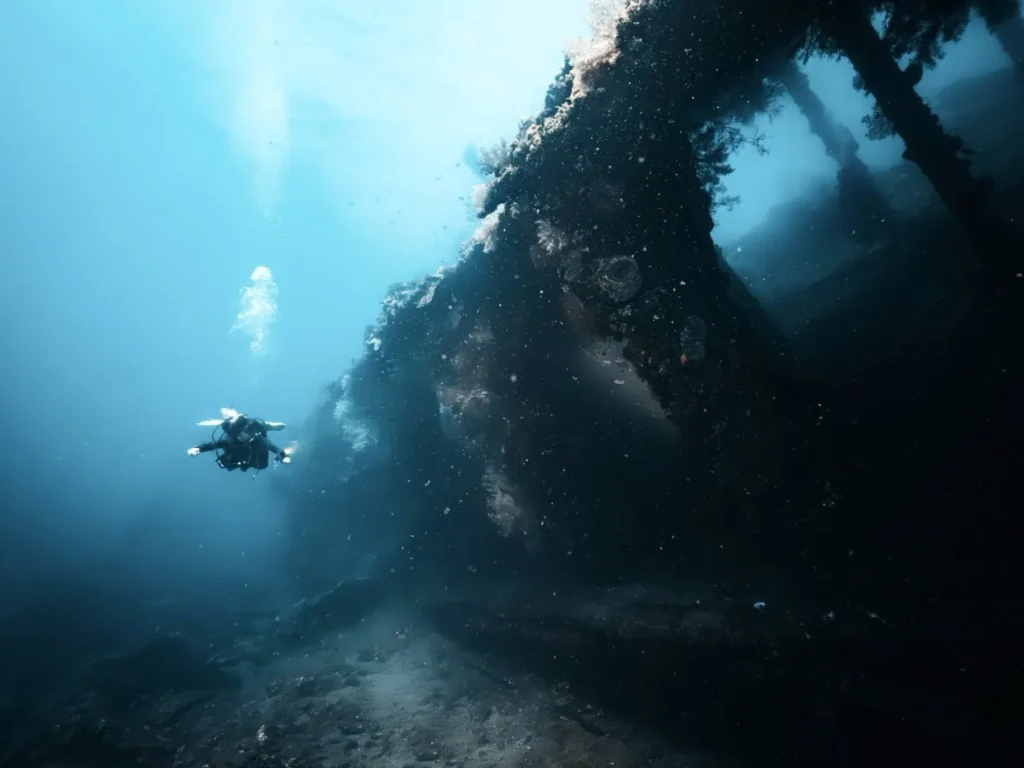
The USAT Liberty is Tulamben’s main attraction and my still my favorite wreck dive in the world. I’ve logged over 30 dives on it, and I still get excited every time I descend.
Originally a WWII cargo ship, the Liberty was torpedoed, beached, and later pushed into the ocean by a volcanic eruption. It’s only 25 meters (82 ft) from shore, and now completely taken over by coral and fish. Big schools of jackfish hang out around the structure, and in the early mornings, you’ve got a good chance of seeing bumphead parrotfish cruising through.
Head deeper and you’ll find soft corals, sponges, and pygmy seahorses hiding in the wreck’s fan coral.
It doesn’t matter if it’s your first dive or your hundredth, the USAT Liberty Wreck is one of those sites you’ll want to dive again and again.
While I’ve covered the basics here, check out my full breakdown of the USAT Liberty for the best swim-throughs and marine life.
Managing the Crowds
Because the USAT Liberty is so popular, it gets very busy mid-morning. Between 9:30 AM and 1:30 PM, the day-trip groups from South Bali and Ubud arrive. If you’re staying in the village, I recommend doing your first two dives early and using the midday window for a long lunch or a nap before a late afternoon or night dive. The Liberty comes alive after dark, with flashlight fish, morays, and all sorts of nocturnal action.
02 – Coral Garden & Suci Place
- Type: Shallow reef
- Depth: 3–15m (10–50 ft)
- Best For: Beginners, macro lovers, snorkelers
- Marine Life: Ribbon eels, frogfish, nudibranchs, coconut octopuses, mantis shrimp
- Notable Features: Artificial reef structures, statues, large anemone fields
- Conditions: Easy shore entry, mild currents, great for long dives
Coral Garden is a shallow reef that sits right in the middle of Tulamben bay. Because it stays between 3 and 15 meters (10–50 ft), it’s a perfect spot for a long, relaxed third dive or a night dive when the Spanish Dancers come out.
The site is a mix of natural reef and artificial structures that have been taken over by coral. You’ll find fields of anemones full of clownfish, blue ribbon eels hiding in the sand, and plenty of nudibranchs if you take it slow.
The Statues are one of the highlights here and are known as “Suci Place.” It features a collection of Buddha statues and Hindu deities that have become a thriving artificial reef.
Navigation Tip: To find the statues, enter the water directly in front of Matahari Tulamben Resort. Swim straight out to about 9–10 meters, and you’ll find the gallery spread out on the sandy slope. It’s easy to miss if you stay too shallow or too deep, so keep an eye on your depth as you swim out.
This is also a great snorkeling spot, so if you’ve got non-diving friends along for the trip, this is where I’d send them.
03 – Drop-Off (The Wall)
- Type: Wall dive
- Depth: 5–70m+ (16–230+ ft)
- Best For: Advanced divers, macro & wide-angle photography
- Marine Life: Moray eels, scorpionfish, nudibranchs, reef sharks, giant trevally, tuna
- Notable Features: Lava-formed vertical wall covered in corals, sponges, and gorgonians
- Conditions: Shore entry, deeper dive, mild to moderate currents
Tulamben’s Drop-Off is a dramatic wall dive that drops beyond 70 meters, just a short swim from shore. Formed by ancient lava flows, the vertical wall is covered in colorful gorgonians and sponges, making it a great site for both wide-angle and macro photography.
The sandy slope leading to the wall is often overlooked, but it’s full of nudibranchs and ghost pipefish. Out in the blue, you’ve got a good shot at seeing giant trevally, tuna, and the occasional reef shark.
While the upper section is calm and easy for Open Water divers, I like to go deeper (if you’re certified), there is a much better chance of finding pygmy seahorses on the deeper fans.
The Entry: It’s worth noting that the entry here is often the trickiest in the village. Because of the way the swell hits this corner of the bay, the walk over the volcanic rocks can be a bit more challenging than at the Liberty. Timing your entry between sets is key here.
04 – Batu Niti
- Type: Muck dive
- Depth: 5–30m (16–98 ft)
- Best For: Macro lovers, photographers, experienced divers
- Marine Life: Nudibranchs, frogfish, rhinopias, harlequin shrimp, wunderpus octopus
- Notable Features: Volcanic black sand, rich macro life, easy navigation
- Conditions: Moderate shore entry, sometimes currents
If you love macro and muck diving, Batu Niti is easily one of the best sites in the area. Located just south of the main Tulamben hub, this site features a steep slope of fine black volcanic sand dotted with small coral patches and hydroids.
I’d recommend starting your dive near the buoy 18–22 m (60–72 ft) then gradually making your way back up to the shallows. This is where I found some of my favorite macro in Tulamben, it’s honestly a treasure hunt style of diving. Good buoyancy is essential here, if you kick up the bottom, the visibility ruins instantly for you and everyone else.
Unlike some of Tulamben’s other sites, Batu Niti can have quite some currents. There isn’t much to hide behind on the open slope, so check the conditions before you gear up.
Tip: Plan enough time in the shallows. I’ve found that many of the best subjects, like the “Shaun the Sheep” nudibranchs or flamboyant cuttlefish, are often hiding in the 5–10 meter (16–33 ft) range among the rubble and sea urchins.

What You’ll See Underwater
Tulamben’s got a bit of everything. You’ve got big fish cruising around the wreck, tiny critters hiding in the sand, and enough variety to keep things interesting dive after dive. After a month of diving here, I realized it’s one of the few places where wide-angle and macro photographers are equally happy.
Bigger marine life
The most famous visitors are the bumphead parrotfish, that visit the Liberty Wreck every morning. They are massive, and seeing them cruise past in the early morning light is a highlight of diving here. You’ll also find a permanent school of Bigeye Trevally (Jackfish) that swirls in a silver tornado over the wreck.
While you won’t see massive pelagics like in Nusa Penida, keep an eye on the blue at the Drop-Off. I’ve seen reef sharks, tuna, and even the occasional eagle ray passing by.
If you are specifically looking for those bigger encounters, you better head elsewhere. Take a look at my breakdown of Bali’s most beautiful dive spots for the best places to see Mantas or Molas.
The Macro paradise
If you love nudibranchs, ghost pipefish, pygmy seahorses, and frogfish as much as I do, Tulamben is a dream. The black volcanic sand makes the colors of the critters pop, making it one of the best places for macro photography in Asia.
During my 30 days in the water here, I found that the sites like Batu Niti and Coral Garden are where you find the real stars:
- Ribbon Eels: Often found in the shallow sand patches.
- Pygmy Seahorses: Hiding in the deep sea fans at the Drop-Off.
- Octopuses: Keep an eye out for Coconut and Mimic octopuses in the muck.
coral & artificial reefs
Tulamben isn’t known for vast, natural coral gardens, but the USAT Liberty has become a spectacular artificial reef. It’s completely encrusted in soft corals, massive sponges, and sea fans.
Further down the beach, the artificial Suci Place statues are now covered in growth and have become cleaning stations where you can watch smaller fish and shrimp at work.
One of the best wreck dives in Asia
The USAT Liberty is the highlight for me. It’s shallow enough to give you loads of bottom time, and there’s always something happening: schools of jackfish swirling, critters hiding in the cracks, and soft coral growing on every surface.
At night, it’s a totally different world. You’ll see hunting morays, flashlight fish blinking through the dark, and the occasional Spanish dancer stealing the show.

Best Time to Dive in Tulamben
Tulamben is diveable year-round, but conditions definitely change depending on the season. If you want the best visibility and calmest seas, aim for May to November – that’s when diving here is at its best.
Dry Season (May–November) is your sweet spot. You’ll get clear water, barely any rain, and nice surface conditions. Tulamben stays drier than other parts of Bali, so the good weather usually sticks around longer here. Just know that June–August is peak season, so expect more people, especially at the Liberty Wreck.
Rainy Season (December–April) is still totally diveable, but you’ll get more humidity, a bit more wind, and slightly lower viz. Mornings are usually calm, but the rain tends to roll in later in the day. That said, Feb–May is a great time for quieter sites and better prices on both diving and accommodation.
Best time of day to dive? Early morning, hands down. You’ll beat the crowds, the marine life is more active, and the viz is usually at its best. From 10 AM to 1 PM, the Liberty gets packed with day-trippers, the visibility drops, and the current can pick up.
Diving Conditions
- Water Temperature – It’s warm all year, usually between 27–30°C, so most people are comfortable in a 3mm wetsuit or even just a rash guard on shallower dives (I tend to freeze and bring my 5mm).
- Visibility – Expect around 15–25 meters most of the time. July to October usually has the clearest water. During the rainy season, viz can drop a bit, but it’s still diveable.
- Currents – Mostly mild or none at all, especially around the main sites. It’s part of what makes Tulamben so good for relaxed, stress-free diving.
Diving Prices & Packages
Diving in Tulamben won’t drain your wallet. With shore dives instead of boats, the cost stays low, and you’ve got plenty of flexibility with how you dive.
Here’s what to expect when it comes to pricing:
- Fun Dives – Expect to pay IDR 450,000–500,000 (€27–€30) per dive, usually with gear, tanks, weights, and a guide included. Some shops might charge extra for equipment, but most have all-in prices. Discounts kick in if you book multiple dives.
- Dive Courses – An Open Water Course costs about IDR 4,000,000 (€240 / $260), and the Advanced course is around IDR 3,500,000 (€210 / $225). These prices typically cover all gear, training, and certification fees.
- Equipment Rental – Most centers include gear in the dive price, but if you’re renting separately, it’s about IDR 200,000 (€12 / $13) per day for a full set. Some offer a discount if you show up with your own gear.
- Independent Diving (Tank Rental) – If you’re experienced and want to dive on your own schedule, some dive centers will rent you tanks. Expect to pay IDR 150,000–200,000 (€9–€12) per dive, including porter help if needed. Great if you want to do your own thing.
- Low Season Deals – From December to April, many shops drop their prices a bit. Fewer divers, better deals.
Best Dive Centers in Tulamben
I’ve dived with all three of these dive centers in Tulamben and had great experiences with each. The right one for you depends on how you like to dive:
- Matahari Tulamben Resort, Dive & Spa – If you want easy, flexible diving, this is the place. Walk in, say what you want to dive and when, and they’ll make it happen—no strict schedules, no hassle. Great for independent divers, too.
- Scuba Tribe Bali – A small, professional dive center with great guides and personal service. No mixing of groups and small ratios, which means more relaxed dives and better spotting. Ideal if you want a more laid-back, quality-focused experience.
- Puri Madha Dive Resort – You can’t beat the location right in front of the Liberty Wreck. If you plan to dive the wreck again and again (like I do), this setup makes it super easy. Gear up, step in, dive.

How to Get to Tulamben (and Dive Sites Nearby)
Tulamben might feel remote, but getting here is straightforward once you land in Bali. Whether you’re heading straight to Tulamben or planning to explore dive hubs like Amed along the way, here’s how to make the journey smooth, including gear bags and all.
How to Get to Tulamben
Tulamben sits on Bali’s northeast coast, about 2.5 to 3 hours from Ngurah Rai International Airport (DPS) in Denpasar. There’s no public transport that gets you directly there, so you’ll need to sort out private transport.
Here are the best options for getting to Tulamben:
- Private Car & Driver – This is the easiest and most comfortable way to get to Tulamben, especially if you’re carrying dive gear. A one-way transfer from Denpasar, Ubud, or Canggu costs around IDR 600,000–800,000 (€35–€50). Most dive resorts in Tulamben can arrange this for you.
- Scooter Rental – If you’re confident on two wheels and traveling light, you can rent a scooter for IDR 80,000–150,000 (€5–€9) per day. It’s a long ride with some winding roads, so only go for this if you’re used to riding in Bali.
- Taxi or Ride-Share Apps – Grab and Gojek don’t typically service the Tulamben area, especially from the airport. You’ll need to book a fixed-fare taxi or ask your accommodation to set up a ride.
Tip: I usually ask my dive center or accommodation to organise the transfer for me.
Getting Around Tulamben
Tulamben is tiny. If you’re staying in the central area, you can walk pretty much everywhere. Dive shops, restaurants, and most accommodations are all within a few minutes on foot.
Here’s how to get around Tulamben:
- Walking – The simplest option. If your hotel is near the main strip, everything you need is just a short walk away. Perfect for those “eat, sleep, dive, repeat” kind of days.
- Scooter Rental – If you want to explore beyond Tulamben (like heading to Amed for the day), scooter rentals go for IDR 80,000–150,000 (€5–€9) per day. Roads are quiet in the village but can get rough further out.
- Dive Center Transport – Most dive shops in Tulamben offer free pickup and drop-off for dives around town. If you’re heading to a farther site, like Seraya or Batu Niti, they may charge a small transport fee.
Tip: Unless you’re planning day trips, you won’t need transport every day. Base yourself near the Liberty and you’ll have easy access to the best dive sites. For an overview of the different areas to stay including hotel tips, have a look at my guide to the best places to stay in Tulamben
Best Non-Diving Activities in Tulamben
Let’s be real: Tulamben is not the place for action-packed sightseeing. It’s a tiny village built around diving, and most people here are doing the same thing – eat, sleep, dive, repeat.
But if you need a day off from diving, or you’ve got a non-diving partner in tow, there are a few things to do nearby, you’ll just need to travel a bit to reach them. For a full list of what’s actually worth it, have a look at my things to do in Tulamben when you’re not diving.
Snorkeling the Liberty Wreck
If you’re not diving, snorkeling is a great way to experience the wreck. The top of the wreck sits around 5 meters, making it an easy snorkel with plenty of fish and coral to see. It’s not the same as diving it, but still a solid experience.
- Snorkel Gear Rental: IDR 80,000 (€5 / $6) per day from local dive shops
- Guided Snorkeling Trip: IDR 850,000 (€50 / $55) per person, including gear, guide, and sometimes transport
Pura Lempuyang Temple (Gate of Heaven)
One of Bali’s most famous temples and Instagram famous for the Mount Agung backdrop. The view is stunning, but expect crowds and queues for that photo.
- Travel Time: ~45 minutes by car from Tulamben
- Entrance Fee: IDR 150,000 (€9 / $10), includes sarong rental and photographer service
- Additional Costs: IDR 50,000 (€3 / $3) round-trip shuttle bus from the parking area to the temple
My advice: Go for the view, but don’t feel pressured to wait half a day just for one picture.
Tirta Gangga Water Palace
A former royal palace famous for its koi ponds and stone stepping stones. When I was here, it was less crowded than the Gates of Heaven.
- Travel Time: ~40 minutes by car from Tulamben
- Entrance Fee: DR 90,000 (€5.30 / $5.80).
Dive Insurance & Safety in Tulamben
Have insurance for the dives you actually plan to do. That means coverage for things like deep dives, wreck dives, repetitive diving—and yes, chamber treatment, just in case.
As someone who works in a hyperbaric chamber, I’ve seen how fast things can go sideways. You don’t want to be figuring out logistics mid-accident. It’s not optional.
These are the three providers I’ve seen hold up best when it really matters:
- DAN (Divers Alert Network) – This is the one I personally use. Reliable and recognized everywhere.
- Dive Assure
- Dive Assist
Closest Recompression Chamber
- Kasih Ibu Hospital in Saba (Gianyar) – It’s the nearest chamber to Tulamben, about 1.5 to 2 hours away by road. Not close, so dive conservatively.
- RSUP Sanglah Hospital in Denpasar – This is the main hyperbaric chamber in Bali, about 2.5 hours away by road.
Common Dive Risks in Tulamben
- It’s remote. Tulamben is hours from major hospitals. Most dive centers are well-prepared, but always check that your shop has emergency oxygen and a solid first aid setup.
- The silent current: While the Liberty is usually calm, sites like Batu Niti and The Drop-Off can have sudden shifts in current. Always check with your guide before gear-up.
- Masters of camouflage: Because so much of the marine life mimics rocks and sponges, don’t touch the bottom. Getting stung by stonefish, scorpionfish, or lionfish is super painful.
- Rocky entries: As I mentioned earlier, the volcanic pebbles are the biggest source of minor injuries (scrapes and twisted ankles). Don’t rush your entry, wait for the sets to calm down.

Get More Tips for Your Time in Tulamben
If you’re planning a dive trip to Tulamben or want to understand how it fits into a bigger Bali itinerary, these guides will help you plan the details around diving, accommodation, and nearby sites.
- Complete Diving Guide to Tulamben – everything you need to plan your trip, including dive sites, conditions, water temperatures, and practical logistics
- USAT Liberty Wreck guide – the best route through the wreck, marine life highlights, and why I keep coming back
- Snorkeling in Tulamben – the easiest spots to access from shore and what you can realistically see without scuba gear
- Where to stay in Tulamben – the best areas to base yourself and my recommendations for dive resorts and beachfront stays
- Things to Do in Tulamben – what to explore between dives, including nearby temples, rice fields, and day trips
- Best Places to Dive in Bali – how Tulamben compares to other dive areas around the island and where to go next
Got a question I didn’t answer? Or a Tulamben dive story to share? Drop a comment below. And if this guide helped you out, send it to your dive buddies – you might convince them to come along.
