
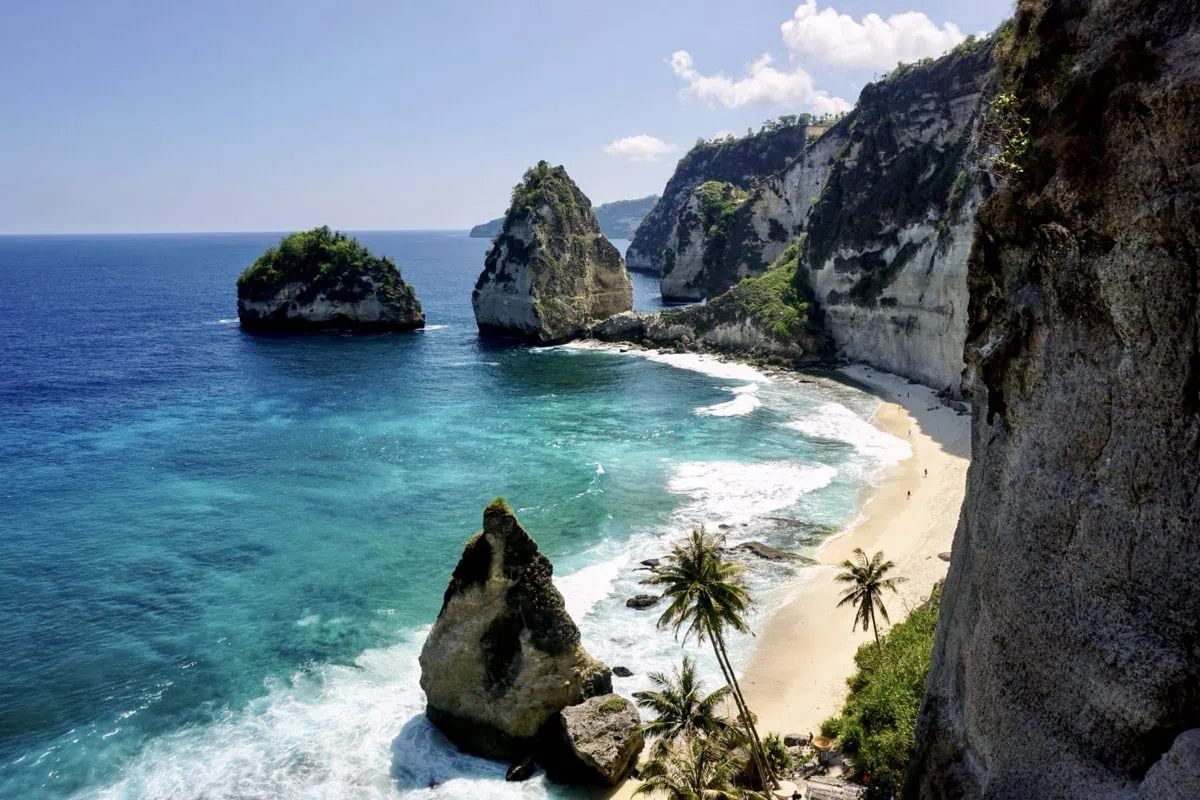
Nusa Penida always looks wild and dramatic in photos, but being there is even more intense. The cliffs feel bigger, the water brighter, the roads shake you awake, and the whole island has this raw, slightly chaotic energy that I ended up loving.
It’s not the smooth beach-club version of Bali. Penida is rougher and quieter, with moments that feel completely untouched.
If you’re wondering what to do on the island, this guide covers the things that are genuinely worth it, not just what looks good on Instagram. From manta dives and cliff viewpoints to stunning beaches that make you stop mid-walk to take it all in.
In this guide you’ll find:
- The best dive and snorkel spots
- Viewpoints and beaches worth your time
- Quieter corners to escape the crowds
- Honest tips on how to get around without stress
Nusa Penida Map
Here’s a quick map to help you see where everything is. The island looks small, but the roads, especially around the west coast, are narrow, bumpy and slow. Even short distances can take longer than you expect, so having a visual overview makes planning your days much easier.
How to use this map: Click the top left to see all locations. Select a location for more info. Open a larger map in a new tab at the top right. Save it to your Google Maps using the star. Enjoy exploring!
Best Things to Do in Nusa Penida
If you’re looking for the best things to do in Nusa Penida, this is everything I recommend after exploring the island myself.
01 – Dive at Manta Point
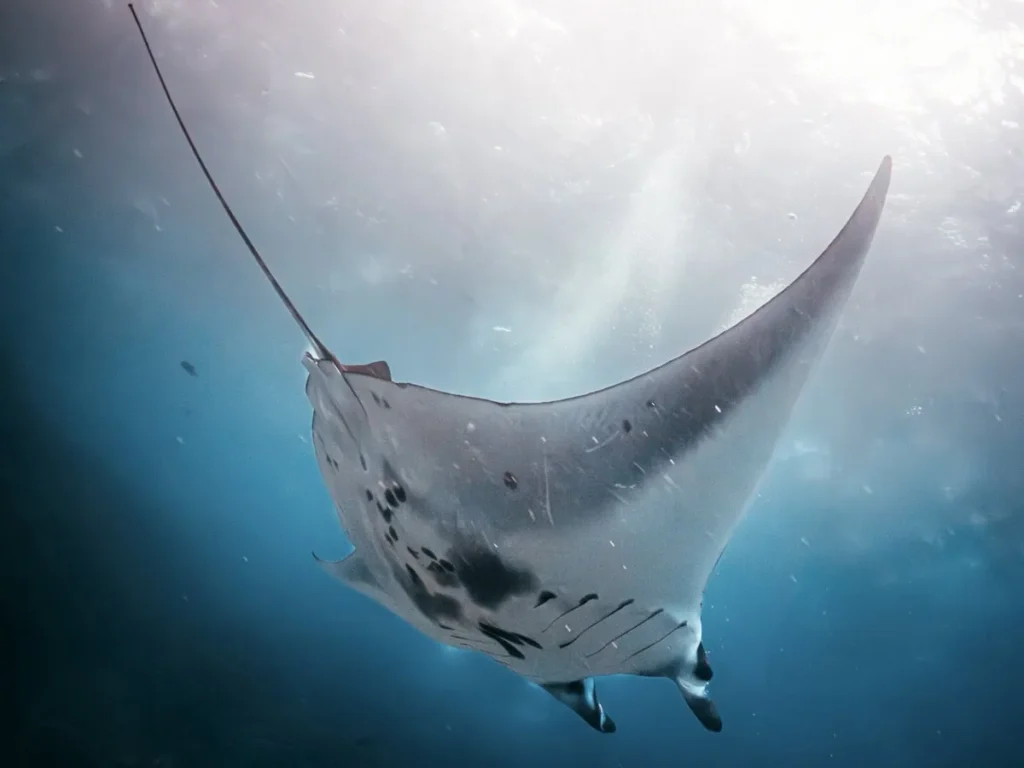
Diving with manta rays is hands-down the most incredible experience and THE best thing to do in Nusa Penida. It’s what I keep coming back for.
Diving Manta Point feels a bit like stepping into another world. The water is colder, the surge rocks you around, and then out of nowhere a manta ray drifts past, completely unbothered by you and other divers. The site sits right along Penida’s southern cliffs, so everything feels big and a little wild in the best way.
Mantas are the obvious draw, but even without them this site has a dramatic energy you don’t find in many places. Huge boulders, open blue water, and that moment when a shadow turns into a manta and suddenly you’re just floating there watching it loop overhead.
How to Do It
Most dive shops in Penida, Lembongan or even mainland Bali run trips here. It’s usually a 45–60 minute boat ride, and conditions can be rough enough that operators change the plan if the swell gets too big. Expect cooler temperatures, some surge and back-roll entries. You don’t need to be an advanced diver, but being comfortable in choppy water makes the whole experience a lot more fun.
When you’re diving with mantas, make sure you
- don’t touch mantas
- give them enough space
- follow your guide
If you want a deeper look at the cleaning stations and how manta encounters work here, my post on diving with mantas in Nusa Penida explains it in detail.
But Nusa Penida has a lot more to offer underwater. If you want a full breakdown of the sites and conditions, have a look at my complete guide to diving in Nusa Penida.
My Tip: Bring a thicker suit or a hood, it can get pretty chilly in the water. Especially on a dive like this, where you don’t move much but stop and stare a lot.

02 – Snorkeling with Manta Rays (Manta Bay vs Manta Point)
Snorkeling with manta rays around Nusa Penida is one of the island’s highlights, it’s the kind of experience that stays with you long after you’re back on land. You hop off the boat, look down into that deep blue, and suddenly a huge manta glides past underneath you, and everything goes quiet for a second.
You can snorkel with mantas at Manta Bay or Manta Point, but the experience is very different depending on which one you choose.
Manta Bay is the classic snorkeling spot. It’s close to shore, shallower and usually calmer, which makes it a good choice for beginners or anyone who prefers easier conditions. But manta sightings here can be inconsistent, sometimes a full week goes by without a single manta showing up.
Manta Point, on the other hand, is much farther out in deeper, open water. Conditions can be rougher and the swell bigger, but this is where you have much better chances of seeing mantas. This area is also where scuba divers go for the manta cleaning stations, so the encounters tend to be more reliable and often more impressive.
How to Do It
You need to book a boat tour to get to both Manta Bay and Manta Point, there’s no way to swim out from shore. When booking, make sure the tour specifically says Manta Bay or Manta Point, because operators don’t switch between the two on the day.
Tours leave from Nusa Penida, Nusa Lembongan, or Bali and often include multiple snorkel stops. Group tours are the cheapest option but can get crowded when a manta appears. Private trips cost more, but you get space, calmer timing and a captain who’s willing to wait for sightings instead of rushing the route.
Snorkeling Tour Recommendation
If seeing mantas is your main goal, book this Nusa Penida snorkeling tour that goes to Manta Point early in the morning, you’ll have much better chances of an encounter there. You’ll also stop at Gamat Bay and Wall Bay, two of the best snorkel sites around the island.
03 – Kelingking Beach Viewpoint
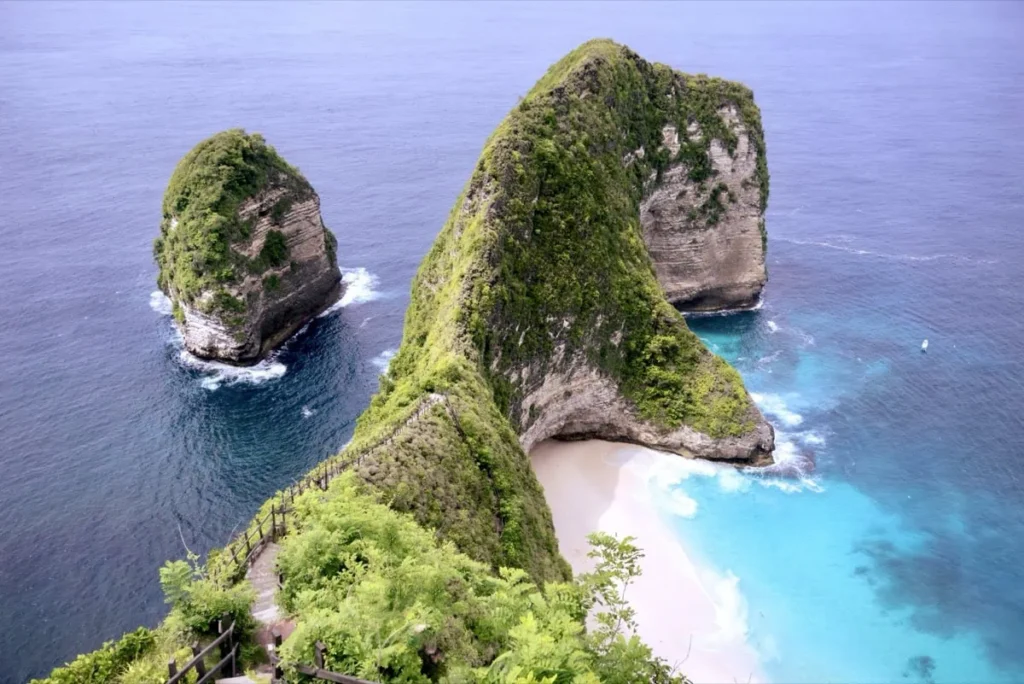
Kelingking was one of those places I thought might feel overhyped, until I walked up to the viewpoint and actually saw it. The T-Rex shaped cliff drops into this bright-blue bay, and the water looks almost fake from above. No matter how many photos you’ve seen, the first time you walk up to the viewpoint it still stops you in your tracks.
I usually avoid places that get too crowded, but Kelingking still managed to feel worth it, especially once I stepped away from the main platform and found quieter angles.
How to Do It
The viewpoint is on the west side of the island and easy to reach, but expect a bumpy scooter ride if you’re driving yourself. From the parking lot it’s a quick walk to the main viewpoint.
The hike down to the beach is no joke: steep, dusty and very exposed in the heat. If you decide to go, wear proper shoes and start early. The climb back up is the part that gets people. I didn’t hike down to the beach, but I watched a few people climb back up and they looked absolutely done. If you plan on going, start early, bring water and wear actual shoes, not flip-flops.
You might notice the controversial glass elevator being built into the cliffs here. Construction has been paused while permits are reviewed, so for now it’s just something you’ll see in the background.
My Tip: If you’re not hiking down to the beach, take your time exploring the smaller side paths around the viewpoint. I wandered a little further along the ridge and ended up with a much quieter view of the whole bay. A few steps away from the crowd makes a big difference here.
04 – Broken Beach
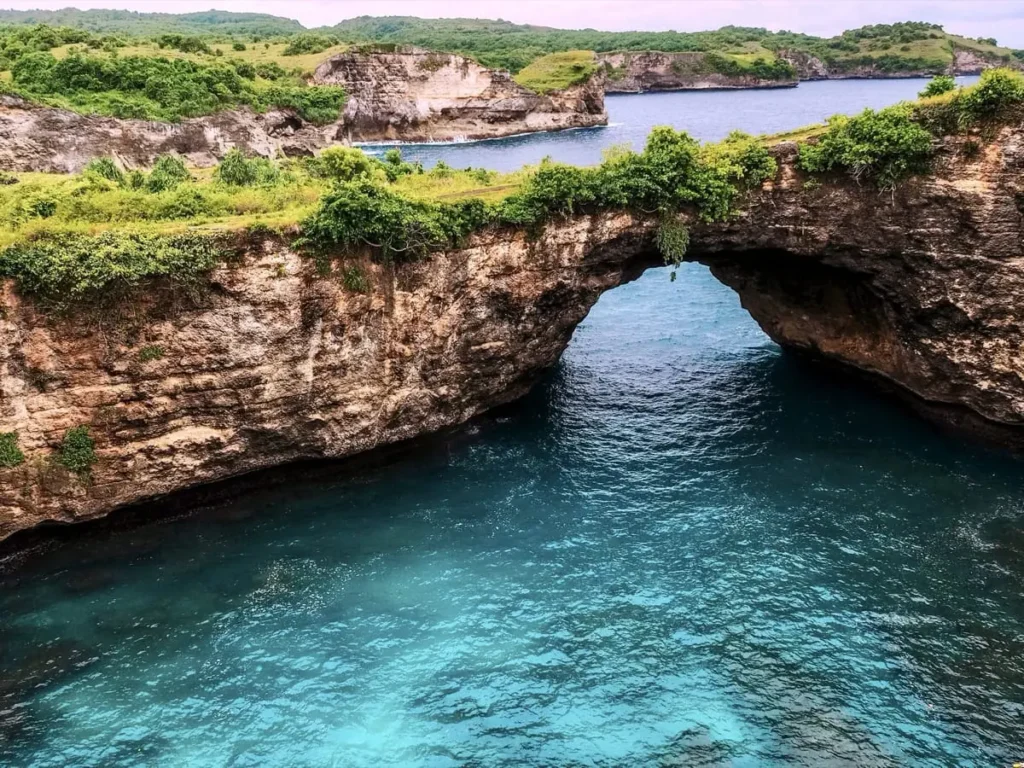
Broken Beach is one of those spots that looks calm in photos but feels completely different when you’re actually standing there. The natural arch is huge, the waves crash hard beneath it, and the whole place has this wild, open-ocean energy. When I visited, the sound of the water echoing through the cove was so loud it felt like it was coming from inside the cliffs.
The arch alone is impressive, but what makes Broken Beach special is the scale. It’s not a swimming spot, just a place to wander around, stare into the cove and take in the coastline.
How to Do It
Broken Beach is on the west side of Nusa Penida and shares the same entrance area as Angel’s Billabong. The roads getting here are rough, especially the last few kilometers, so prepare for a bumpy scooter ride or hire a driver if you want an easier day.
Once you arrive, the walk is easy, just a few sandy paths around the edge of the cove. You can circle almost the entire rim, and every angle looks a little different depending on the swell and light.
My Tip: Take a moment on the far side of the arch where fewer people walk. You get a clear view straight out to the open ocean, and watching the waves surge through the opening from that angle gives you a much better sense of how powerful the place actually is.
05 – Angel’s Billabong
Angel’s Billabong is just a short walk from Broken Beach, so you can easily visit both at the same time.
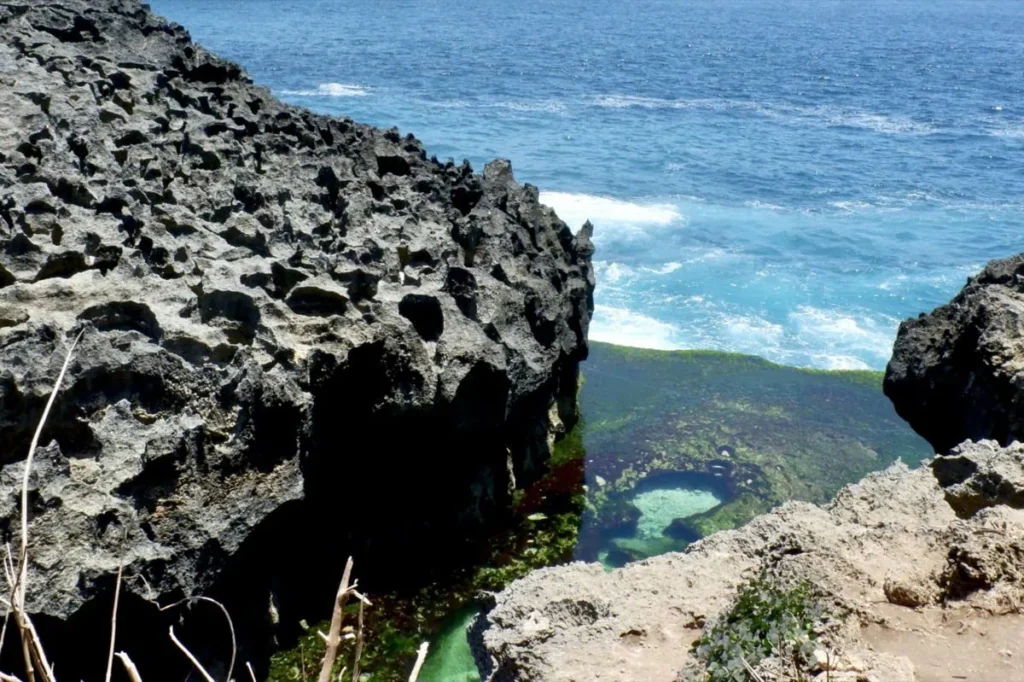
It’s a place that looks completely different depending on the tide. When I went, the tide was low enough to see the natural pool clearly with bright green and turquoise layers trapped between sharp rocks. The waves were still crashing hard on the outside, so you could feel the power of the ocean even while standing above this calm little pocket of water.
It’s this contrast of quiet, glassy water inside the pool and wild surf pounding the cliffs just a few meters away, that makes Angel’s Billabong so special. It’s the kind of spot you walk up to and immediately understand why it ends up in every guide to Nusa Penida.
How to Do It
Angel’s Billabong is right next to Broken Beach, just a short stroll from the parking area.
Swimming here is only possible at very low tide, and even then it’s not always safe. The swell can jump out of nowhere and wash straight across the rocks. When I visited, there were “no swimming” signs all around, and after watching a few big sets roll in, I didn’t even think twice about staying on the higher ground.
My Tip: Stand a little higher up on the rocks instead of going straight to the pool edge. You get a better view of the patterns in the water, and it keeps you safely out of reach of surprise waves. I saw a couple of people get splashed pretty badly just from edging too close.
If you want the prettiest colors, go when the sun is high up in the sky, mid-morning to early afternoon.
06 – Diamond Beach
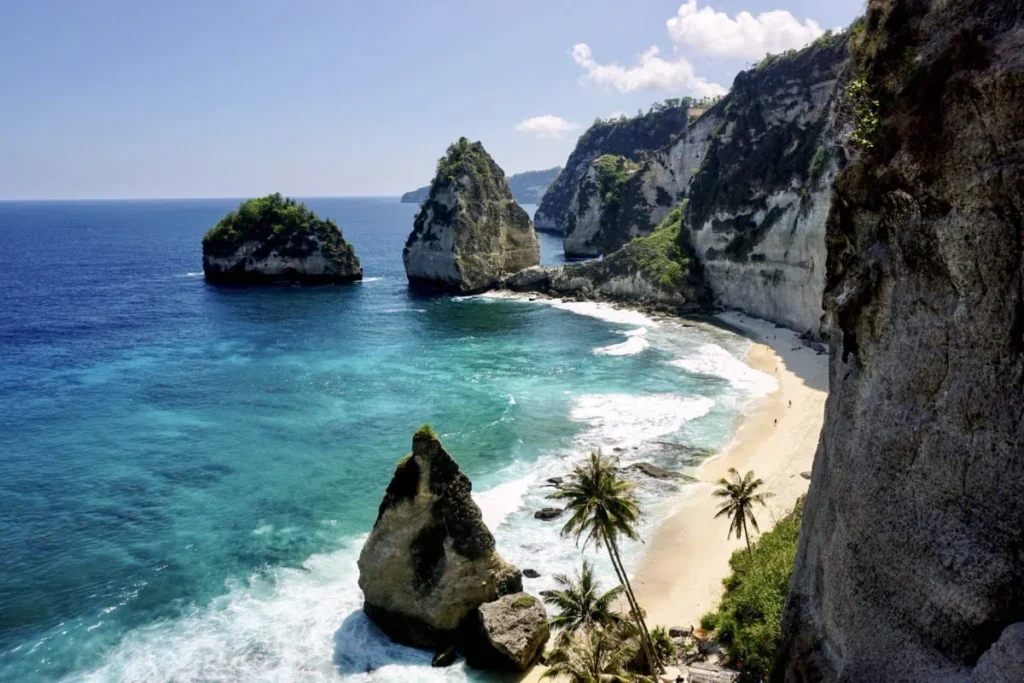
Diamond Beach is one of the most dramatic beaches on Nusa Penida and also one of the best viewpoints on the island.
The tall, sharp limestone pinnacles rise straight out of the water, and the beach curves around them in this perfect little arc of white sand and turquoise. The colors here are intense, and because it’s on the east side, the morning light makes everything glow. It’s also a spot where you can choose if you want to stay up at the viewpoint for the easy version, or head down the staircase if you want to see it up close.
When I first stepped up to the edge, it felt almost too pretty. I would also say it’s one of the few beaches on Nusa Penida that actually feels untouched.
How to Do It
Diamond Beach is on the east coast, right next to Atuh Beach. The iconic staircase carved into the cliff is the only way down, and it’s a lot steeper in real life than it looks in photos. The steps are uneven, narrow and can get slippery in the heat. I made it partway down before realizing it was much tougher than expected, and honestly the best views are still from the top.
If you do go all the way down, go early to avoid the midday heat and wear decent shoes. The beach itself is beautiful but the waves can be rough, so it’s more of a “walk around” spot than a proper swimming beach.
My Tip: Walk along the ridge and check out the angles toward Atuh Beach too, the side views are just as stunning and usually a lot quieter.
07 – Atuh Beach
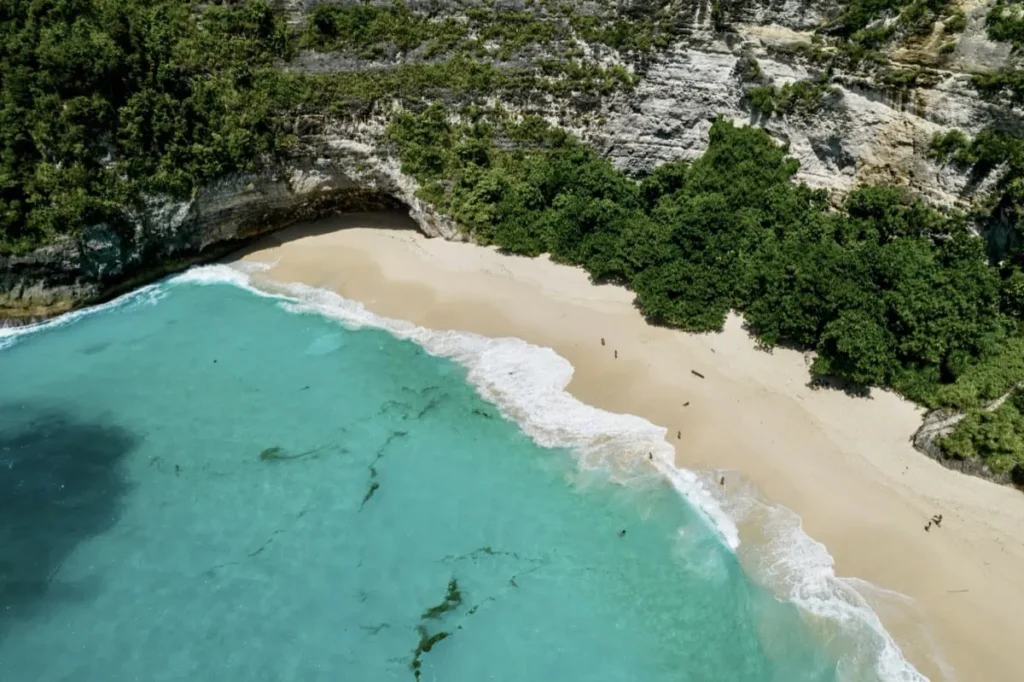
Atuh Beach sits right next to Diamond Beach, but the vibe couldn’t be more different. Where Diamond feels dramatic and vertical, Atuh is softer and more relaxed. It’s a long strip of white sand framed by big rock arches and calm water.
The stairs are much easier than Diamond Beach, the sand is wide, and there’s plenty of space to sit, wander or grab something cold from one of the small warungs. It’s the perfect spot for a quick swim.
When I walked down, it instantly felt like the kind of place you could spend a slow morning without doing anything at all.
How to Do It
You access Atuh Beach from the opposite side of the ridge from Diamond Beach. The walk down is easy with proper steps, some shade and it’s not too steep. Once you reach the bottom, you’ll find a few beach huts selling drinks and snacks. I went mid-morning and still found it peaceful, with just a handful of people relaxing under umbrellas.
You can swim here when the tide is right, but always check the waves first. Sometimes the waves roll in stronger than they look from above.
My Tip: If you’re here early, walk all the way to the far left side of the beach. There’s a quieter spot of sand tucked behind a rock, and the view of the arches from that angle is even better than from the main entrance.
08 – Thousand Islands Viewpoint
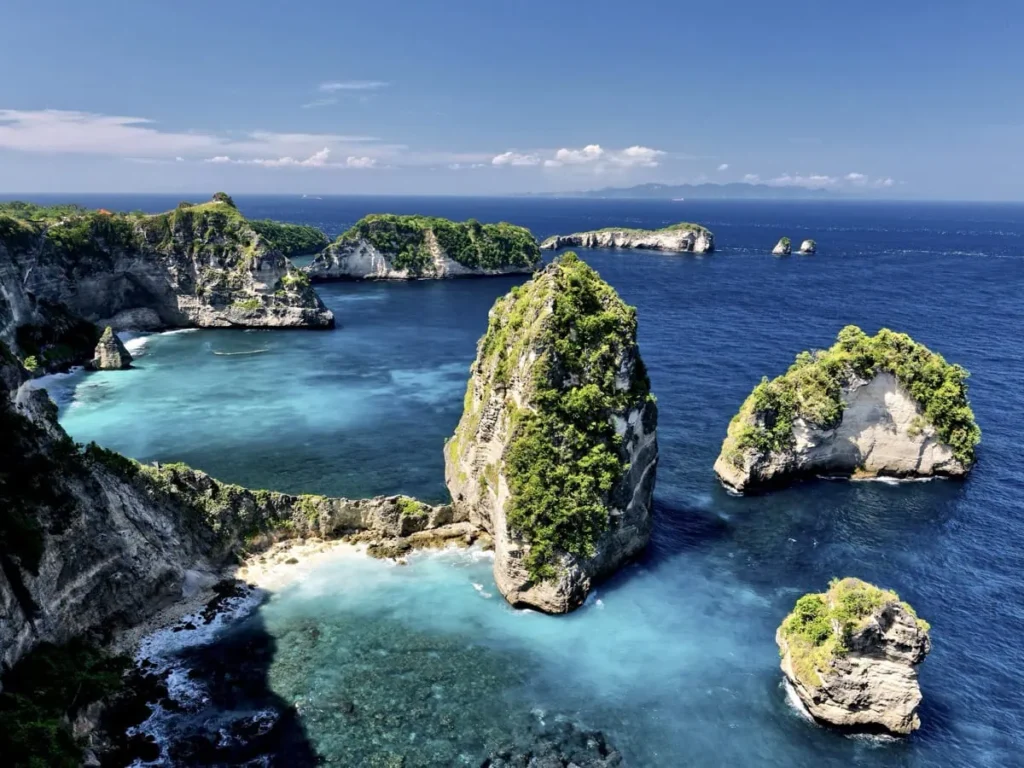
Thousand Islands Viewpoint sits on the far east side of Nusa Penida, just a few minutes from Diamond Beach. When I arrived, the whole place was windy, bright and completely exposed. The scale here is wild. And because it’s more spread out than the west-side viewpoints, it never feels packed. Even with other people around, you can always find your own quiet corner to stand and take it all in.
How to Do It
You can reach Thousand Islands Viewpoint via the same entrance road as Rumah Pohon Treehouse, on the eastern tip of the island. From the parking area, you walk down a short, steep staircase that leads to several viewpoints scattered along the ridge. It’s not a long hike, but you’ll feel the climb on the way back up, especially in the heat.
I went mid-morning, and the light made the cliffs glow a pale gold against the deep blue water. Sunrise is gorgeous here too if you’re up early, the sun comes up directly over the ocean.
My Tip: Most people stop at the first ledge because it’s the most obvious one, but the best view is actually farther along the ridge. Walk to the last viewpoint on the right, it’s quieter, and from there you can see all the little islands lined up along the coastline without anyone in your way.
09 – Rumah Pohon Treehouse
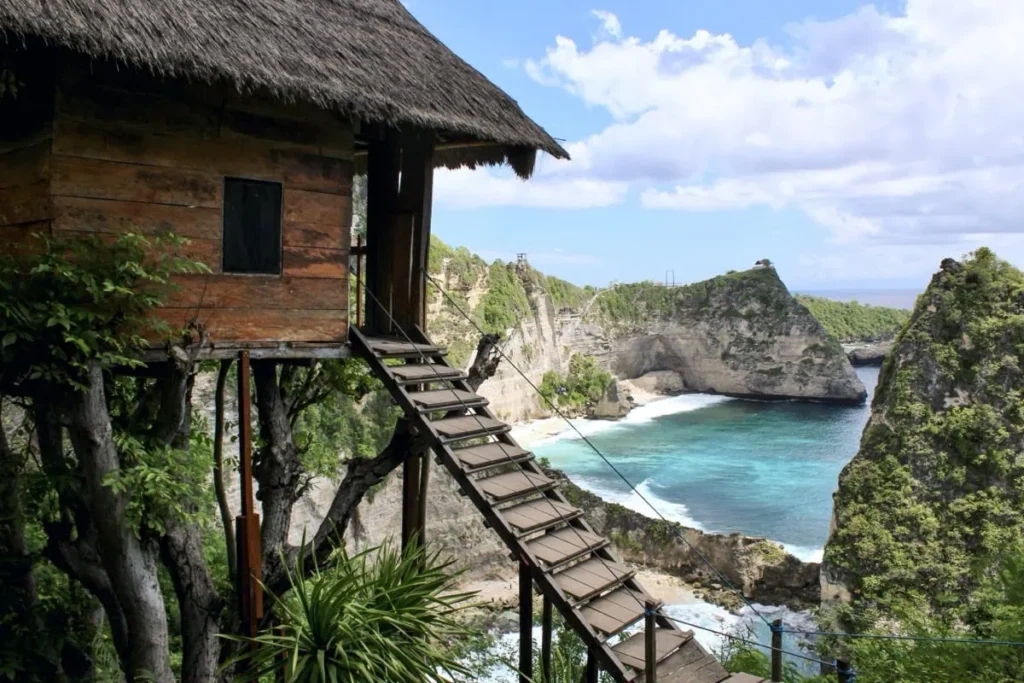
Rumah Pohon is one of those spots you see all over Instagram. The little wooden treehouse sits on the edge of a cliff overlooking the whole Thousand Islands area, with nothing but blue water and scattered sea stacks in front of you. When I walked down the path and saw it for the first time, it felt smaller and more fragile than I expected.
The view from the treehouse platform is one of the best on the east side of Nusa Penida. Even if you’re not chasing a photo, the perspective you get from that lower angle is beautiful. The cliffs wrap around you in a way they don’t from the higher viewpoints, and you’re close enough to feel the wind push through the gaps.
How to Do It
Rumah Pohon is accessed from the same entrance as Thousand Islands Viewpoint. The trail takes you down a short but steep set of stairs carved into the cliff. It’s not long, but it’s definitely a workout on the way back up, especially in the heat.
There’s a small booth where you pay a fee to access the photo platform. When I went, there was a light queue of people waiting to take turns, but it moved quickly. The treehouse itself is simple and not somewhere you’d actually want to spend the night anymore, but it’s the viewpoint that matters.
My Tip: If you want the spot mostly to yourself, go early in the morning. I arrived just after the first wave of sunrise visitors, and it was quiet enough to take my time.
10 – Tembeling Natural Pools & Forest
Tembeling was one of my favourite spots on Nusa Penida because it feels completely different from the rest of the island. Instead of cliffs and wide-open views, you walk (or ride) down through dense forest until the path opens up to these natural pools hidden between the rocks.
The pools feel tucked away and protected, and the water has this perfect cool temperature that makes you want to stay in forever. Down by the ocean, the waves crash hard against the rocks, so you get this contrast of quiet pools and wild coastline all in one place.
How to Do It
Tembeling is on the southwest side of Penida and the road down is… let’s say “adventurous.” The final stretch is rough enough that many people park their scooters halfway and walk the rest. There are also local drivers with small motorbikes who offer rides down for a fee if you don’t want to risk the steep, uneven path yourself.
Once you reach the bottom, there are two pools: an upper one that’s smaller and quieter, and a bigger one closer to the sea. From there, a short path takes you out to a rocky area overlooking the ocean. I went late morning and there were only a few other people around, which made the whole place feel even more peaceful.
My Tip: Wear proper shoes if you’re walking down. The forest path gets slippery in places, and flip-flops make it much less fun. And once you reach the pools, walk all the way out to the ocean viewpoint, it’s one of the best “hidden” views on the island in my opinion.
11 – Goa Giri Putri Temple
Goa Giri Putri is one of the most unexpected places on Nusa Penida. From the outside, it looks like a small shrine built into the side of a limestone hill. Once you walk through the narrow entrance (you literally duck and squeeze through a crack in the rock), the space opens into a massive underground temple. I remember when I stepped inside, I couldn’t believe how big it was. Cool air, incense, and quiet chanting make it feel like a completely different world than the rest of Nusa Penida.
It’s also an active temple, so you see real ceremonies happening instead of something staged for tourists. That gives the experience a much more grounded, local feel.
How to Do It
Goa Giri Putri is on the northeast side of Penida, about 20–30 minutes from the main harbor. Since it’s an actual temple, you have to wear a sarong to enter (rental is included with your donation). After you squeeze through the narrow opening, the path leads you deep into the cave where the main prayer areas are.
The ground can be slippery and uneven, so walk slowly, especially near the wetter sections. I visited in the early afternoon and it wasn’t busy at all.
My Tip: Be respectful with photos, this is a real place of worship and people come here to pray.
12 – Crystal Bay (the Beach)
Crystal Bay is one of the easiest beaches to reach on Nusa Penida, and it has that classic island vibe you sometimes miss after a day of cliffs and long staircases. The water is usually deep, clear blue, the waves are gentle and the whole bay feels a lot more relaxed compared to the dramatic east side.
The beach itself is wide, the sand is soft enough to lie on, and the water is usually calm enough for a swim. And there’s a lively atmosphere with people sunbathing, snorkelers looking for turtles, and small warungs along the shore. For me, chilling at Crystal Bay is one of the best things to do in Nusa Penida after an early diving morning.
How to Do It
Crystal Bay is on the west side of Nusa Penida, a short drive from the main harbor. The road is one of the better ones on the island, which makes it a nice stop if you’re tired of bumpy scooter rides. Once you arrive, it’s just a flat walk from the parking area to the beach.
You can swim here and the conditions are usually great. But sometimes the currents pick up, especially later in the afternoon. I went mid-day and the water was perfect for a swim.
My Tip: Stay for sunset if you’re already on the west side. The light hits the cliffs in this soft, golden way and the whole bay turns warm and calm. It’s one of the nicest places on the island to end the day.
13 – Suwehan Beach
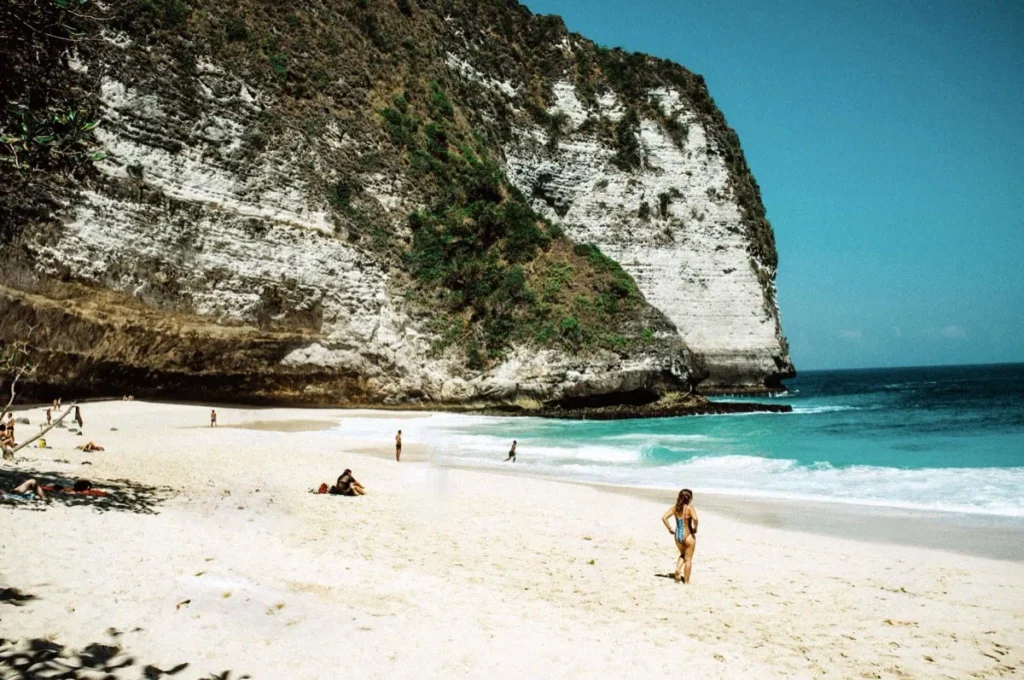
Suwehan Beach is one of the more hidden beaches on Nusa Penida, and getting there definitely adds to the experience. The beach is small and sheltered by cliffs on both sides, which gives it a really peaceful atmosphere. If you like spots that feel a bit more remote, Suwehan is perfect.
The viewpoint sits high above the water, with a sharp limestone rock rising out of the sea like a giant tooth. When I got to the top, the whole place felt quite untouched, no crowds, no noise, just wind and the sound of waves rolling in below.
How to Do It
Suwehan is on the southeast coast of the island, not far from Atuh and Diamond Beach, but it feels much quieter. To reach the beach, you’ll walk down a long, steep staircase carved into the cliff. The steps are uneven and exposed, and the climb back up is sweaty, so bring water and go slow.
At the bottom, there’s plenty of space to sit and enjoy the view, but swimming depends on the conditions. The waves can get strong, so it’s more of a beach to relax on than a full swimming spot.
I went late morning and only saw a handful of other people the entire time, but I guess this is a rare thing on Penida.
14 – Teletubbies Hill
Teletubbies Hill, also called Bukit Teletubbies (“bukit” just means “hill” in Bahasa Indonesia), is a group of big, perfectly rounded hills that honestly reminded me a little of the Chocolate Hills in the Philippines. The landscape feels very soft and peaceful compared to the cliffs and chaos everywhere else on the island.
This isn’t an action-packed stop or a dramatic viewpoint. It’s more of a “sit and breathe for a second” kind of place. The colours of Teletubbies Hill change a lot depending on the season. During rainy season, the hills turn this beautiful, bright green. In the dry season, they’re more muted, kind of golden and textured, but still beautiful in their own way.
It’s a nice spot for photos, and if you have a drone, this is where it really shines. I didn’t stay long, maybe 20-30 minutes, but it was a nice stop and worth it when you’re in the area.
How to Do It
Teletubbies Hill is in the middle of the island and easy to pair with east-coast spots like Atuh Beach or Thousand Islands. The road isn’t too bad, and you just walk straight out from the parking area into the open field of hills. You can wander around or just sit and take in the silence. There’s no defined path, it’s just open space.
My Tip: Go when you need a break from the steep stairs and bumpy roads. I stopped here after a full morning of viewpoints and beaches, and it was exactly the slow, quiet moment I needed before heading back out into Penida’s wild coastline.
How to Get to Nusa Penida
You’ve got three main ways to reach Nusa Penida, and which one you pick really depends on where you’re coming from.
01 – Fast boats from Sanur (most popular)
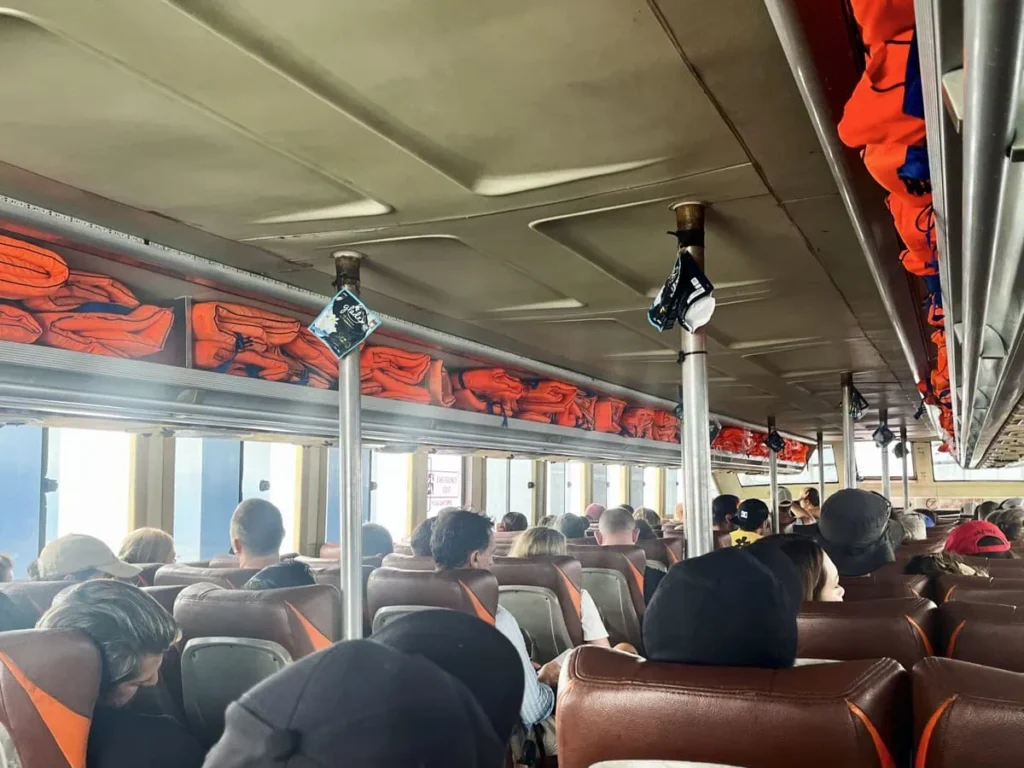
This is the classic route. Boats run from early morning until late afternoon and the crossing takes about 40 minutes. It’s busy and a bit chaotic at times, but it’s the easiest option if you’re staying in central or southern Bali.
Sanur now has a proper jetty, so boarding is much easier than it used to be.
02 – Fast boats from Kusamba (best for Bali’s east coast)
If you’ve been diving in Tulamben or Amed, or staying around Sidemen, Kusamba is a much smarter choice than driving all the way to Sanur. The crossing is shorter and the sea tends to be calmer on this side of the island.
03 – Public ferry from Padangbai (slowest but cheapest)
The Padangbai ferry takes around 90 minutes, but at IDR 48,000 (€2.80 / $3) it’s by far the cheapest way across. It’s also the only option if you want to bring your scooter with you. The schedule isn’t as frequent as the fast boats, but it works if you’re not in a rush.
Coming From Nusa Lembongan
If you’re already staying on Nusa Lembongan, getting to Penida is incredibly easy. Boats run between the two islands all day long, and the crossing takes about 15 minutes. It’s perfect if you’re combining both islands or doing a day trip from Lembongan.
Where to Book Tickets To Nusa Penida
Fast-boat prices don’t vary much between companies, expect to pay around IDR 150,000–200,000 (€9–12 / $10–13) one way.
You can buy tickets at the pier, but during high season it gets messy and boats fill up fast. I always book tickets in advance through 12Go Asia. It saves time, avoids the back-and-forth with different sellers, and shows all departure times in one place.
Where You’ll Arrive
Most boats arrive in Nusa Penida at Banjar Nyuh (Toyapakeh) or Sampalan. Both are convenient and close to scooter rentals, dive shops and accommodations.
My Tip: If it’s your first trip, leave from Sanur, and book in advance. Sanur port has a new jetty, so you don’t need to walk through water while boarding anymore.
How to Get Around Nusa Penida
Getting around Nusa Penida is where a lot of people underestimate the island. The distances look short on the map, but the roads, especially around the west coast, are rough, narrow and full of potholes.
You basically have three options:
- Rent a scooter
- Hire a private driver
- Join a tour
What’s best for you depends on your travel style.
01 – Renting a Scooter
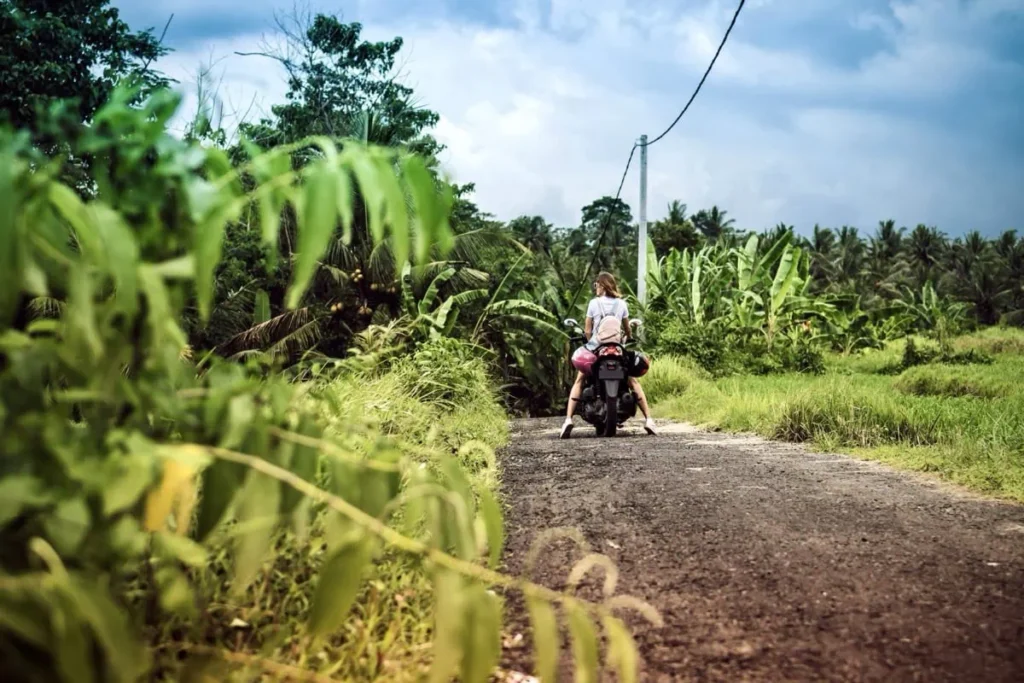
This is the most flexible way to explore the island, but also the one that requires the most confidence. Some roads are smooth and easy; others feel like a roller coaster made of loose gravel. If you’re not already comfortable riding a scooter, this is not the place to “learn on the go.”
I rode a scooter here and while it was fine, there were a few stretches where I slowed to walking speed because the road had more holes than asphalt.
02 – Hiring a Private Driver
This is the best mix of comfort and safety. Drivers know which roads are in good shape, which ones to avoid after rain and how to time the busy spots. You can still choose all your own stops, but you don’t have to think about navigating or finding parking.
For groups or couples, this often ends up being the easiest (and most stress-free) option.
My Tip: Share your planned route with your driver the day before. They’ll tell you if something is unrealistic or if a road has turned into a mud pit after rain.
03 – Joining a Day Tour
Tours are convenient if you want zero planning, but they rush through the island. You’ll hit the main viewpoints without having to navigate the roads, but you’ll also be on a fixed timeline with a group. Good for people who want “easy,” less ideal for people who want flexibility.
My Tour Recommendation:
This is a great private day trip that takes you to all the best highlights of Nusa Penida, perfect if you want a calmer experience and everything organised for you.
So what’s best?
- Scooter if you’re confident and want total freedom
- Driver if you want comfort and less stress
- Tour if you’d rather not plan anything
I personally like having my own scooter, but I would never recommend it to someone who isn’t already very comfortable riding. I’m used to driving in Southeast Asia, and the roads here on Nusa Penida can be unforgiving.
Where to Stay in Nusa Penida
Distances look short on the map, but where you stay on Nusa Penida does make a huge difference.
I break these areas down in much more detail in my where to stay in Nusa Penida guide, but here’s the quick version to help you pick the right base.
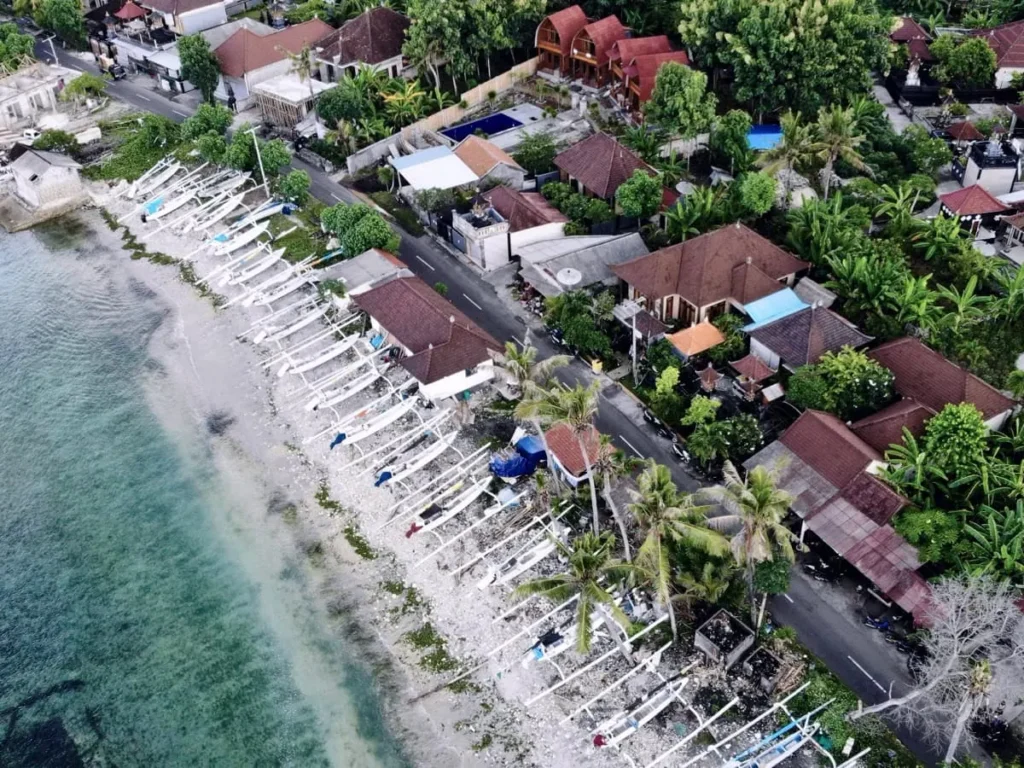
Toyapakeh / Ped (North Coast)
Best for: Divers who want zero stress
Toyapakeh is basically the dive hub of Nusa Penida. Most boats leave from here, most dive shops are based here, and the roads are smoother than anywhere else on the island. It’s not the prettiest area, but it’s practical with ATMs, minimarts, cafés, scooter rentals, and everything you need within minutes.
If you’re diving multiple days in a row, staying here makes those 6 a.m. mornings a lot easier. No long rides, no racing across the island to get to the dive boat. Just walk or get a quick pickup and you’re on the boat.
Great places to stay in Toyapakeh:
- Budget: Nusa Penida Pudak Nature Bungalow
- Mid-range: Mambo Beach Resort
- Luxury: Adiwana Warnakali Resort
Crystal Bay (West Coast)
Best for: Sunsets and a quieter base
Crystal Bay is a completely different vibe with fewer shops, more coconut palms, and one of the nicest beaches on the island right at your doorstep. After a long diving day, this area feels like an actual holiday: sunsets, ocean breeze, and fewer people.
The only downside is the morning ride if your dive shop is in Toyapakeh. It’s not terrible, but it’s long enough to matter if you’re diving back-to-back days.
Great places to stay in Crystal Bay:
- Budget: The Tinsi
- Mid-range: Puri Garden Penida
- Luxury: Atalaya Villas Nusa Penida
Batununggul / North-East Coast
Best for: Quiet, local-feeling stays that aren’t too far
Batununggul has this laid-back coastal village vibe. It’s calmer than the north coast but not remote. The roads here are smoother and the evenings are breezy. It’s close enough for easy dive-shop pickups, but far enough from the crowds to get a slower, more local feel.
If you want quiet without sacrificing convenience, this is your spot.
Great places to stay in Batununggul:
- Budget: Bamboo Bungalow Jungle View
- Mid-range: The Kanha Palace
- Luxury: Gara Gara Sea View
How I Decide Where to Stay
If I’m diving several days straight, I stay in Toyapakeh. Being five minutes from the pier is a lifesaver on early mornings.
If I’m mixing diving with chill days, I stay in Crystal Bay for the sunsets and slower pace.
And when I want something peaceful but still practical for diving days, Batununggul works perfectly.
If you’re still unsure which area fits your plans, I explain the pros and cons of each in my full guide to where to stay in Nusa Penida.
Best Time to Visit Nusa Penida
Nusa Penida is warm all year, but the experience changes a lot depending on the season, especially if you’re diving or planning to hit the viewpoints.
Dry Season (April–October)
Best overall weather + calmest logistics
Dry season is when Penida feels the easiest. The roads stay dry, the viewpoints are clearer, and the ocean is usually calmer, especially in the mornings. It’s the most popular time to visit, so expect more people at Kelingking and Diamond Beach, but everything just works smoother.
Rainy Season (November–March)
Lush landscapes + fewer crowds
This is when the island turns bright green. Teletubbies Hill looks incredible, the cliffs look more dramatic, and the island feels less dusty. The downside: sudden rain showers, slippery paths and rougher seas on the south side.
If you’re planning to visit Tembeling or any of the east coast staircases, be extra careful, the stone steps can get super slippery.
Diving Seasons
- Mantas: All year. They’re around in every season, even when visibility isn’t perfect.
- Molas: August-October
- Best visibility: July–October
- Ocean can be rough: December–February (still diveable, just a bit sporty)
I’ve dived Penida in different months, and honestly, the biggest factor is time of day, not season. Early mornings are always calmer, and visibility can change in a matter of hours.
Temperature & Comfort
Dry season is cooler and breezier, especially at night. Rainy season is hot and humid. You’ll feel it on the long staircases at Diamond and Suwehan.
So what’s the best time?
- If it’s your first trip: April to October
- If you want quieter viewpoints and don’t mind some rain: January to March
- If you want the hills extra green: after the first rains (Nov–Dec)
- If you’re here mainly to dive: any time of year works, but July–October has the best conditions.
Nusa Penida Itineraries (1–3 Days)
Nusa Penida looks small on the map, but the roads, heat and distances mean you can’t just see it all in a single sweep.
These itineraries are based on how the island actually feels to travel with realistic timing, no rushing, and enough space to enjoy the views without being exhausted by noon.
1-Day Itinerary (If You’re Short on Time)
Morning – West Coast Viewpoints
- Kelingking Beach Viewpoint (go early)
- Broken Beach
- Angel’s Billabong
The roads here are rough, so take your time. These are big, dramatic cliffs, not places you want to rush.
Lunch: Grab something at a nearby warung before heading toward the coast.
Afternoon – Easy Finish
- Crystal Bay for a swim, a coconut, or sunset if you’re staying late.
My tip: Start around 7:30am if you want Kelingking before the crowds.
2-Day Itinerary (My Recommended Way to See the Island)
Day 1 – East Coast Highlights
This side of the island is fully exposed and heats up fast, so mornings make all the difference.
Morning:
- Diamond Beach (best early)
- Atuh Beach
Lunch: Warungs near Atuh or the hilltop parking area.
Afternoon:
- Thousand Islands Viewpoint
- Rumah Pohon Treehouse
- Teletubbies Hill for a calm, green break before heading back.
Day 2 – Diving + Lazy Afternoon
Morning:
- Dive at Manta Point or
- Snorkel at Manta Bay / Manta Point
Once you’ve spent a morning in cold water and currents, you’ll want to keep things slow.
Afternoon (Chill Only):
- Crystal Bay for a lazy beach afternoon. Flat walk, easy access, shade, cold drinks, exactly what feels good post-dive.
Optional: Stay for sunset. It’s one of the island’s best.
My tip: Don’t schedule anything strenuous after diving. Penida’s heat + roads will wipe you out.
3-Day Itinerary (If You Want a More Relaxed Trip)
Day 1 – East Coast Highlights
Morning:
- Diamond Beach
- Atuh Beach
Lunch: Warungs near Atuh or the hilltop parking area.
Afternoon:
- Thousand Islands Viewpoint
- Rumah Pohon Treehouse
- Teletubbies Hill
Day 2 – Diving + Lazy Afternoon
Morning:
- Dive at Manta Point or
- Snorkel at Manta Bay / Manta Point
Afternoon:
- Crystal Bay beach time
Day 3 – West Coast at your own pace
Morning:
- Kelingking Beach
- Broken Beach
- Angel’s Billabong
Afternoon:
- Tembeling Natural Pools
If You’re Planning More Diving Days
These itineraries are easy to stretch. If you’re diving multiple days, just plan non-diving days around your boat schedule. Diving a 2-dive trip in the morning and keeping the afternoons slow works really well here.
If you want to explore more than just Manta Point, I wrote a breakdown of the best dive sites in Nusa Penida, including the drift dives and the calmer reef sites. If you want to get a feel for the dive conditions before booking, my Nusa Penida diving guide covers sites, conditions, gear, and what to expect underwater.
FAQ: Best Things to do on Nusa Penida
Get More Nusa Penida Tips to Help You Plan
- Start with my complete guide to diving in Nusa Penida, it covers conditions, currents, and everything you should know before going.
- For a closer look at the underwater highlights, my breakdown of the best dive sites in Nusa Penida walks you through each spot and what to expect.
- Not diving every day? I’ve also put together a guide to snorkeling in Nusa Penida, with the safest sites, when to go, and how to avoid the crowds.
- And for a dry day, check out my best things to do in Nusa Penida covering beaches, viewpoints, and the easy spots worth checking out.
- And if you’re planning a longer dive trip around the island, don’t miss my full breakdown of the best places to dive in Bali.
Did you know that by booking through links on this site, you support this blog at no additional cost to you. Thank you!
