

Nusa Penida is one of those places that leaves you a little speechless the first time you dive it.
The water’s clear enough to make you blink twice, the reefs are full of life, and if you’re lucky, a manta might glide past like it owns the place. Diving in Nusa Penida reminds you how wild and unpredictable the ocean really is.
The currents here can be strong and unpredictable, and that’s exactly what makes the marine life so incredible. It’s diving with a bit of edge: thrilling, sometimes humbling, but always worth it.
I’ve dived all over Bali, and Penida really stuck with me. It’s where I had some of my most unforgettable dives, the kind that stay with you long after you’ve surfaced.
In this guide, I’ll walk you through everything you need to know:
- Nusa Penida’s best dive sites
- When to go for the best conditions and marine life
- What to expect underwater
- Where to stay for easy diving logistics
- And how to make the most of your trip, from transport to safety
If you’re planning to dive Bali, make sure Nusa Penida’s on your list. You’ll see why once you get in the water.
And if you’re still at the planning stage for your trip, I’ve also put together a bigger overview of the island’s best dive destinations.
Essential Info for Diving Nusa Penida
| Best Time to Dive | April to November |
| Difficulty Level | Intermediate to Advanced — currents can be strong and change quickly |
| Top Marine Life | Manta rays, mola molas (sunfish), reef sharks, turtles, and tons of macro life like nudibranchs and pygmy seahorses. |
| Best Dive Sites | Manta Point, Crystal Bay, SD Point, Toyapakeh, PED, and Mangrove. |
| Diving Conditions | Visibility: 15–30m Currents: Mild to strong, depending on the site and tides Water temp: 18–28 °C / 64–82 °F (coldest July–October) |
| Nearest Airport | Ngurah Rai International Airport (DPS), Bali (~45-minute drive to Sanur, then a 30-minute fast boat to Nusa Penida) |
Why Dive in Nusa Penida?
Nusa Penida has this wild energy underwater that’s hard to explain until you’ve been there, and it’s easily some of the best scuba diving in Bali. The island sits right in the middle of a powerful channel between Bali and Lombok, so the water never really stops moving. And that’s exactly what keeps the reefs so alive.
It’s raw, it’s exciting, and it’s easily some of the best diving Bali has to offer.
Here’s what makes it special:
- Drift diving at its best – fast-moving, crystal-clear water and long, effortless dives when the current’s right.
- Mantas year-round – they’re the stars of the show, and you can usually find them around Manta Point or Manta Bay.
- Mola molas (sunfish) – show up from July to October (the water drops to around 18°C (64°F), but it’s worth freezing a bit).
- Healthy reefs & big visibility – soft corals, sponges, and fish life that thrive thanks to those strong currents.
Goes with mantas bulletpoint: For more on where and how to see them, read my guide to [Diving with Mantas in Nusa Penida].
Compared to the calm, easy diving up north in Tulamben and Amed, Penida feels wilder and more unpredictable. Tulamben is all about slow exploration with wrecks, macro, and relaxed shore dives. Amed has that same laid-back vibe with colorful reefs close to shore. Penida, on the other hand, is pure movement from drift dives and deep blue walls to big pelagics cruising past.
If you’ve got a few dives under your belt and want something more adventurous, Nusa Penida is the place. Do Bali’s north coast for the calm and the critters, then finish in Penida for mantas, molas, and that feeling that anything could show up out of the blue.

Top Dive Sites in Nusa Penida
The diving around Nusa Penida is wild, beautiful, and never quite the same twice. The currents change every day, which keeps things interesting and the reefs healthy. Whether you want to see mantas, chase molas, or just drift along coral-covered slopes, here are the sites that really stand out.
If you want more details or learn more about sites I haven’t included here, have a look at this deep dive into Nusa Penida’s best dive sites.
01 – Manta Point
- Type: Reef
- Depth: 5–18 m
- Best For: Diving with manta rays
- Marine Life: Mantas (year-round), bamboo sharks, blue-spotted rays, frog fish
- Conditions: Cool water (18–24 °C / 64–75 °F), occasional surge, can be choppy on the surface
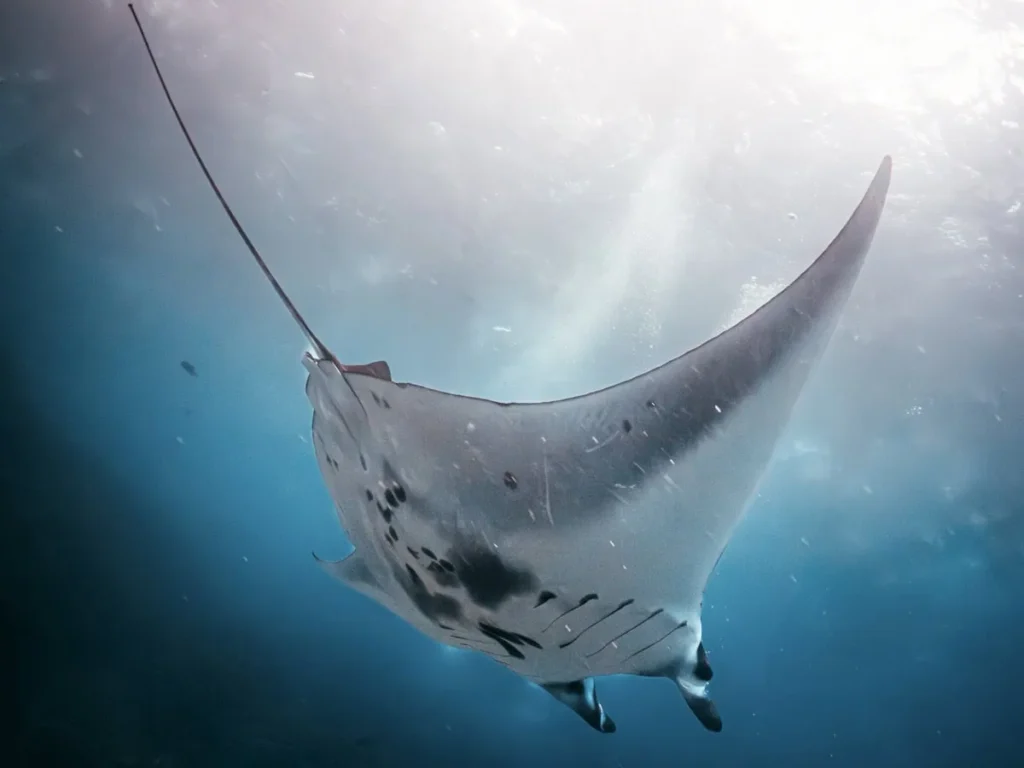
Manta Point is one of the most memorable dives you’ll ever do. The cold, plankton-rich water here is what brings mantas in year-round. And the moment you drop down and see the first manta gliding out of the blue, it feels absolutely magical and unreal.
We spent most of the dive just hovering near the cleaning station, watching them circle past again and again, close enough to see the tiny cleaner fish at work. It’s the kind of dive that makes you forget about the cold, the surge, and even your bottom time.
The site itself is shallow and spread out, with big coral bommies where the mantas come to be cleaned. You don’t move much here, just pick a spot, hover and wait. Some days they’re everywhere, other days you wait a bit longer. But when they finally sweep past, you can’t help but grin behind your reg.
Getting to Manta Point is a bit of a mission. It’s down on the south coast, and the boat ride can be rough when the swell’s up, but it’s worth every bump. If you’re diving Nusa Penida, this one’s non-negotiable.
My Tip: Bring a thicker wetsuit, the water can drop to 18°C. Try to resist the urge to swim toward the mantas, they’ll come close if you just wait.
02 – Crystal Bay
- Type: Sandy bay with a steep drop-off
- Depth: 5–40+ m
- Best For: Spotting mola molas (July–October)
- Marine Life: Mola mola, batfish, leaf scorpionfish, shrimp gobies, reef fish
- Conditions: Strong and sometimes unpredictable currents; sudden thermoclines can drop temps fast
Crystal Bay starts off calm and beautiful with soft corals, white sand, and plenty of reef life. It’s a lovely dive site, and an easy start, especially if it’s your first dive in Nusa Penida.
But as soon as you swim around the corner, everything changes. The water suddenly clears up and the temperature drops, sometimes by 5–6°C in seconds. That’s when you know you’ve hit the thermocline. Between July and October, this is the place to spot a mola mola, and your first encounter is something you will always remember.
We were at about 25 meters when a dark, round shape appeared from the deep. It was a mola mola – massive, awkward, and completely mesmerizing. This huge, weird-looking fish hung around 35 meters, just drifting in the blue and barely moving. We dropped down a few meters to get a better look and just stared in awe. Even after years of diving, seeing a mola mola is one of those moments that genuinely gives you chills.
But even without the mola mola, Crystal Bay is a stunning dive site with a dramatic reef, great visibility, big schools of fish, and that constant feeling that anything could appear from the blue.
My Tip: Wear a thicker wetsuit or a hooded vest during mola mola season, the water gets super cold.
03 – SD Point
- Type: Drift dive along a coral slope
- Depth: 5–25 m
- Best For: Easy, scenic drift diving
- Marine Life: Turtles, reef fish, schools of fusiliers, occasional eagle rays
- Conditions: Usually gentle to moderate current, can pick up quickly with the tide
SD Point is one of those dives that just feels effortless. You jump in, find your buoyancy, and the current does the rest. It’s a long, sloping reef covered in healthy coral and filled with life: bright table corals, sponges, and schools of fish everywhere.
I love dives like this. You don’t fight the water or check your compass every five minutes, you just breathe and enjoy what unfolds around you. We glided past turtles sleeping on the reef, schools of fusiliers flashing by in the light, and the occasional trevally darting in to hunt. The visibility here is usually fantastic, sometimes 30–40 meters, and when the sun cuts through the surface, it’s just stunning.
It’s an easy site, but the current can surprise you. Some sections pick up speed quickly, and before you know it, you’re flying. It’s super exciting and nothing to worry about. As long as you stay with your group and keep an eye on your depth, it’s pure fun.
My Tip: Stay streamlined and close to your buddy, and enjoy the ride.
04 – Toyapakeh
- Type: Reef and wall dive
- Depth: 5–40 m
- Best For: Coral, currents, and fish action
- Marine Life: Jackfish, sweetlips, turtles, nudibranchs, reef fish, occasional pelagics
- Conditions: Strong, changing currents — dive with experienced local guides
Toyapakeh is one of those dives that sticks with you. It’s vibrant, fast-moving, and packed with life — the kind of site that feels like something out of a documentary.
The dive at Toyapakeh starts just off the reef wall, and as soon as you drop down, you can feel the energy of the water. The current here is alive, strong enough to keep you moving, but not so much that you can’t enjoy what’s around you.
The reef is incredible: massive coral heads, bright soft corals, and schools of fish everywhere. It’s one of those places where you don’t know where to look first with a wall of jackfish, turtles cruising past, and nudibranchs hiding between corals.
I had one of those dives where everything just lined up: clear water, good current, and that perfect sense of controlled chaos. I remember looking around and thinking “this is what diving in Nusa Penida is all about”, it’s busy, colorful, and you can’t get enough of it. If the tide is right, Toyapakeh is easily one of the best dives in Bali.
But Toyapakeh can be unpredictable. The current changes direction fast, and sometimes it splits around the reef, which can scatter a group quickly. That’s why it’s one of those dives where you really want a good guide who knows the site.
What You’ll See Underwater
The underwater world around Nusa Penida is ridiculously alive. Every dive feels like you’re dropping into a different kind of ocean, sometimes calm and clear, sometimes wild and full of motion, but one thing’s constant: there’s life everywhere you look.
The Big Encounters: Mantas and Molas
Let’s start with the show-stealers. Manta rays are around all year, especially at Manta Point and Manta Bay. And seeing them up close never loses its magic. They sweep past in slow, deliberate motions, looping around the cleaning stations while you just float and watch.
Then, during the colder months from July to October, you might get lucky and meet a mola mola. These massive, flat ocean sunfish rise from the deep to be cleaned, usually hanging at around 25–30 meters, especially at Cristal Bay
You can also see turtles, reef sharks, and the occasional eagle ray cruising by.
Tiny Things Worth Slowing Down For
Nusa Penida has a lot happening on a smaller scale too. On one dive at SD Point, I spent almost ten minutes hovering over a patch of coral watching a frogfish shift its color to match the reef. They’re everywhere here if you look carefully, chubby little camouflage masters that blend in perfectly until they twitch.
You’ll also find nudibranchs, leaf scorpionfish, and pygmy seahorses hiding in the sea fans. It’s easy to miss them when you’re busy watching the blue for big stuff, but if you slow down, the reef here starts to come alive in a completely different way.
If you’re a macro lover (like me) and can’t get enough of nudies and shrimps, you should consider heading up to Bali’s macro heaven Amed. You’ll get calm, easy dives with critters everywhere.
Healthy Reefs & Natural Walls
There are no artificial reefs or wrecks to dive in Nusa Penida, just healthy reefs, gentle slopes, and breathtaking walls, and that’s part of its charm. The coral here is alive and thriving, with everything from massive table corals to soft sponges swaying in the current.
The visibility often hits 30 or even 40 meters, especially along the north coast, and when the light filters through the water, the whole reef lights up. Penida’s reefs feel wild and untouched. It’s the kind of diving that reminds you how vibrant the ocean can still be when it’s left alone.
If you’re into wreck diving, though, it’s worth heading up north to dive in Tulamben, home to Bali’s famous Liberty wreck and a few smaller ones nearby.
If You’re Snorkeling Instead
Even if you’re not diving, you can still see a lot of what makes Nusa Penida so special. Some of the island’s best reefs sit just below the surface, and you’ve got a real shot at seeing mantas while snorkeling.
I’ve shared my favorite spots, including tips on when to go in [my Nusa Penida snorkeling guide].

Best Time to Dive Nusa Penida
There is not one best time to dive Nusa Penida. The diving is honestly good all year. What changes throughout the year isn’t the visibility or the marine life, it’s the water temperature.
Penida has two very different seasons underwater, a warm one and a (freezing) cold one. Knowing which one you’re dropping into helps you prepare, especially if you get cold easily or you’re aiming for specific wildlife.
If you’re choosing your dates based on marine life:
- The best time to see mola molas: August to October, when the water is coldest.
- The best time to see mantas: May, when conditions at Manta dive sites are good and mating activity peaks.
Here’s what each seasons feels like when you’re actually in the water.
If you want a full breakdown by month, water temperature, and what you’re likely to see, I’ve put everything into a full guide on the best time to dive Nusa Penida.
Cold Season (June to October)
Cold season in Nusa Penida is the famous “mola mola season”. And yes, it’s cold – really cold for a tropical dive destination. Some days you drop into comfortable 24–25°C (75–77°F), other days you hit a thermocline and the temperature drops straight to 18°C (64°F) out of nowhere. If you’re diving around the south coast or in the channel, expect dramatic shifts.
Conditions in Cold Season
- South & channel sites: 18–25°C (64–77°F), with thermoclines hitting hard
- North & east sites: 22–26°C (72–79°F) and more stable
- Visibility: usually 20–30m+ on the north; can drop to around 10m in the south during swells
I personally freeze in Penida’s cold season. I usually wear a 5 mm plus a hooded vest and still complain, but the dives are worth it.
What You’ll See in Cold Season
This is the best time to see mola molas come up from the deep to visit the cleaning stations, especially when the water hits its coldest point between August and October.
You also get a higher chance of thresher sharks, wobbegong sharks, and sometimes dolphins on the boat ride. It’s the time when the ocean feels most alive, and every dive gives you the feeling that anything could show up.
Warm Season (November to May)
Once the water warms up to 26–29°C (79–84°F), Penida feels totally different with gentler currents, calmer surface, and top conditions at the manta sites. This is the classic tropical diving season you would expect when thinking of diving in Bali.
Conditions in warm season
- Water temps: 26–29°C (79–84°F)
- Visibility: generally 15–20m, sometimes more
- Manta sites: at their best with less swell, clearer water, and calmer entries
I am a freeze baby and still wear my 5mm wetsuit, but most divers are happy in a 3 mm, a shorty, or a Rash guard.
What You’ll See in warm season
Most of Nusa Penida’s marine life is not seasonal, so you can see almost everything except reliable mola molas. Mantas are great this time of the year, especially around May, when you sometimes see mating trains.
All the usual Penida highlights like turtles, bamboo sharks, trevallies, tuna, and nudis show up regardless of the season.
Cost of Diving in Nusa Penida
Diving in Nusa Penida isn’t cheap, but it’s fair for what you get. Boats, fuel, and logistics all cost more here than on the mainland. Still, once you drop below the surface, you’ll know it was worth it.
Prices don’t vary much between shops, but smaller local centers often offer a more personal experience and smaller groups, which makes a big difference in Penida’s currents.
Here’s what you can expect:
- Fun Dives – Most dive centers charge between IDR 700,000 and 900,000 per dive (€40–55 / $45–60) with full gear, guide, and boat included. A typical three-dive day costs around IDR 2 million (€115 / $130).
- Courses – Expect to pay around IDR 6–7 million (€345–400 / $390–450) for an Open Water course and IDR 5–6 million (€290–345 / $325–390) for Advanced course. That said, Penida’s strong currents make it better for divers who already have some experience. If you’re new, consider doing your course in Amed or Tulamben first, then head here for the fun dives.
- Nitrox – Most dive centers charge an extra IDR 70,000–100,000 per tank (€4–6 / $5–7).
- Equipment rental – A full set of rental gear costs around IDR 200,000–250,000 per dive (€12–15 / $13–16). Most dive centers include equipment in their dive prices. You can save around IDR 100,000–150,000 (€6–9 / $7–1 0)if you bring your own gear.
- Marine park fee – Nusa Penida’s marine park fee is IDR 100,000 per day (€6 / $6.50) and often not included in fun dive prices. For sites like Manta Point, some shops add a small fuel surcharge because of the longer boat ride.
- Dive Packages – You’ll often get a better rate for multi-day dive packages. Ask your dive center before you book. Low season (November–March) is when most dive shops offer the best deals, and some even bundle in accommodation discounts if you stay with them.
Dive Gear for Nusa Penida: Rent or Bring Your Own?
Most dive centers in Nusa Penida have good-quality gear, usually Aqualung, Scubapro, or Mares, and it’s generally well maintained. So if you don’t want to bring your own setup across Bali, renting scuba equipment is absolutely fine.
That said, I always bring my own gear. It’s heavier, but it just feels better to dive with equipment that fits the way I like it. My mask doesn’t leak, my reg breathes the way I expect, and my wetsuit actually fits. You’ll be dealing with currents here, so comfort really matters.
If you do decide to pack your own, focus on what makes the biggest difference:
- Fins: If you bring fins, make sure they have power for the current. I always bring my Mares Avanti Quattros, and they’ve never let me down.
- Wetsuit: Water temperatures can drop to around 18°C, so a 5 mm is ideal (go thicker, if you freeze like I do). Most dive centers have full suits as rentals, but your own will usually fit and insulate better.
- Mask & computer: Small, easy to pack, and worth having your own.
- SMB: Non-negotiable here, you’ll use it often.
So no, you don’t need to bring your own scuba gear, but if you dive often and have the space, it makes a difference. For me, it’s worth every extra kilo in my luggage.
If you’re not sure what’s worth bringing for diving in Nusa Penida, I’ve put together a full checklist in [my Nusa Penida dive packing guide].
Best Dive Centers in Nusa Penida
After a few trips to Nusa Penida, I’ve realised the dive operator you choose can completely change how you experience this island. The currents, the logistics, the boat rides, it all depends on how organised your dive shop is. I’ve tried a handful of centres here and swapped plenty of stories with other divers on the boats and beaches. These are the ones I’d happily book again:
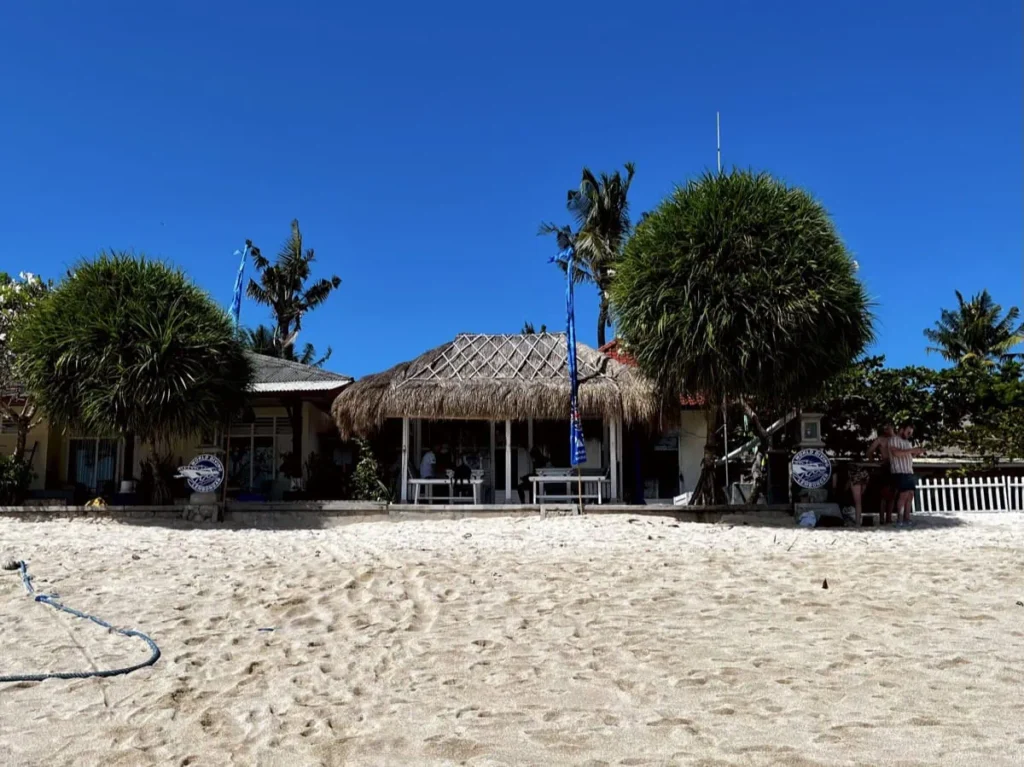
- Blue Corner Dive – Solid, professional, and calm even when the sea isn’t. Their guides actually check conditions before committing to a site, and they don’t crowd the mantas, a small thing that says a lot.
- Scuba Junkie Penida – My go-to when I want to dive non-stop. Three dives a day, slick logistics, and guides who read the currents like a book. I always felt safe, even when it got sporty.
- World Diving Lembongan – If you’re staying on Lembongan and still want Penida’s big sites, these are your people. I genuinely enjoyed diving with them – super nice crew, super professional, great service, and even greater dives.
- Bali Diving Academy – One of Bali’s originals, safe, experienced, and still genuinely excited about the diving here. Great choice for both fun dives and courses.
A Few Things I’ve Learned
If you’re booking with a dive center here, don’t just look at the price. In Penida, a “cheap” day can turn into a bad one fast if the conditions aren’t managed properly. What I always look for:
- Small groups (4 divers max per guide)
- Guides who carry SMBs and actually know how to use them
- Nitrox availability if you’re doing multiple deep dives
- Flexibility with sites, you want a shop that cancels or changes plans when conditions shift
- Crew that helps, not hurries — because surface intervals here are half the fun
The good shops make you feel like part of the team, not cargo to be dropped off and collected. That’s what separates a decent dive from one you’ll still be talking about on the ferry back to Bali.
Getting to Nusa Penida & Getting Around
You’ve got three main ways to reach Nusa Penida:
- the fast boats from Sanur
- the fast boats from Kusamba
- or the public ferry from Padangbai
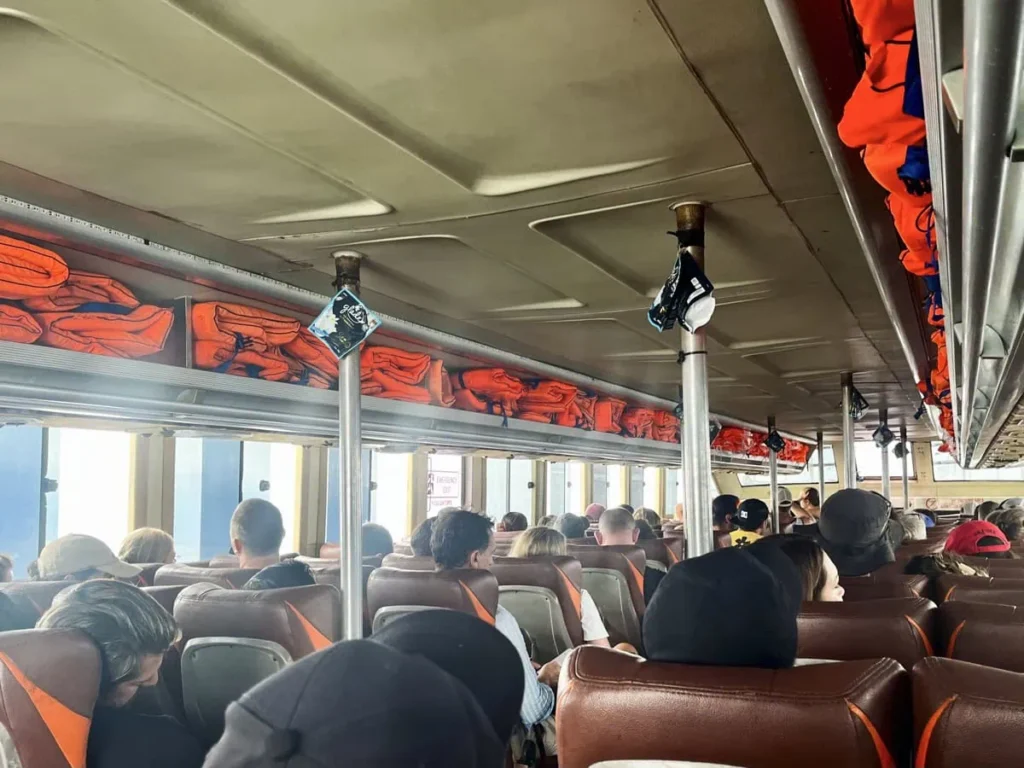
Sanur is the most popular and busiest route and takes around 40 minutes.If you’re staying on Bali’s east coast or coming over after diving Amed or Tulamben, boats from Padangbai or Kusamba make more sense.
There are plenty of fast-boat companies, but prices don’t differ much. Expect to pay around IDR 150,000–200,000 (€9–12 / $10–13) one way. Booking online in advance is almost always cheaper than buying at the pier, and in high season the boats fill up fast. If you want to avoid last-minute scrambling at the ticket window, book ahead.
The Padangbai ferry is the slowest at about 90 minutes, but it’s also the cheapest, with tickets costing IDR 48,000 (€2.80 / $3). It’s also the only option if you want to bring a scooter across.
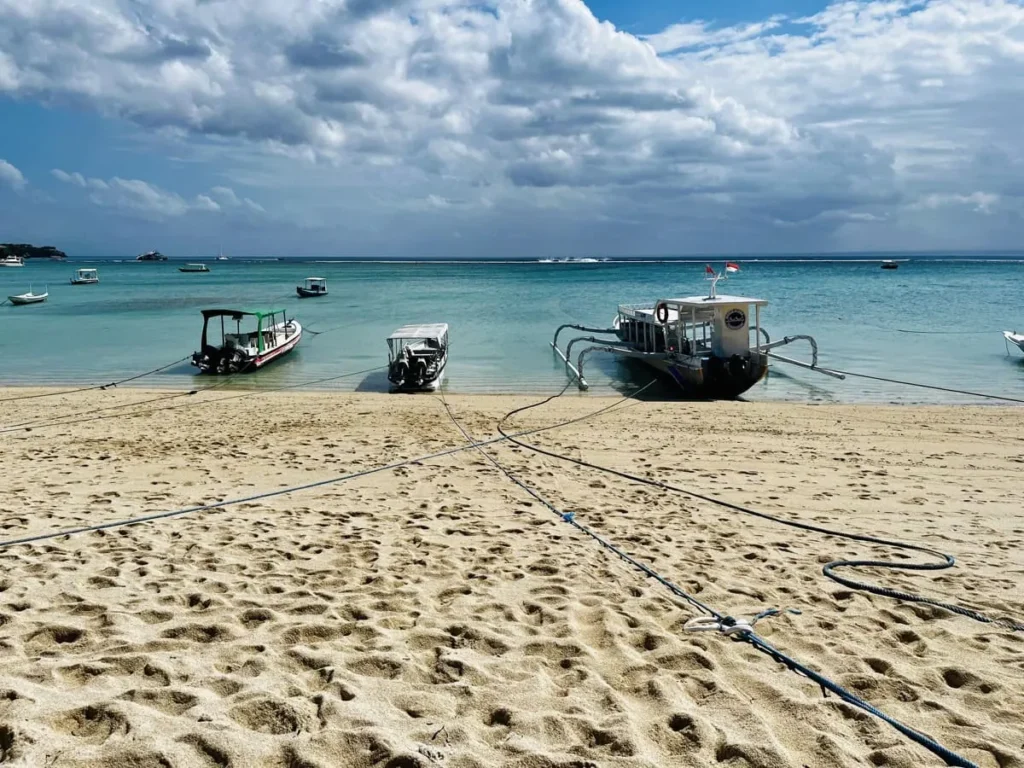
Most boats arrive at Banjar Nyuh (Toyapakeh) or Sampalan, which is perfect because you’re close to the main dive shops and accommodation areas.
If you’re still deciding which port to leave from, I explain all the options in my guide to getting to Nusa Penida.
I always book my tickets in advance via 12Go Asia and can highly recommend them. They are reliable, have an easy booking process, and save you a lot of time and hassle at the pier.
Getting Around the Island
You’ll arrive in either Toyapakeh or Banjar Nyuh, both close to most dive shops. Moving around Penida is easy enough, but you need to know what you’re getting into.
There’s no Grab or Gojek on the island. Locals agreed to keep them out, so you’ll be using private drivers, scooter rentals, or whatever your accommodation arranges.
- Car + driver: Expect around IDR 600,000–800,000 for a full day. Worth it if you’ve got dive gear or you’re exploring the west coast viewpoints.
- Scooter rental: On Penida, scooters usually cost IDR 100,000–150,000 per day, about 20–30% more than in Bali. Roads are steep, broken in spots, and dusty. Great if you’re confident — not great if you aren’t.
If you’re staying longer, it can actually be cheaper to rent a scooter on Bali for IDR 70,000–100,000 per day and bring it over on the ferry. You’ll save money fast and get a better-maintained bike.
As a diver, staying near Toyapakeh, Crystal Bay, or Sampalan keeps things simple and cuts down morning travel time.
Transport Tips
- Book morning boats, you’ll usually have a calmer sea and smoother ride.
- No Grab/Gojek, so confirm prices before you hop in with a driver.
- Scooters are fun, but skip them if you’re carrying heavy gear.
- The last boats to Bali usually leave around 4:30–5 p.m.
Where to Stay in Nusa Penida for Divers
From my time diving around Nusa Penida, I realised where you stay really affects your day-to-day ease (and how tired you feel when the boat picks you up at 6 a.m.). There are three zones I keep recommending to divers heading here:
Toyapakeh / Ped / North Coast
Best spot if you want zero stress on dive days.
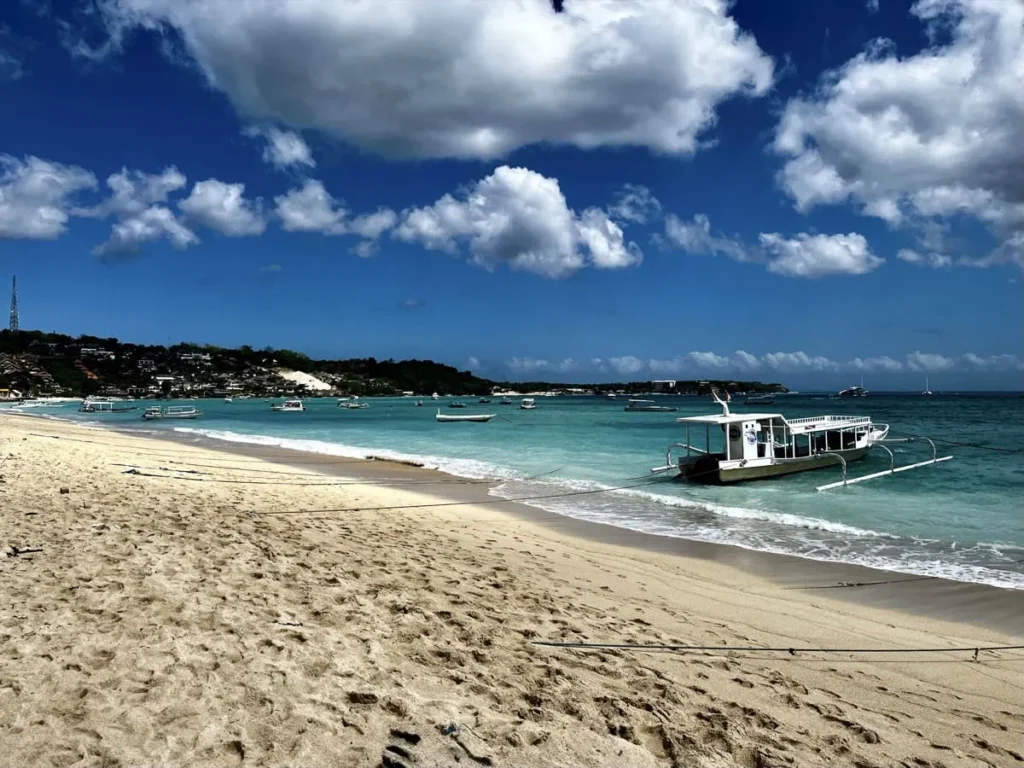
Toyapakeh is the unofficial “dive hub” of Nusa Penida. Most boats leave from here, so you’re usually a short walk or a quick pickup away from your dive center. The area itself isn’t glamorous, but it’s practical: you’ve got ATMs, minimarts, cafés, scooter rentals, and the island’s smoothest roads. After a long day underwater, it’s nice not to deal with a long drive back to your room.
If you’re diving several days in a row, this area just makes life easier.
Great Hotels in Toyapakeh
- Budget: Nusa Penida Pudak Nature Bungalow
- Mid-range: Mambo Beach Resort
- Luxury: Adiwana Warnakali Resort
Crystal Bay / West Coast
The place to be if you want sunsets and a quieter base.
Crystal Bay feels completely different from the north coast. Palms everywhere, a wide sandy beach, and one of the best sunsets on the island. It’s quieter, prettier, and has a bit of that “old Bali” feeling. You’re surrounded by nature, not traffic or shops.
The only downside: if your dive center is in Toyapakeh, expect a slightly longer morning ride. It’s not terrible, but it’s enough to matter on those early starts. If you like relaxing after dives, though, this is the place that feels like an actual holiday.
Great Hotels in Crystal Bay
- Budget: The Tinsi
- Mid-range: Puri Garden Penida
- Luxury: Atalaya Villas Nusa Penida
Batununggul / North-East Coast
Best for quiet stays without being too far away.
Batununggul is calmer and more spread-out than the north coast, but still close enough for easy dive shop pickups. The roads out here are smoother than the far-eastern side, and the area feels more local and less touristy. You’ll get wide ocean views, a slower pace, and cooler evenings thanks to the coastal breeze.
It’s a good balance: peaceful but not remote, and still practical for diving days.
Great Hotels in Batununggul
- Budget: Bamboo Bungalow Jungle View
- Mid-range: The Kanha Palace
- Luxury: Gara Gara Sea View
How I Decide Where to Stay
If I’m diving several days in a row, I stay in Toyapakeh. Being five minutes from the pier makes mornings so much easier. If I’m mixing diving with downtime, I stay in Crystal Bay — the sunsets alone are worth it. When I want something quieter and more local without being too far, Batununggul works really well.
If you’re still deciding which area fits your dive plan best, have a look at my guide to where to stay in Nusa Penida, it lays out all the pros and cons.
Best Non-Diving Activities in Nusa Penida
Even if you’re here mainly for the diving, it’s worth taking a dry day to see a few of Penida’s famous spots. The island is rugged and beautiful, and some of the views honestly feel unreal. Just be ready for bumpy roads, stairs, and a lot of sun — it’s part of the Penida experience.
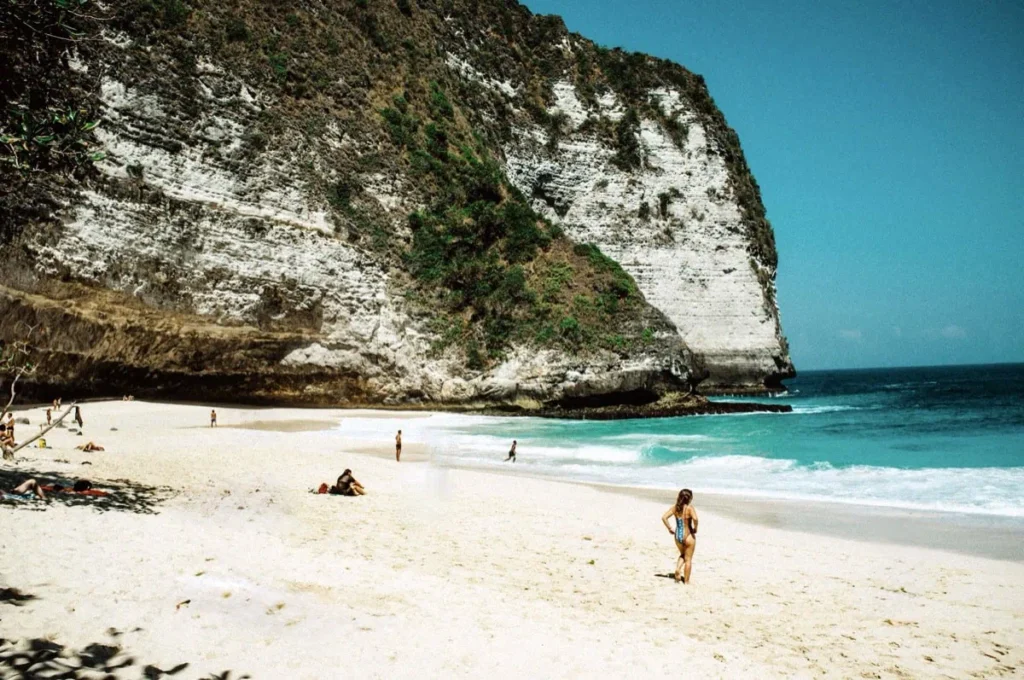
Kelingking Beach
This is the classic T-rex viewpoint you’ve seen all over Instagram, and it’s still impressive even after the hundredth photo. Go early in the morning if you want it quiet, because by 10 a.m. the tour vans start rolling in.
The hike down is steep, hot, and harder than it looks. I always tell people: only go down if you’re sure you want to come back up. The view from the top is more than enough.
Broken Beach & Angel’s Billabong
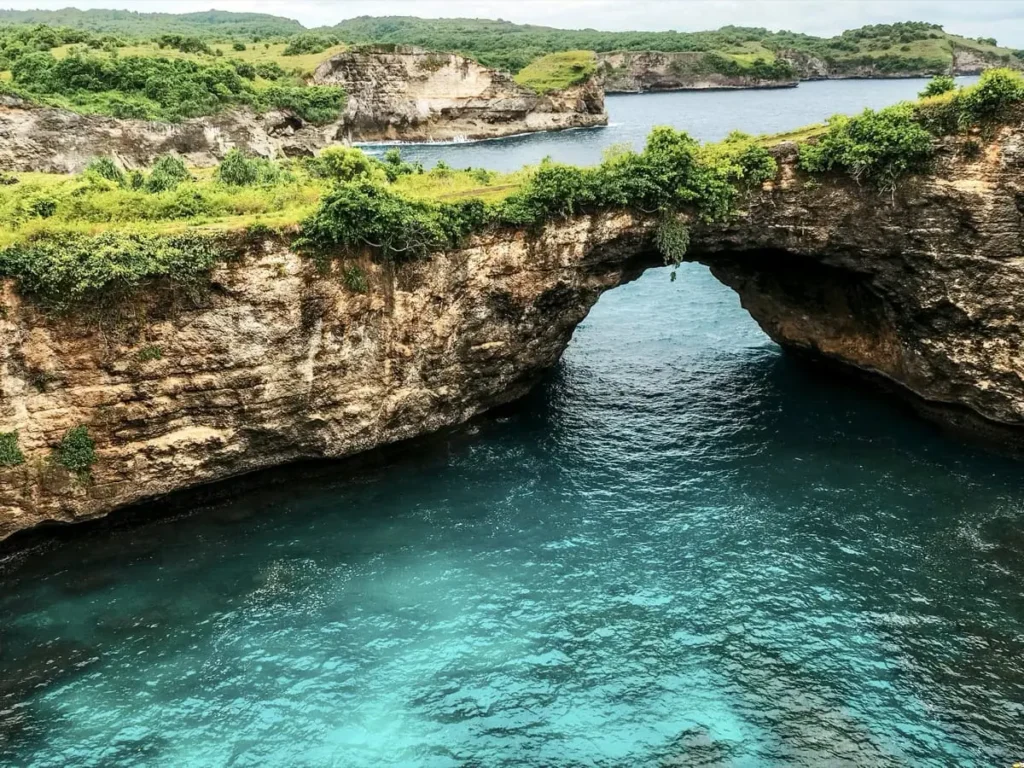
These two are next to each other, so it makes sense to combine them into one stop. Broken Beach has that huge natural arch with turquoise water swirling underneath, and Angel’s Billabong is a natural infinity pool carved into the rock.
Go at low tide if you want calmer conditions, and don’t swim here — the waves can be brutal. It’s a great spot for photos and a slow wander, but stick to the safe areas.
Tembeling Natural Pools & Forest
Tembeling is one of those places that still feels a bit hidden. You get a long, winding ride through the forest, then a short walk that suddenly opens up to these crystal-clear natural pools tucked under huge overhanging cliffs. It’s cool, shaded, quiet — the kind of spot where you actually want to sit for a while instead of rushing to the next viewpoint.
The pools are perfect for a quick dip after a morning of diving, and if you follow the path down a little further, you end up at a tiny beach with big waves and dramatic rock formations. It’s much calmer and more peaceful than the big-name spots.
Temples & Viewpoints
If you want something calmer, visit Pura Goa Giri Putri, a temple hidden inside a giant cave. It’s a bit surreal walking into a small opening in the rock and finding this huge underground hall.
You can also stop at Bukit Teletubbies for wide, rolling hills. It’s a nice break from cliffs and crowds, especially at sunrise.
For a full breakdown of what’s worth seeing on dry days, have a look at my guide to the best things to do in Nusa Penida.
Essential Safety Tips for Diving in Nusa Penida
Nusa Penida is an incredible place to dive, but it’s also an island with strong currents, bumpy roads and limited medical facilities. A little preparation makes everything smoother and lets you enjoy the diving without worrying about the “what ifs.”
Dive Insurance
Standard travel insurance is essential but not enough if you plan to dive. Make sure you’ve got proper dive coverage before you start your trip. I work in a hyperbaric chamber and deal with dive-related injuries all the time, so I’m pretty careful about the insurance I choose.
These are the insurance providers I trust when it comes to diving:
- DAN (Divers Alert Network) – my personal go-to
- Dive Assure
- Dive Assist
Nearest Hyperbaric Chambers
There’s no chamber on Nusa Penida, so if something serious happens, you’ll be taken back to Bali. The two closest chambers are:
- Kasih Ibu Hospital Gianyar – closest to the eastern dive areas like Padang Bai and Amed.
- Sanglah General Hospital Denpasar – Bali’s biggest emergency hospital, near the airport.
Your dive center will have oxygen on board and a proper emergency plan, but having the basics in your head never hurts, especially on an island with currents like Penida’s.
Currents & Drift Diving
Penida’s currents are part of what makes the marine life so good, but they’re also not to be underestimated. I’ve had dives here that started lazy and turned fast within minutes.
Listen to your briefing, follow your guide and don’t fight the current — drift diving is about going with the flow, literally. If something feels off, signal early.
Boat Safety
Pick dive centers that take boat safety seriously. You want oxygen, radios, life jackets, and a crew that isn’t shy about calling off a dive if the swell picks up. Penida has days where conditions change quickly, and good operators adapt instead of pushing ahead for the schedule.
Marine Conservation
Penida’s reefs are in great shape, it’s on all of us to keep them that way.
- Use reef-safe sunscreen or wear a rash guard.
- Keep your fins off the coral, the slopes here make it easier than it sounds to accidentally kick something.
- Don’t touch mantas or try to get closer for a photo; they come to you if they want to.
- Take nothing but photos, no shells, no coral, no sand “souvenirs.”
Little habits make a big difference, especially on a heavily visited island like Nusa Penida.
FAQ: Diving in Nusa Penida
Get More Nusa Penida Tips to Help You Plan
- Start with my complete guide to diving in Nusa Penida, it covers conditions, currents, and everything you should know before going.
- For a closer look at the underwater highlights, my breakdown of the best dive sites in Nusa Penida walks you through each spot and what to expect.
- Not diving every day? I’ve also put together a guide to snorkeling in Nusa Penida, with the safest sites, when to go, and how to avoid the crowds.
- And for a dry day, check out my best things to do in Nusa Penida covering beaches, viewpoints, and the easy spots worth checking out.
- And if you’re planning a longer dive trip around the island, don’t miss my full breakdown of the best places to dive in Bali.
