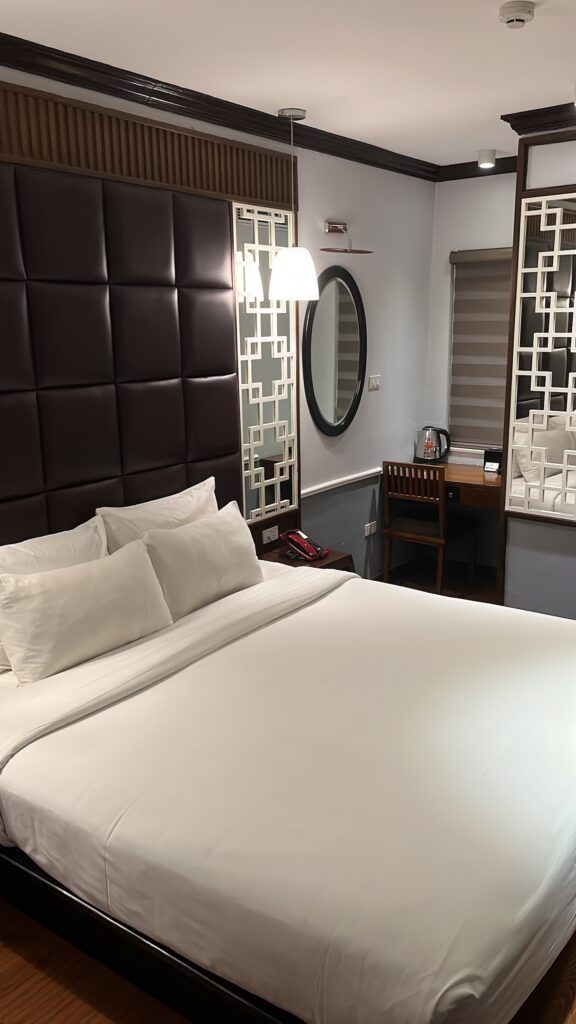
From the early morning hours until late in the evening, Hanoi’s Old Quarter is buzzing with life. Asian friendliness blends with delicious street food, chaotic traffic, and cultural diversity at every turn.
I spent a week in this diverse city and fell in love with its unique atmosphere from the very first moment. I’m sure you’ll feel the same way!
In this blog post, you’ll discover the most beautiful corners of Hanoi’s Old Quarter, where to find the best street food, and which attractions are truly worth seeing. Additionally, I’ll share some tips for your stay in Hanoi’s Old Quarter, so you can make the most of your time in this charming neighborhood.
01 – Hanoi’s Old Quarter: An Overview
Hanoi stands as one of the world’s oldest capitals. During the 13th century Ly Dynasty, the Old Quarter was established as the trading hub of Hanoi and has remained the heart and soul of the city ever since.
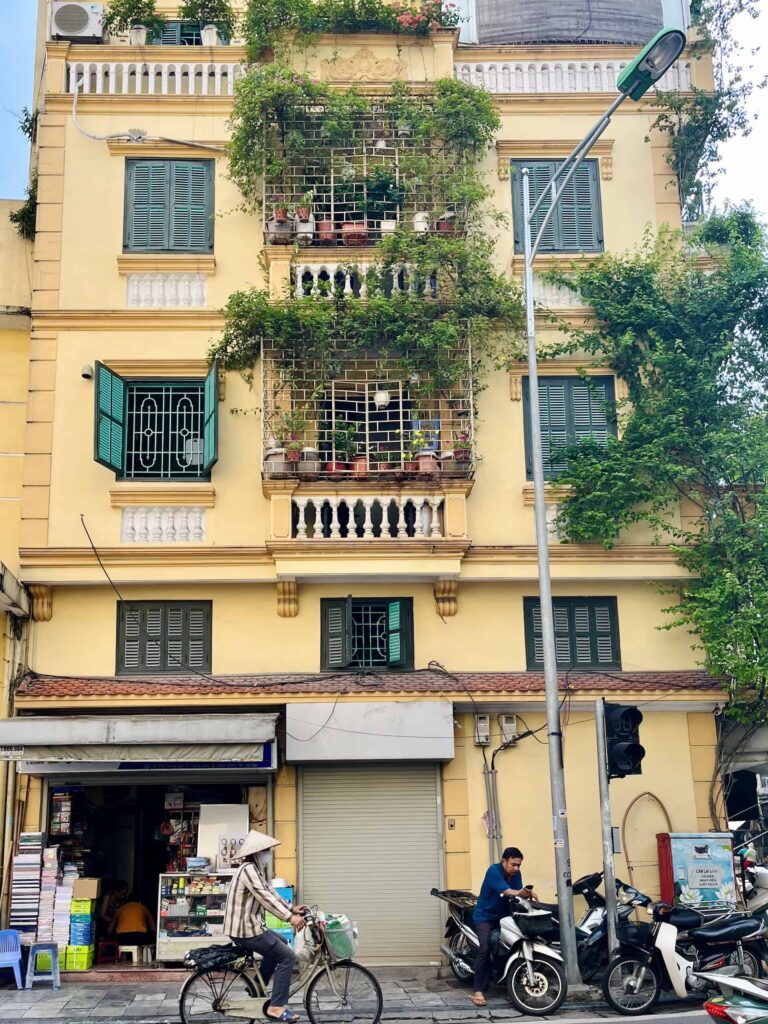
During this time, streets in the Old Quarter specialized in the trade of certain products, and many continue this tradition today. In the narrow lanes of this ancient quarter, slender, deep houses stand side by side – a relic of 19th-century taxation based on street-front width. Even my hotel was only as wide as my hotel room.
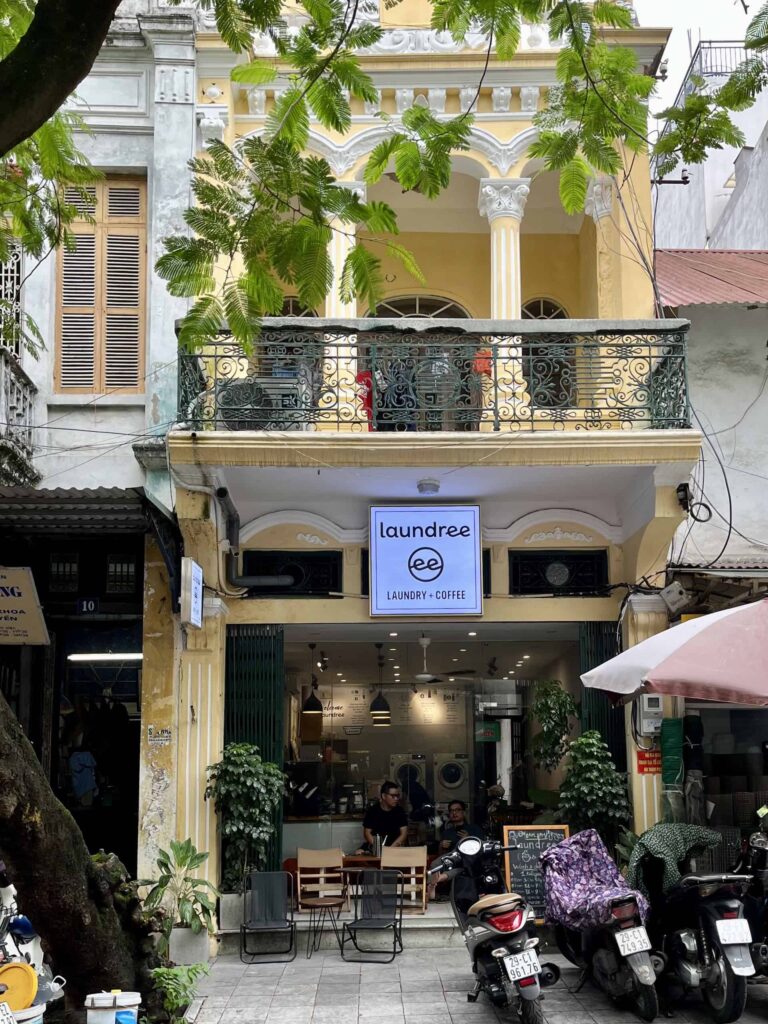
The architecture in the Old Quarter reflects a blend of French colonial and Vietnamese influences, featuring colorful facades, ornate balconies, and playful details. Absolutely gorgeous! This unique architectural mix, surrounded by numerous trees and the chaotic traffic in the narrow streets, creates a unique urban jungle.
02 – Must-See Spots in Hanoi’s Old Quarter
The 36 Streets of the Old Quarter
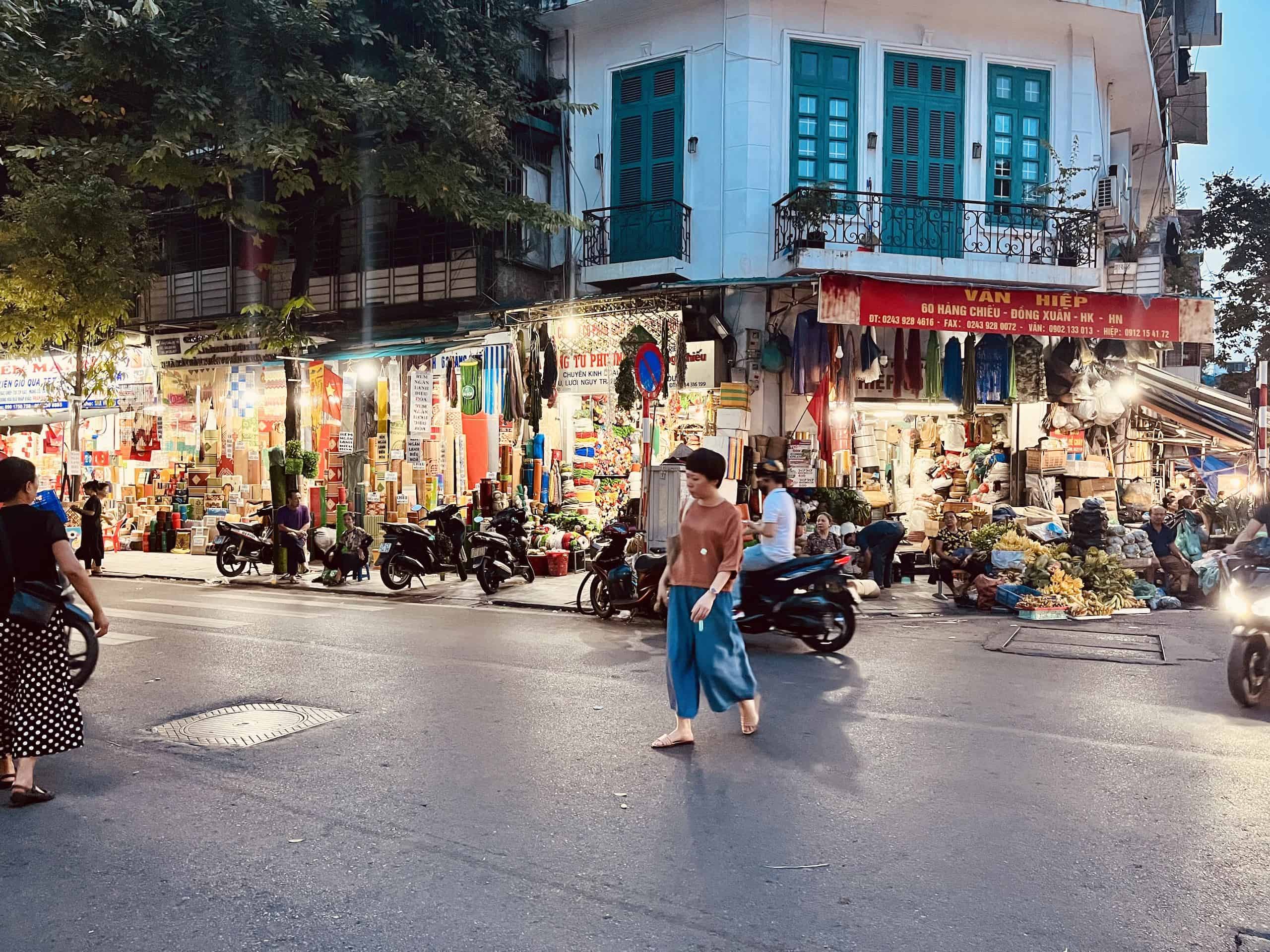
Hanoi’s Old Quarter consists of 36 streets, named after the products and services originally available there. This tradition continues in many streets, where respective products are still traded today. For example, Hang Bac Street is known for silver, Han Ma Street for paper products, and Han Gai Street for silk.
My favorite activity in the Old Quarter is strolling through the streets and discovering the different corners of the area. Each street here has its own unique vibe.
In the street of my hotel, Lan Ong Street, herbal medicine is still traded today – the air is filled with the delightful scent of anise and other herbs as soon as I step outside. In the next street, bamboo is traded, and meter-long bamboo poles lean against the walls of the houses.
Among clothing, jewelry, bamboo, and kitchen utensils, I always come across corners that are new and different, exuding their unique charm. But it’s not just everyday items you find in Hanoi’s Old Quarter, there’s also a wide selection of souvenirs and gifts.
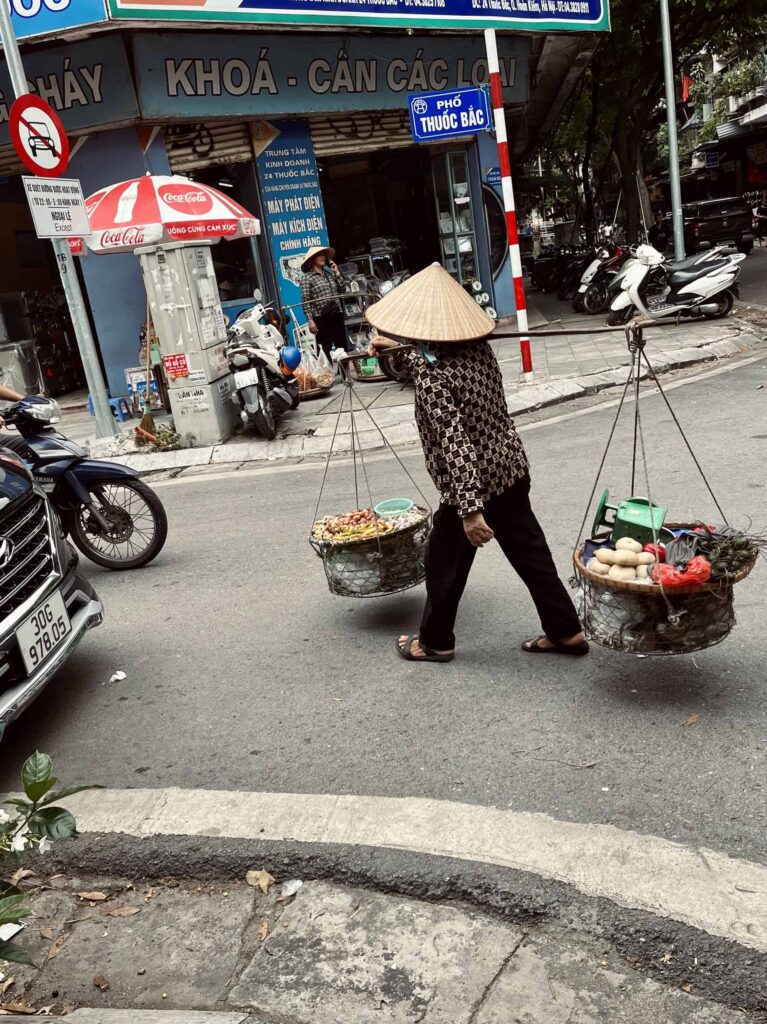
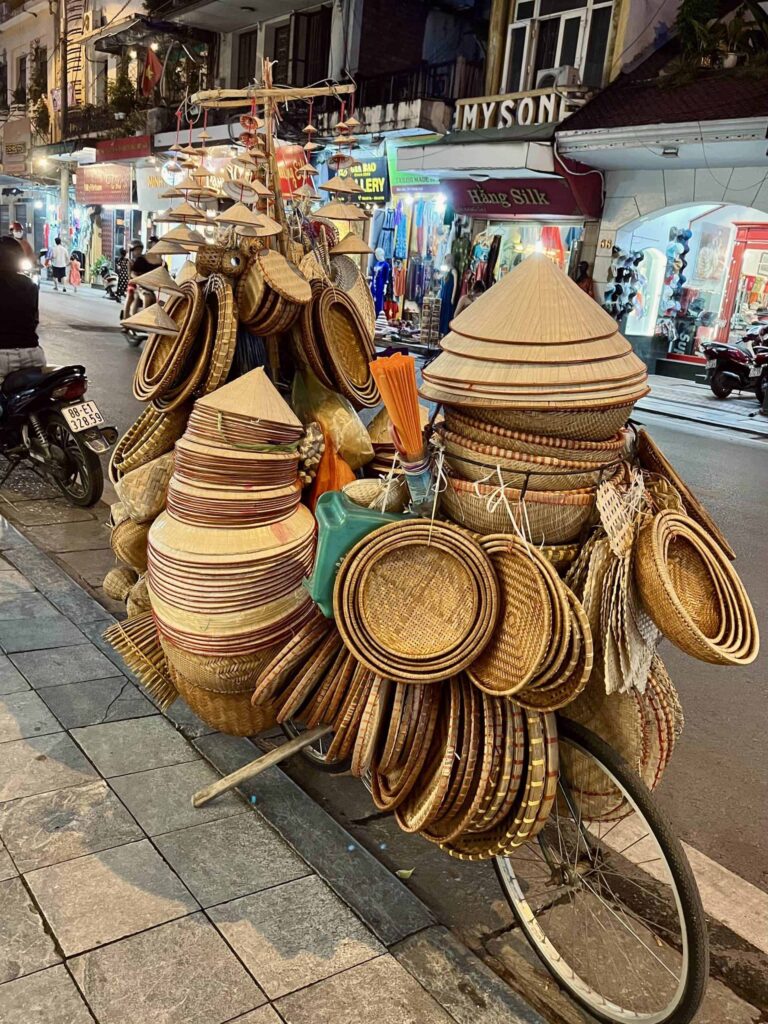
In addition to small shops with handmade textiles, ceramics, art, Vietnamese decorations, or typical conical hats, you’ll also meet traditional street vendors carrying their goods with a long pole on their shoulders.
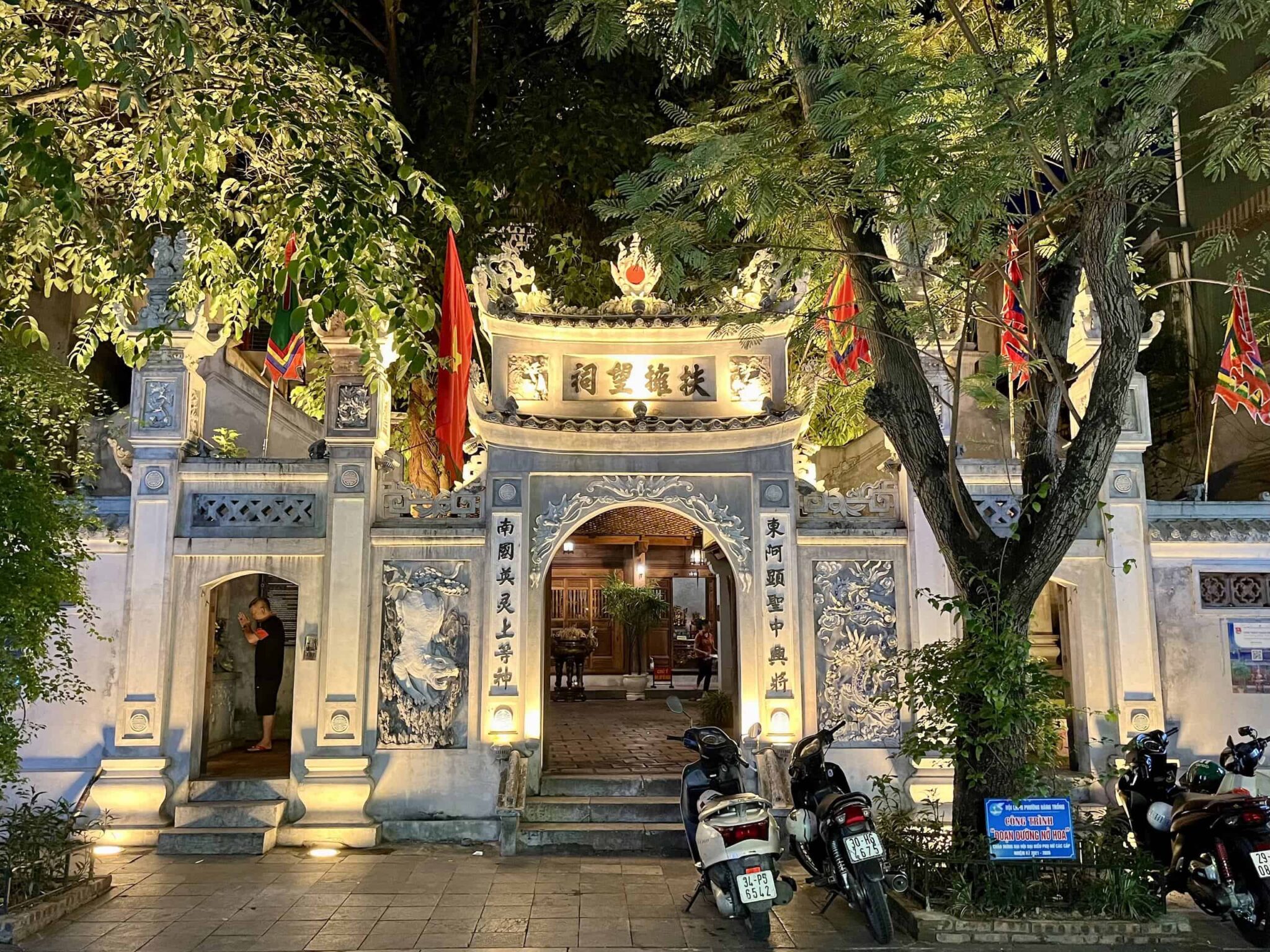
Amidst the hustle and bustle of merchants, I often discover historical buildings. The Old Quarter is home to various temples and pagodas, providing insights into Hanoi’s spiritual heritage.
Hoan Kiem Lake
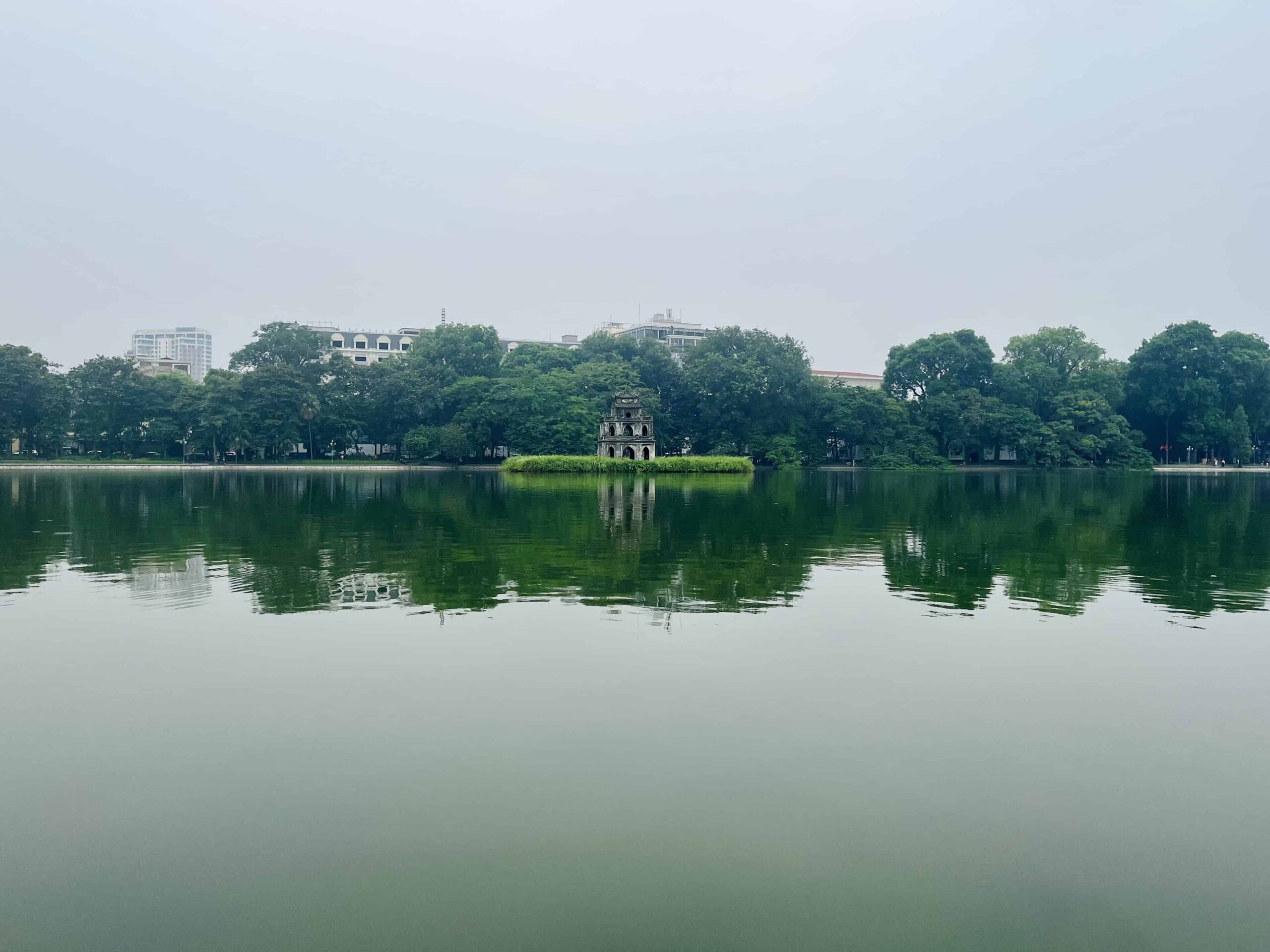
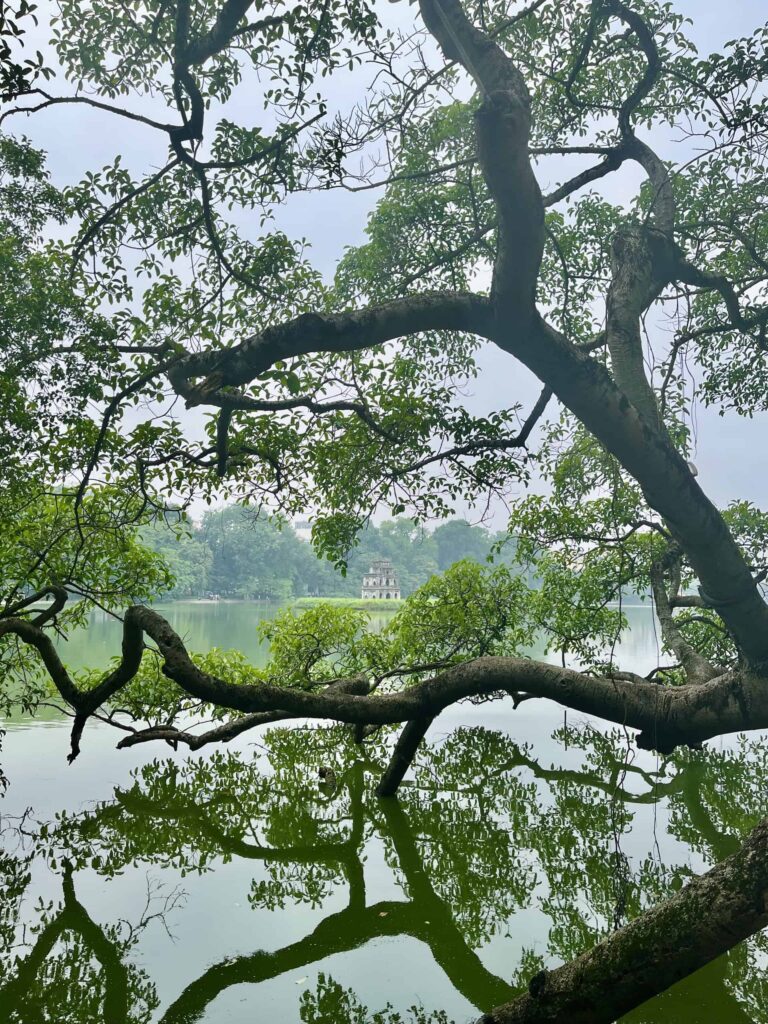
The Hoan Kiem Lake (also known as Sword Lake) is located at the southern end of the Old Quarter and is one of Hanoi’s most symbolic landmarks. The name “Hoan Kiem” translates to “Lake of the Returned Sword” and is associated with a legend involving Emperor Ly Thai To and a magical sword.
The lake not only holds historical and cultural significance for Hanoi but also serves as an oasis amid the chaotic city.
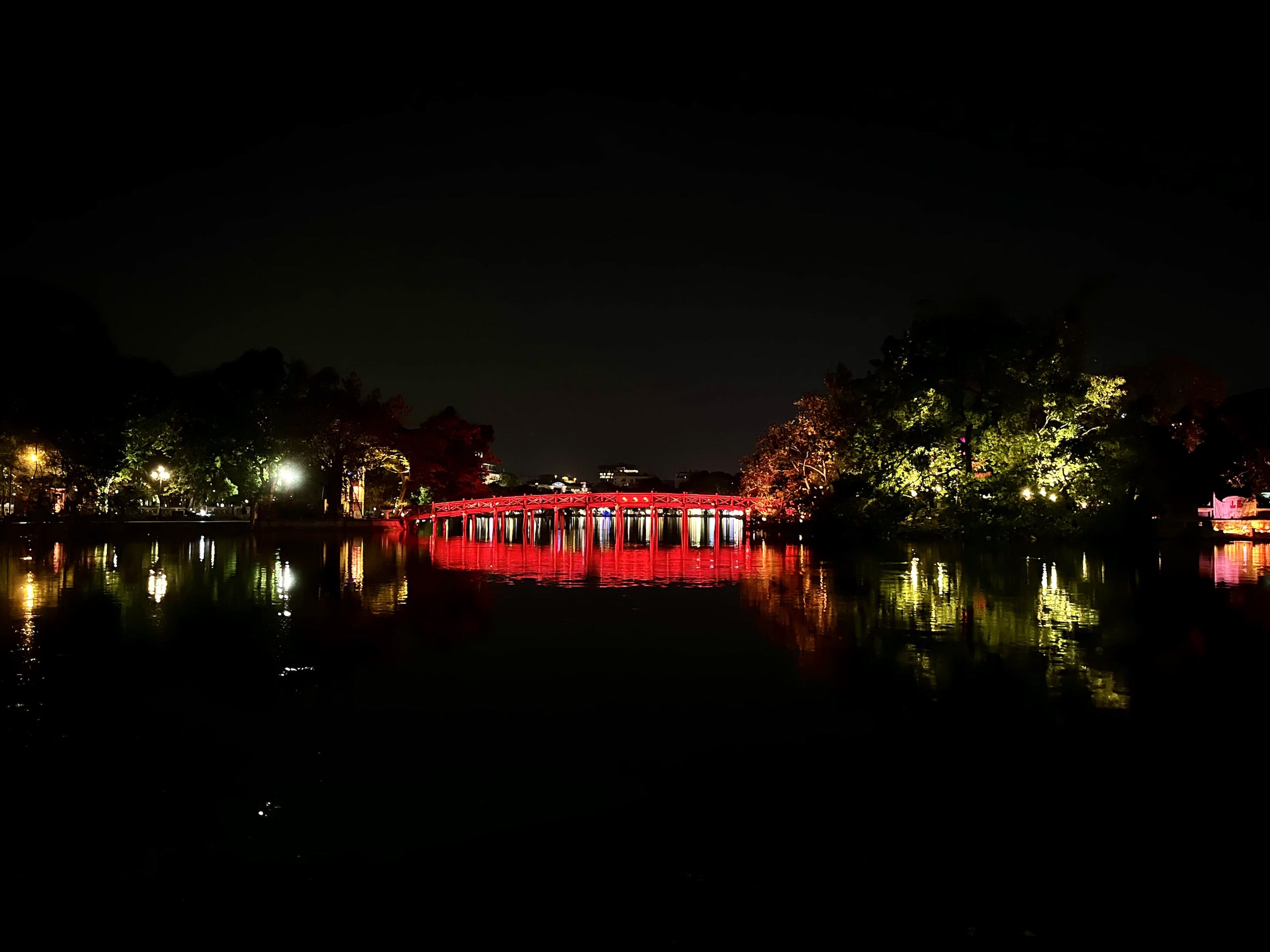
On a small island in the northern part of the lake you’ll find the Jade Mountain Temple (Ngoc Son Temple). To reach the temple, you have to cross the picturesque red Huc Bridge. I only admired the temple from the outside, but the red bridge adds a lot of charm to the whole scene.
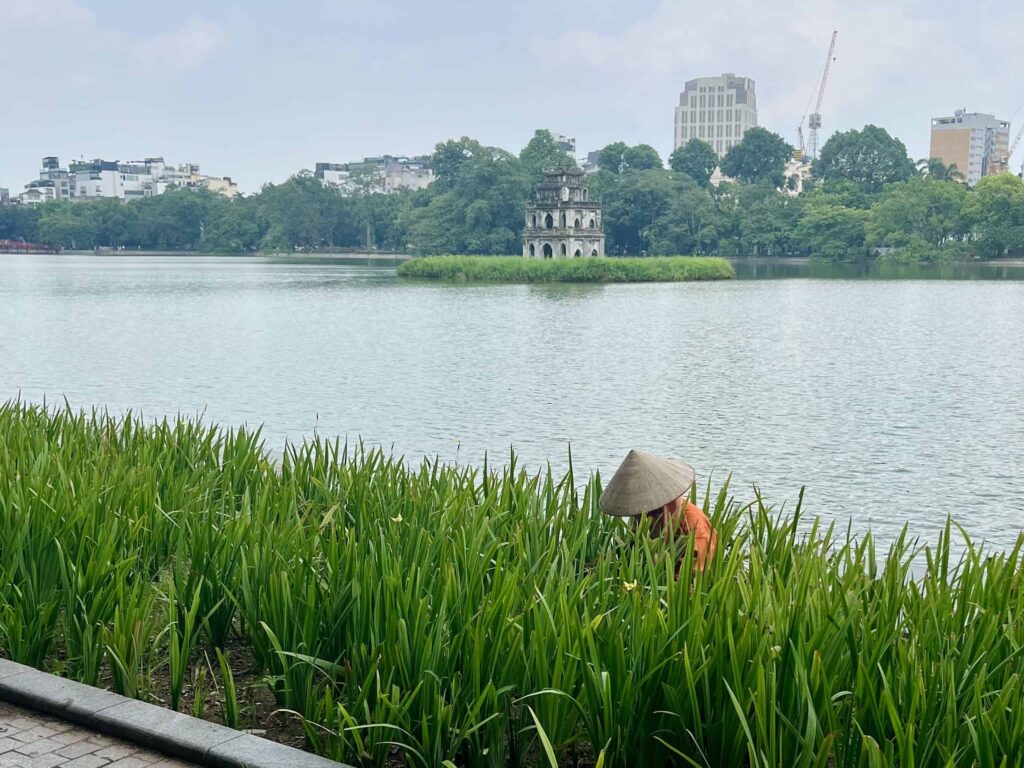
In the middle of the lake stands Tháp Rùa, the Turtle Tower. According to legend, a golden turtle brought the sword back to the lake. There’s no bridge to the Turtle Tower, you can only admire it from the shore.
I visited this lake almost every day and couldn’t get enough of it. The path around the lake is well-maintained and surrounded by beautiful plants and flowers. Strolling along here is the perfect counterbalance to the busy city.
But my favorite time at Hoan Kiem Lake is in the evening. The promenade reflects in the calm water, and the red illuminated Huc Bridge casts its magical spell upon you.
Hanoi Train Street
The Hanoi Train Street is undoubtedly one of the most well-known and unconventional attractions in Hanoi.
The tracks on the street date back to the colonial era. Over time, houses were gradually built along the street, and the community began to conduct their daily lives beside and on the tracks.
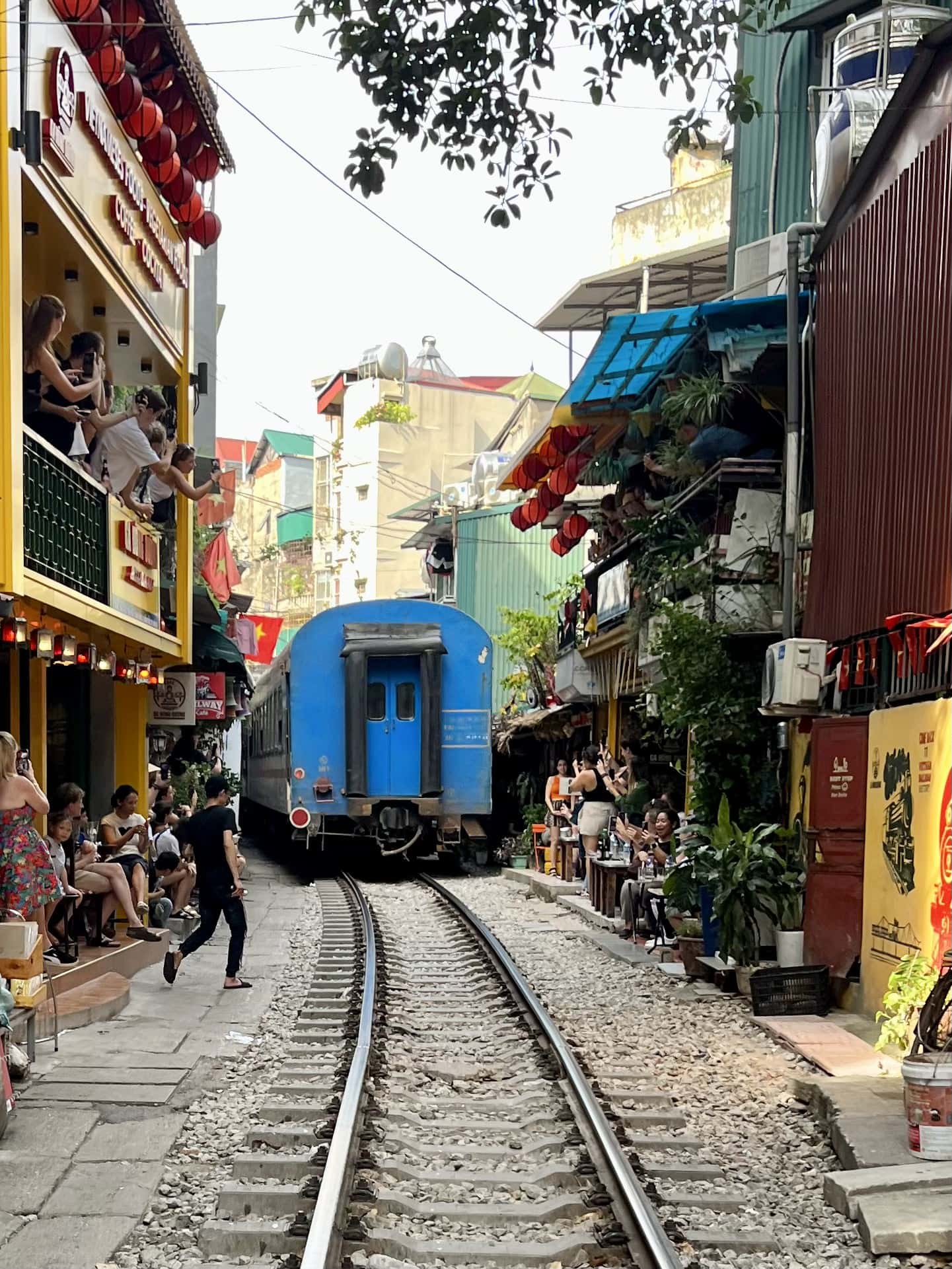
Even today, there’s a lively atmosphere on the tracks – you can see locals trade, cook, and play. When a train approaches, furniture and goods are swiftly brought indoors, and the blue train weaves through the narrow alley with just a few centimeters of clearance from the house walls.
Access for tourists to Train Street is now heavily restricted for safety reasons and monitored by the police. If you want to experience firsthand how the train navigates through the narrow street, it’s best to secure a spot in one of the cafes along Train Street in advance.
According to the official schedule for 2024, you can see the train passing Train Street at the following times:
- Weekdays: 7:00 PM, 7:45 PM, 8:30 PM, 10:00 PM
- Weekends: 9:15 AM, 11:20 AM, 3:20 PM, 5:30 PM, 6:00 PM, 7:00 PM, 7:45 PM, 8:30 PM, 9:00 PM, 11:00 PM
However, don’t rely 100% on the schedule and plan ample time; trains in Asia are rarely punctual.
I initially wanted to see the street itself but happened to arrive exactly when everything was being prepared for an incoming train. Like this, I got to witness the chaotic putting away – blocking off – and restoring process live. An unforgettable experience!
Night Market
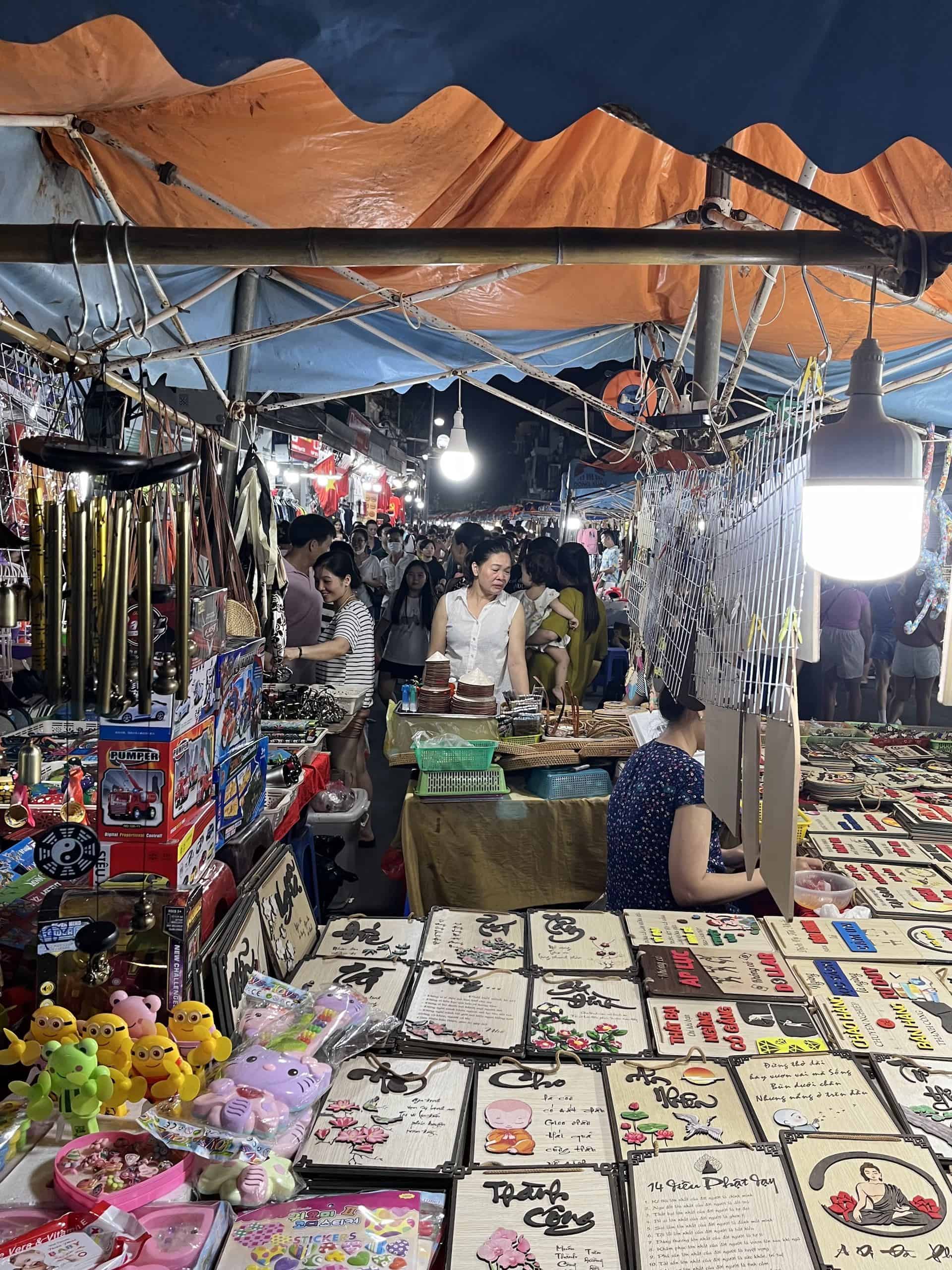
The Night Market in the Old Quarter takes place every weekend and is open on Friday, Saturday, and Sunday from around 7:00 PM until midnight. Here, you can find just about everything your heart desires—clothing, shoes, handbags, and jewelry, as well as various traditional crafts and souvenirs.
The Night Market starts at the northern end of Hoan Kiem Lake (at the chaotic roundabout) and stretches from Hang Dao Street northward to Hang Duong Street. During the Night Market, these streets transform into pedestrian zones, making the traffic in the surrounding areas even more chaotic.
I loved this Night Market! What sets it apart for me is its authenticity. It’s not just about the typical fake Adidas, Gucci, etc products that unfortunately dominate many other night markets in Southeast Asia. Here, you’ll also find locals shopping at the stalls. Of course, the Night Market is also a hotspot for authentic street food.
Additionally, Hanoi’s Old Quarter is super charming in the evening. The streets are illuminated with fairy lights and paper lanterns, creating a lively and magical atmosphere.


Street Food
Street food is an essential part of daily life in Hanoi. Many Vietnamese families don’t cook at home. Instead, they gather around small plastic tables with stools next to street food stalls on the roadside for a communal meal.
In Hanoi’s Old Quarter, you’ll find a huge selection of street food. Here are some must-try dishes:
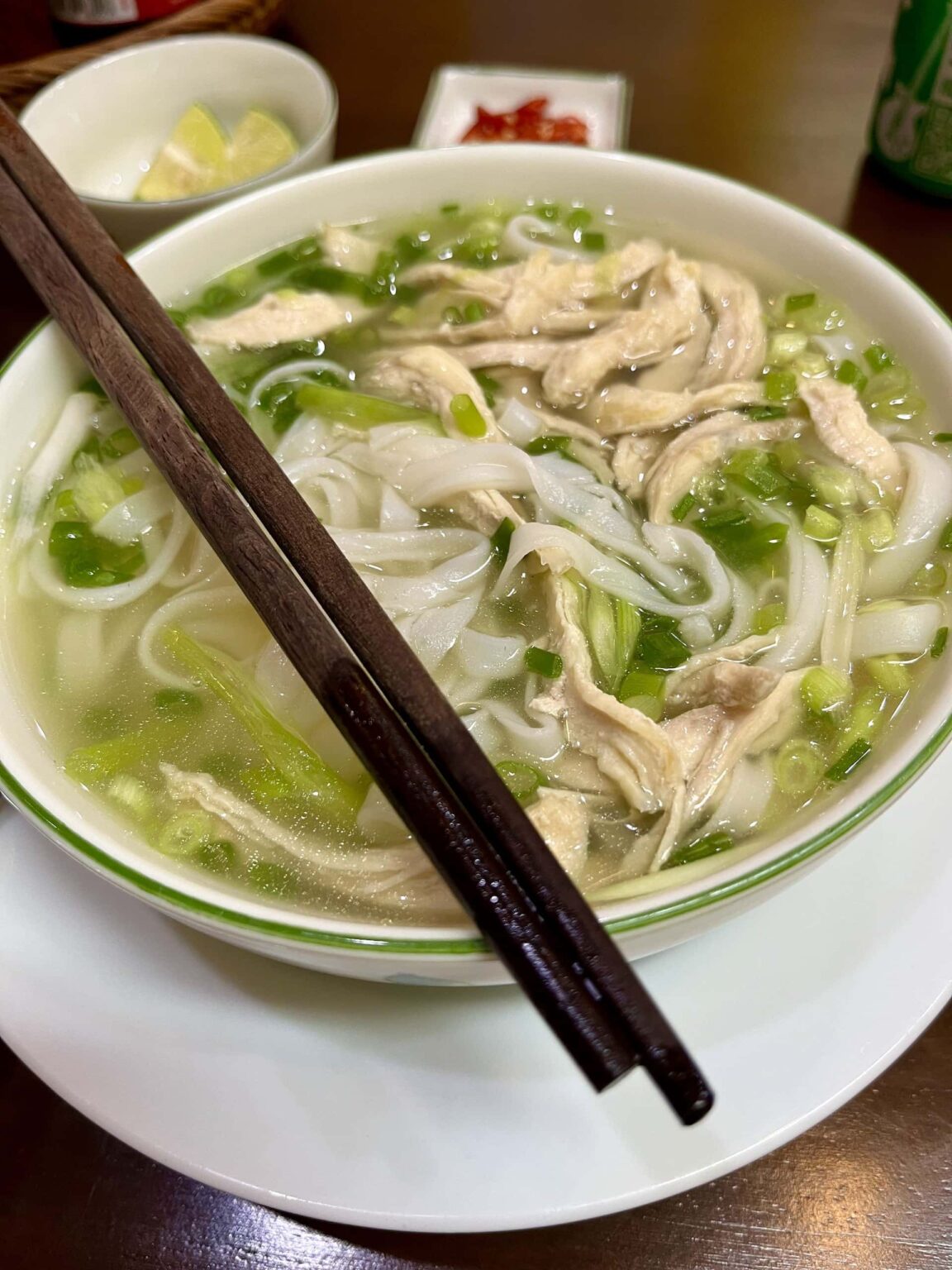
Pho – the most famous Vietnamese dish, a delicious noodle soup with chicken (Pho Ga) or beef (Pho Bo), herbs, chili, and lime. You can find this traditional soup on almost every corner of Hanoi’s Old Quarter. As a noodle soup enthusiast, I had a bowl of Pho every single day.
There’s also a “dry” version of Pho without soup (similar to the Japanese noodle soup Ramen, which also comes with or without soup). This variation is quite different but equally delicious, you should definitely try both.
You can find the best Pho at Pho Tron, a small street-side eatery that only serves food in the evening. The small tables with the typical blue plastic stools on the sidewalk quickly fill up. If you don’t arrive early, you might have to wait a few minutes, but a spot usually opens up quickly.
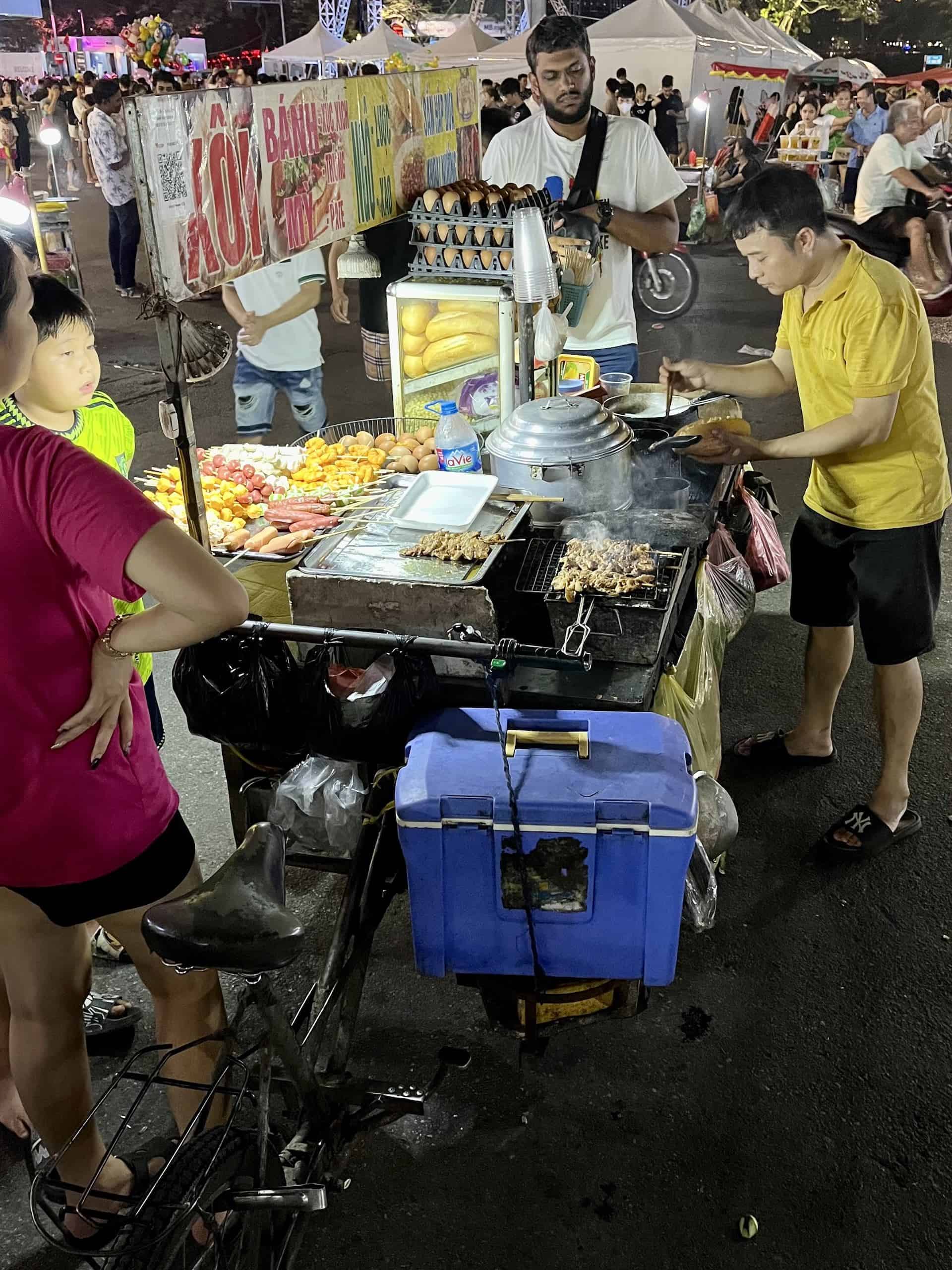
Banh Mi – another Vietnamese specialty and equally delicious. It’s a sandwich filled with grilled meat, pate, pickled vegetables, herbs, and a tasty sauce. Like many things in Vietnam, the cuisine is influenced by French colonial times as well. I haven’t found such good baguettes anywhere else in Asia.
You’ll get the best Banh Mi at Bahn Mi Paté. It’s prepared fresh right in front of you, and you can choose from different ingredients.

Vietnamese Coffee Culture
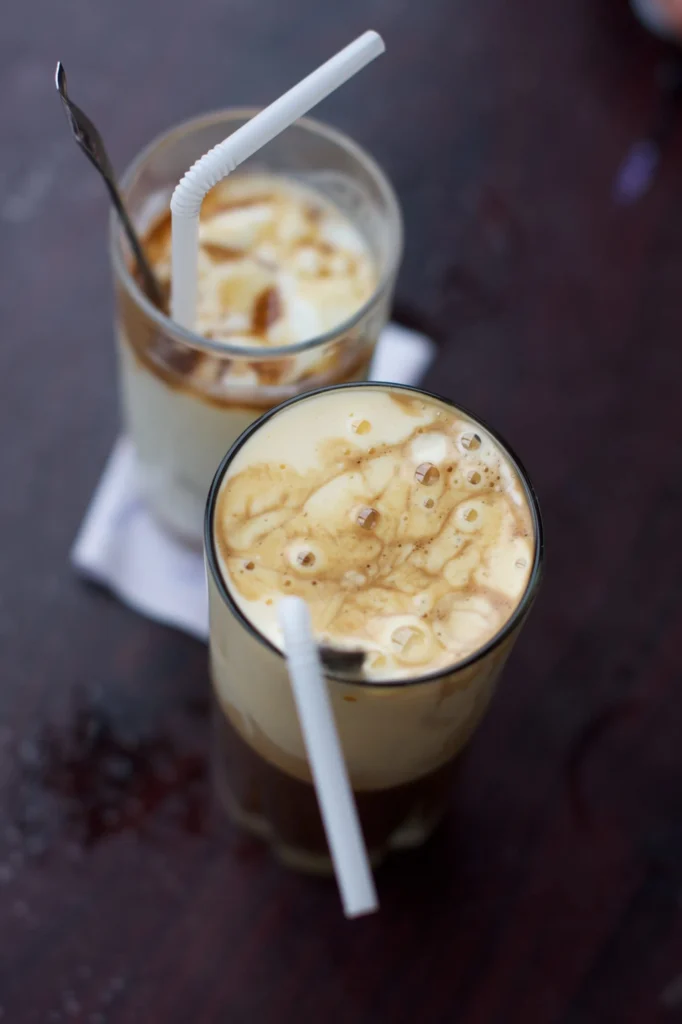
Egg Coffee – Hanoi’s coffee specialty that every coffee lover must try. Thanks to the French influence, Hanoi has a fantastic coffee culture with delightful coffee and cozy cafes. For the traditional Egg Coffee, egg yolk is whisked with condensed milk and then mixed with coffee. The result is a sweet, creamy coffee that you probably haven’t tasted like this before.
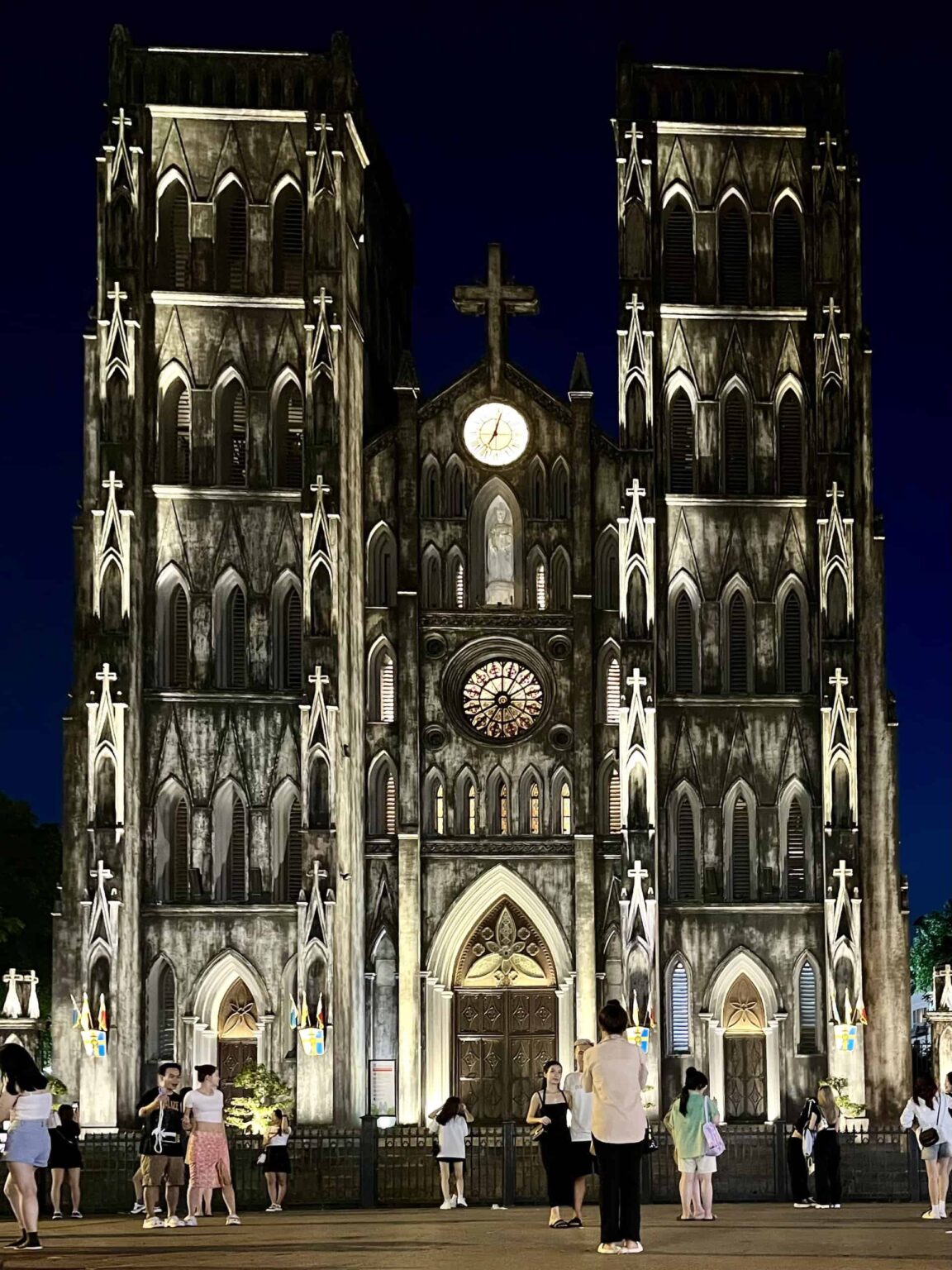
St. Joseph’s Cathedral
Yes, you read correctly. Hanoi’s Old Quarter is home to a cathedral. It was built during the French colonial era to accommodate the then-growing Catholic community. Even today, it is still used by Hanoi’s Catholic community.
I visited the cathedral in the evening when it is beautifully illuminated. It’s a bit surreal to admire a cathedral in Asia that bears a strong resemblance to the French Notre Dame. However, it is definitely worth a visit!
Long Bien Bridge
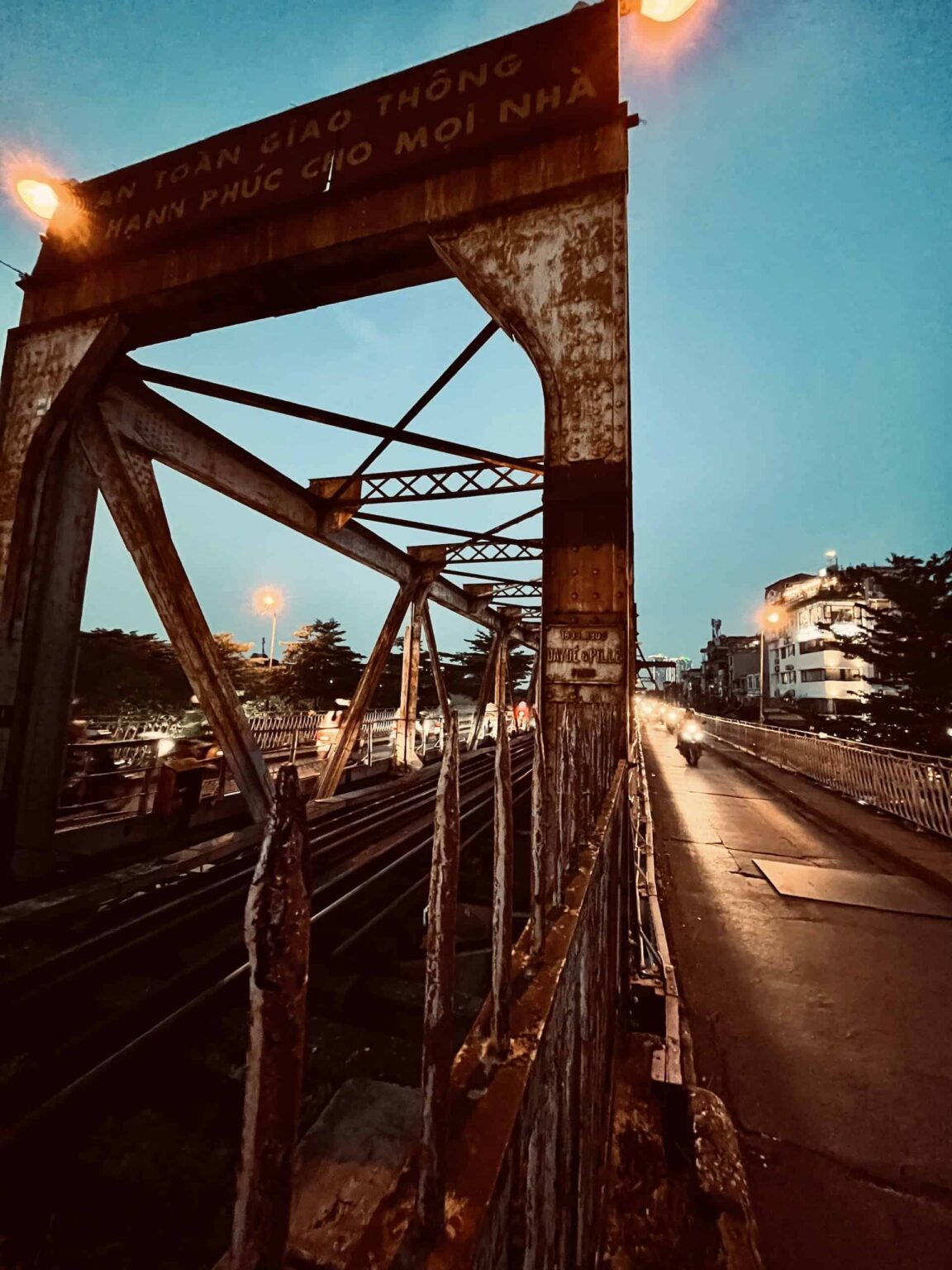
Built during the French colonial period, the Long Bien Bridge is today considered an iconic landmark in Hanoi. Located northeast of the Old Quarter, it’s a 10-minute walk well worth the effort.
The bridge spans the Red River, connecting the two districts of Hoan Kiem and Long Bien.
It served as a crucial transportation route during the Indochina and Vietnam Wars and remains in use today. The landmark has become a symbol of resilience and endurance and holds special significance for Hanoi’s residents.
Among tourists, the Long Bien Bridge is known for its railway tracks running between traffic lanes and its distinctive yellow color. Walking along the bridge rewards you with a spectacular view of the Red River.
I visited the bridge just before sunset, during rush hour. The sidewalk is quite narrow, and with all the traffic, the bridge vibrates and sways quite a bit – so I didn’t get very far. Nevertheless, the Long Bien Bridge exudes a special charm and is worth a visit.
Tran Quoc Pagoda
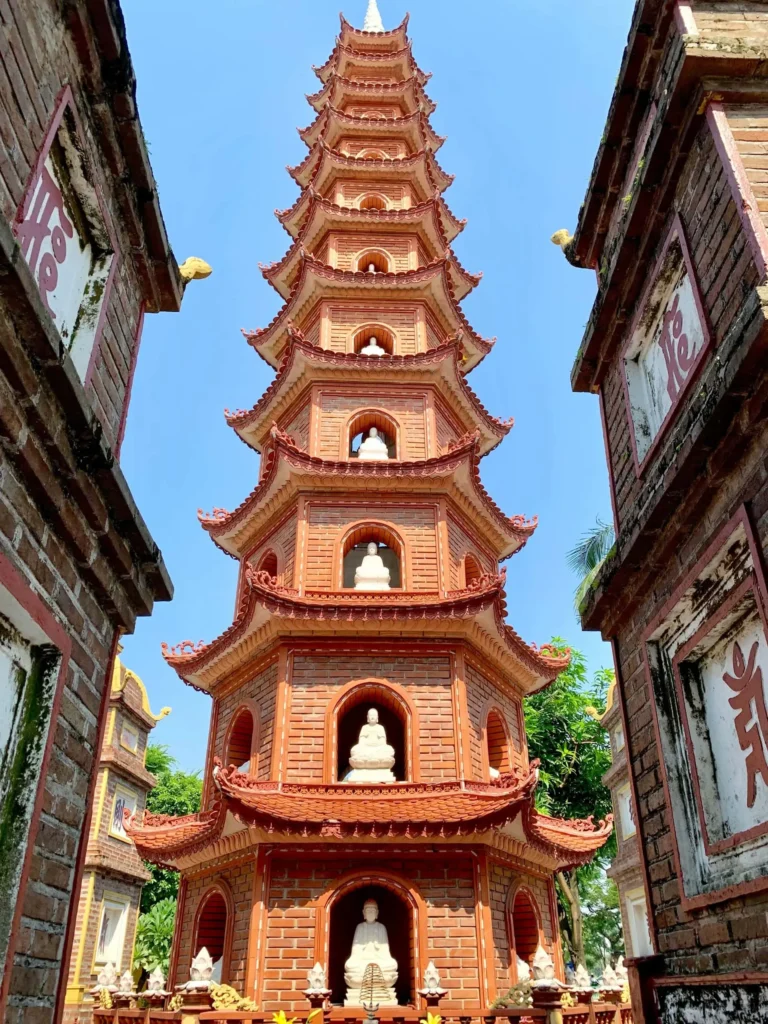
The Tran Quoc Pagoda is situated on a small peninsula in the southern part of West Lake, quite a distance from Hanoi’s Old Quarter. However, this should not deter you from visiting this religious structure, as it is undeniably one of the most beautiful attractions in Hanoi.
This pagoda is the oldest in Hanoi, easily recognizable by its 11 tiers, with a nine-tiered lotus flower made of precious stones decorating its top. Belonging to Buddhism, the most widely practiced religion in Vietnam, the pagoda is regularly used for rituals.
I decided to walk from the Old Quarter to the Tran Quoc Pagoda, discovering many charming corners of Hanoi along the way. The walk took me roughly 35 minutes. On hot days, I would recommend taking a grab, you’ll pay around 60,000 VND (approximately 2.50 €) for a one-way trip.
03 – Map of Hanoi’s Old Quarter
How to use this map: Click the top left to see all locations. Select a location for more info. Open a larger map in a new tab at the top right. Save it to your Google Maps using the star. Enjoy exploring!
04 – Travel Tips for Hanoi’s Old Quarter
Weather and Best Time to Travel
The best time to travel to Hanoi is from April to May or September to November. During these months, you can expect pleasant temperatures ranging from 24°C to 30°C.
The summer months are hot and bring increased rainfall, especially from June to August. During this period, temperatures can reach up to 33°C with pretty high humidity.
In the winter, from December to February, temperatures typically range between 14°C and 22°C, but at night, they can drop below 10°C. If you plan to visit Hanoi during this time, be sure to pack a warm jacket.
Getting There
By plane – Hanoi is well-connected to the rest of the world through Noi Bai International Airport. Many budget airlines, such as Air Asia, offer daily flights within Vietnam and from other Asian countries to Hanoi.
The arrival hall at the airport can be quite hectic, with various small shops vying for the attention of incoming tourists. However, the airport is not too large, and navigation is relatively straightforward.
It’s best to purchase a Vietnamese SIM card right here. I paid $15 USD for a SIM card with unlimited data for a month – a standard offer from various providers.
To get from the airport to the city, the most convenient option is to use a Grab (taxi). Be cautious, as persistent taxi drivers and sometimes scammers may try to convince you to choose their services while you wait for your Grab.
For the trip from the airport to the Old Quarter of Hanoi, I paid 328,000 VND (approximately €12.50). The travel time to the city center is around 45 minutes.
By bus – Vietnam has a well-developed bus network. If you’re already in Vietnam, you can travel cost-effectively from another city to Hanoi.
By train – The train network in Vietnam is also well-developed. Plus, many train journeys take you through the beautiful landscapes of Vietnam. This is reason enough to hop on a Vietnamese train, in my opinion. The Hanoi train station is centrally located and easily accessible.
How many days in Hanoi’s Old Quarter?
If you’ve never been to Hanoi’s Old Quarter, you should plan at least 2 to 3 days for your visit. The old quarter is not very large, but there is a lot to see and discover.
I spent a total of 6 days in Hanoi’s Old Quarter since my visa for Thailand took a bit longer to be processed, but that’s another story. I liked the extra time to explore more of Hanoi’s Old Quarter.
05 – Hotel Recommendation for Hanoi’s Old Quarter
I stayed at the Classy Holiday Hotel & Spa. It’s a family-run establishment, and all the staff members are incredibly kind and helpful. They checked in with me daily to ensure everything was in order and inquired about any other needs I may have.
The hotel’s location is perfect, right in the heart of Hanoi’s Old Quarter, surrounded by traditional shops, street food, and charming restaurants.
The breakfast is top-notch! There’s a diverse cold buffet, and they also prepare hot dishes like pancakes, various egg preparations, or fresh Pho to order at your table.
My room is clean and quiet, and the bed is exceptionally comfortable. I pay 684,000 VND (approximately €26) on weekdays and 1,025,000 VND (approximately €39) on weekends, including breakfast.
All in all, I highly recommend this hotel and I’ll gladly check in here again on my next visit to Hanoi.