
After spending around 5 weeks in the Semporna area and diving Sipadan on 10 separate days, my answer is pretty simple:
Sipadan is 100% worth it, but only for certain types of divers.
If you love big fish, wall diving, and that feeling of drifting along while sharks and turtles cruise past you, then Sipadan really does live up to the hype.
But if you’re an absolute beginner, or you’re mostly looking for a luxury beach holiday with a bit of diving on the side, then honestly, it’s a waste of money.
And that’s where a lot of the mixed opinions about Sipadan come from. It’s expensive, permits are limited, and you’re usually only getting a couple of dives there, not a full trip. So expectations get really high.
For me, it completely blew my expectations, but not because every single dive was incredible.
Some dives were genuinely insane, sharks cruising past, turtles everywhere, big schools moving through the blue. But other dives were just good. That’s something people don’t really say. Sipadan isn’t magically perfect everywhere, it’s certain spots and certain moments that make it what it is.
If you’re expecting every dive to be the best dive of your life, you might feel underwhelmed. But if you go in knowing you’re there for a few mind-blowing moments, then it’s absolutely worth it.
Why Sipadan Is So Famous
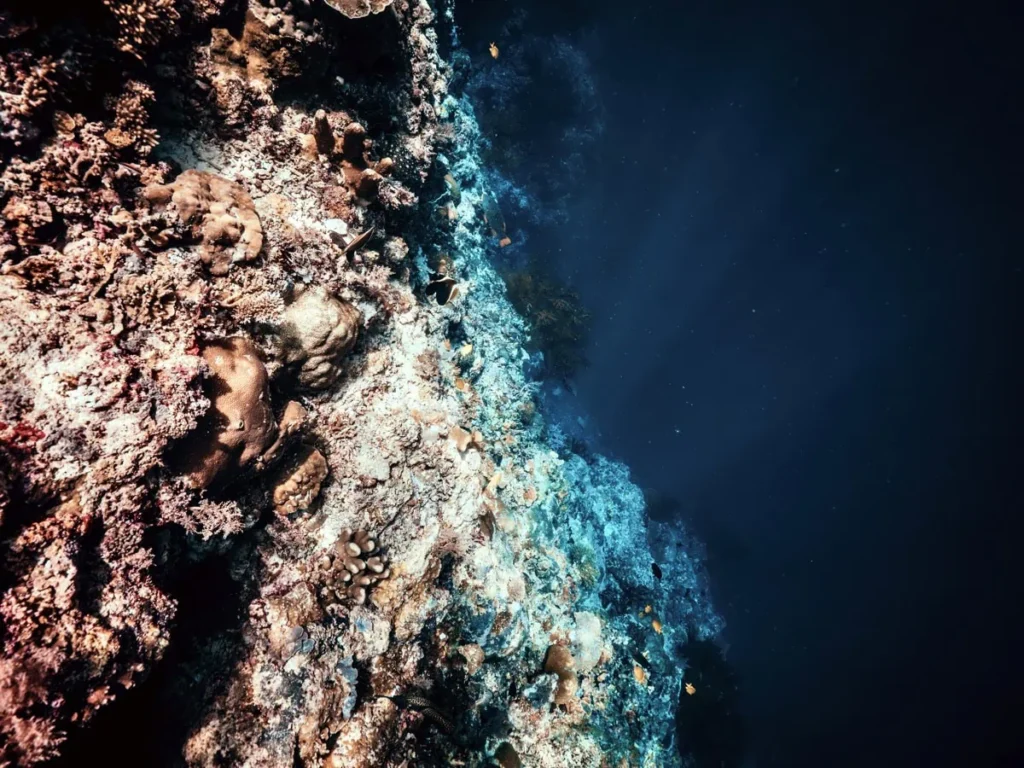
Sipadan isn’t just another dive spot, it’s a 600m volcanic pinnacle rising straight out of the Celebes Sea.
There’s no shallow reef system around it, so everything from the deep gets pushed right up against the island. That’s why diving in Sipadan feels so concentrated compared to other places.
Big schools
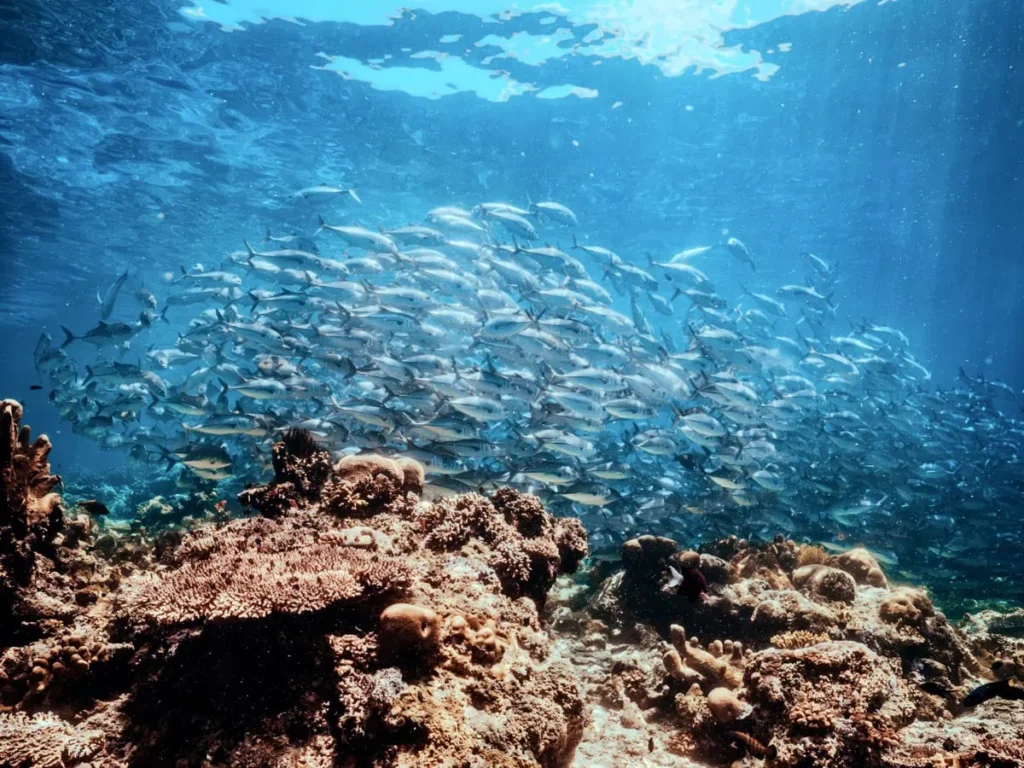
One of the main reasons people fly halfway around the world to get here is for the schooling fish.
- The Barracuda Tornado: At Barracuda Point, you can witness hundreds of chevron barracuda forming a massive, shimmering vortex. It doesn’t happen on every single dive, but it is reliable enough that most divers will see it at least once.
- The Jack Vortex: Close behind are the thousands of Bigeye Trevallies (Jacks) that form silver walls so thick they can literally block out the sun.
- The Bumphead Parrotfish: You’ll also see herds of giant Bumphead Parrotfish cruising the shallow reef flats, grazing on coral.
Turtles everywhere
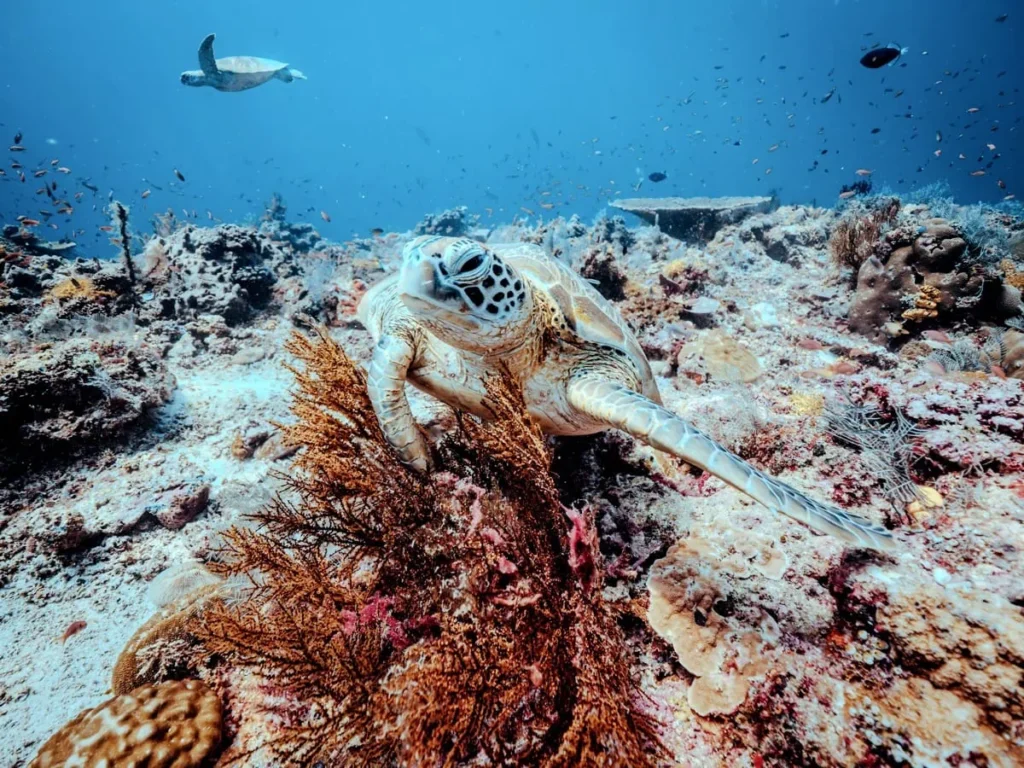
At Sipadan, you’ll stop counting turtles after about ten minutes.
Because it’s a protected sanctuary and major nesting ground, sightings are basically guaranteed. You’ll see them resting on ledges, cruising along the wall, and coming up for air during your surface interval.
Sabah Parks rangers live on the island and run a turtle hatchery, relocating eggs to keep them safe from predators. That’s one of the reasons turtle numbers here are so high.
There’s also a site called Turtle Tomb, one of my favourite dive sites in Sipadan. It’s a deep limestone cavern system where turtles sometimes get lost and drown because they need to surface to breathe. Access is restricted to divers with the right cave or cavern certification, but if you are certified, you can see turtle and even dolphin skeletons inside.
Wall diving
Sipadan drops off straight into the deep.
You’re diving along vertical walls with open blue right next to you, which is why there’s always a chance something bigger will come in from the deep.
Grey reef sharks and whitetips are pretty common here. They’re not rare sightings, you’ll usually see them cruising along the reef edge on most dives.
And honestly, the drop-off itself is a big part of what makes it feel different. You’re right on the edge of a reef that suddenly disappears into the blue, dropping hundreds of meters down. It gives the whole dive a much more open, big ocean feeling compared to most places in Southeast Asia.
What Might Disappoint You
Even a world-class destination has its downsides.
And with Sipadan, you kind of have to accept them upfront, otherwise it’s easy to come away disappointed.
It’s expensive
Sipadan isn’t cheap.
Between permit fees (around RM 450–550 / US$95–120 / €90–110) and dive packages, it adds up quickly. Compared to most of Southeast Asia, it’s definitely on the higher end.
But it’s not just the price, it’s what you actually get for it.
With permits allowing only two dives at Sipadan, you’re paying that fee for roughly two hours of bottom time. If those 2 hours are spent in a Barracuda Tornado, cruising with sharks, or enjoying the countless turtles, it’s the best money you’ll ever spend. If not, the price-per-minute can feel a bit steep.
For a full overview of fees and packages, read my guide to Sipadan diving prices.
It’s not the easiest place to get to
This isn’t a casual destination, getting to Sipadan takes time. Flights, transfers, boats, it’s a full travel day at minimum. It’s not somewhere you add onto a short trip.
This post on how to get to Sipadan covers everything step by step.

Only two dives at Sipadan
A permit only allows two dives per day at Sipadan.
After that, you’ll usually head back for a third dive at a nearby reef like Mabul or Kapalai. So you’re still getting a full dive day, just not all of it at Sipadan, which is usually what you came for.
You can find a full breakdown of the Sipadan permit system in this guide.
You might only get one Sipadan day
Permits are limited, and unless you’re booking a higher-end package, you’ll likely spend a few days diving around Mabul and Kaplai while waiting for your Sipadan day.
That’s normal, but it does mean a lot of your trip builds up to just one or two days.
Visibility isn’t guaranteed
Because Sipadan sits out in the open ocean, conditions can change quite a bit. I’ve had clear 40m+ visibility, but also days where it dropped to around 15–20m.
When visibility is low, it changes the whole feel of the dive, especially if you’re expecting that big blue, open-ocean experience.
Is Sipadan Worth the Cost?
Sipadan is not cheap, especially for Southeast Asia.
A typical day diving Sipadan is around RM 1,400–1,600 (US$320–370 / €300–350), which includes the boat, guide, lunch, two dives at Sipadan and a third at a nearby reef. A big chunk of that is the permit, about RM 450 (US$95–120 / €90–110).
So yeah, you’re paying quite a lot, for not that much time underwater. You get two dives at Sipadan a day, roughly two hours total, and often a third at a nearby reef. And that’s kind of where it starts to feel a bit off.
If those dives line up, clear water, sharks cruising past, big schools everywhere, it feels completely worth it. If not, it can feel like a lot of money for a pretty average dive.
For a full pricing overview, read this guide on the cost of diving in Sipadan.
A Sipadan day is expensive, but you’re not paying that price every day. Most of your dives will be around Mabul or Kapalai, which brings your overall cost per dive down quite a bit.
How it compares globally
This is where it gets interesting.
If you compare Sipadan to a $30 (€28) dive in Thailand, it feels very expensive. But that’s not really the right comparison.
If you’re coming here for big fish and pelagic action, you’re competing with places like Komodo in Indonesia or Tubbataha Reef in the Philippines.
In Komodo, a day of diving with a good operator is usually around $120–200 (€110–185) for 3 dives. Liveaboards are typically $250–400 (€230–370) per day, depending on the boat.
Tubbataha is even more of a commitment. It’s liveaboard-only, and trips usually cost $300–500 (€280–460) per day.
So yeah, Sipadan feels expensive at first, but for this kind of diving, it actually feels pretty reasonable. You’re paying a premium for Malaysia, but you’re getting a good deal for a world-class dive destination.

Who It’s For
Sipadan is 100% worth it if you’re the kind of diver who:
- Enjoys current diving: You don’t mind a bit of movement and actually like the feel of a good drift dive.
- Wants big fish and open-ocean action: Sharks, massive schools, and that “endless blue” feeling are what Sipadan does best.
- Is okay paying more for fewer, better dives: You aren’t looking for a high volume of cheap dives, you’re here for a few standout, world-class experiences.
- Is already a confident diver: You’re comfortable on deep walls and in changing conditions, and you don’t get stressed if conditions aren’t perfect.
- Has realistic expectations: You know that while not every dive will be a 10/10, the ones that do line up will be unforgettable.
Who Should Skip It
Sipadan is probably not worth it if you:
- Are a beginner: You can dive here after passing your AOW, but you won’t get the most out of it. Some conditions might feel overwhelming, and you’ll spend more time checking your equipment than the scenery.
- Are on a tight budget: If cost is your primary driver, there are much better value destinations in Southeast Asia (like Koh Tao or Tulamben, where you’ll get far more dives for the same budget).
- Expect every dive to be perfect: If you arrive expecting a Planet Earth documentary every time you hit the water, you’re setting yourself up for disappointment.
- Care more about luxury than diving: Semporna and Mabul are working dive hubs. It’s about the water, not 5-star resort service and cocktails.
- Don’t enjoy current or deeper dives: If you prefer calm, shallow, easy reef dives, you’ll find better (and cheaper) spots elsewhere.
You probably already know which side you fall into. For a full look at what to expect, read my in-depth guide to diving in Sipadan.
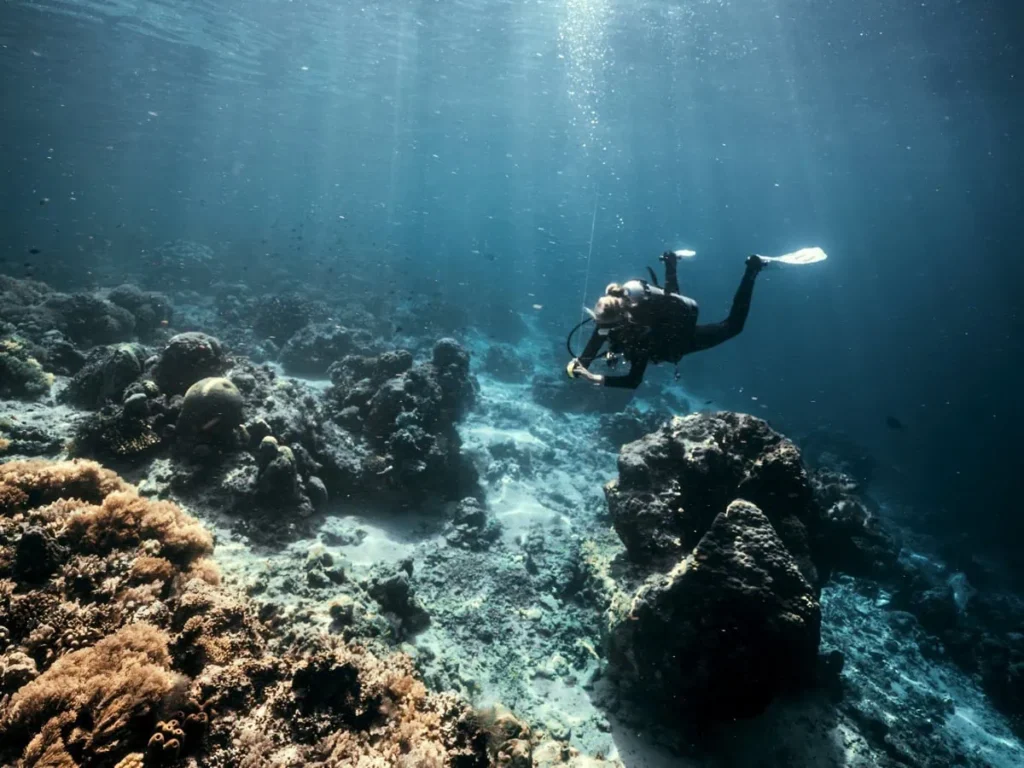
How to Make Sipadan Worth It
A lot of whether Sipadan feels “worth it” comes down to how you plan your trip. If you just show up for one day and hope for the best, it’s a gamble. If you plan it properly, it’s much easier to get value out of it.
- Stay long enough to get more than one Sipadan day
This is probably the biggest one. If you only get one permit day and conditions aren’t great, it can feel like a lot of money for not much. If you stay a bit longer and get two or more days at Sipadan, your chances of getting those really good dives go up a lot. You can read more about how Sipadan permits work in this guide. - Wait until you are a confident diver
Sipadan isn’t a place where you want to still be figuring things out. It’s a 600m drop-off with currents that can change mid-dive. If you’re still adjusting your buoyancy or constantly fiddling with your BCD, you’ll miss a lot of what’s actually happening around you. To really get your money’s worth, you want to be at a point where everything feels easy, so you can just focus on what’s in the blue. - Don’t treat it as a one-day highlight
Sipadan works much better as part of a longer trip. If you combine it with diving around Mabul or the surrounding reefs, it stops feeling like you paid a lot for just a couple of dives, and more like part of a bigger experience. - Get your timing right
This links back to getting to Sipadan. If you lose a day to travel or poor planning, everything starts to feel tighter and more expensive than it needs to be.
Do that, and Sipadan stops feeling like a gamble, and starts feeling like exactly what you came for.
Plan Your Sipadan Diving Trip
If you’re planning a trip to Sipadan, these guides will help you understand the diving, the logistics, and how to make the most of your limited permit days.
- Sipadan dive guide – a complete overview of diving Sipadan, including what to expect, how it works, and how to plan your trip
- How to get to Sipadan – flights, transfers, and how to plan your route so you don’t lose a day traveling
- How to get a Sipadan permit – how permits work, your chances of getting one, and what to know before booking
- Best time to dive in Sipadan – when conditions are usually best and what to expect throughout the year
- Dive sites in Sipadan – the main dive sites and which ones are actually worth your limited permits
- Diving around Semporna without a Sipadan permit – the best alternative dive sites around Mabul and the surrounding islands if you can’t dive Sipadan every day
- How much it costs to dive Sipadan – diving and permit prices, what drives the cost, and how to keep it affordable
- Is diving Sipadan worth it? – an honest breakdown of what it’s really like, who it’s for, and when it actually makes sense
- Where to stay for diving Sipadan – Mabul, Kapalai, Semporna or Seaventures, and how to choose what fits your trip
