

Nusa Penida has a great mix of snorkel spots: some laid-back, some a bit wild, and a few that are popular for obvious reasons. I’ve scuba dived and snorkeled around Penida many times now, and the manta rays are the reason I keep jumping back in.
I’m pretty comfortable in the ocean, so the currents and swell don’t stress me out, but you definitely feel the water move here. Conditions can shift fast too. One hour it’s clear and quiet, the next it’s a bit choppy. You get whatever the ocean feels like offering, and most days it’s something worth sticking around for.
If you’re wondering what snorkeling in Nusa Penida is really like, this is the information I wish I’d had before my first trip.
In this guide I’ll cover:
- The best snorkel spots
- What makes each one special
- How to get there & when to go
- Honest tips to help you have a good day in the water
Essential Info for Snorkeling in Nusa Penida
If you’re planning to go snorkeling in Nusa Penida, here are the essentials you need to know.
- Best time to snorkel: Dry season, roughly May to November. Calmer seas, better visibility, and less wind. I’ve had the clearest mornings around this time.
- Access type: Mostly by boat. A couple of bays (like Crystal Bay) are fine from shore when conditions are calm.
- Gear rentals: Easy to find in Toyapakeh and at popular beaches, plus most tour operators provide everything. Quality varies a lot, though — I prefer bringing my own mask because fit matters.
- Marine life: Manta rays, turtles, big schools of reef fish, occasional reef sharks, and mixed coral gardens. I’ve personally seen mantas on several trips here.
- Safety notes: Expect some water movement. Currents and swell shift fast, boat traffic can be busy, and visibility changes with wind. Go early and listen to your guide, Penida’s water has personality.
Overview of the Best Snorkeling Spots in Nusa Penida
These are the snorkel spots in Nusa Penida I keep coming back to, and what they really feel like once you’re in the water.
| Spot | Level | Access | Best for |
|---|---|---|---|
| Manta Bay | Beginner–intermediate | Boat only | Easy manta chance, short boat ride |
| Manta Point | Intermediate–advanced | Boat only | Best manta encounters on calm days |
| Crystal Bay | Beginner–intermediate | Shore + boat | Easy snorkel, families, relaxed days |
| Gamat Bay | Intermediate | Boat only | Clear water, nice reef, fewer crowds |
| Wall Bay | Intermediate–advanced | Boat only | Drift snorkeling, tons of fish |
| Turtle Point | Beginner-friendly | Boat only | Calm water, turtles |
How to use this map: Click the top left to see all locations. Select a location for more info. Open a larger map in a new tab at the top right. Save it to your Google Maps using the star. Enjoy exploring!
01 – Manta Bay: Easy-Access Manta Snorkeling
I’ve snorkeled Manta Bay several times now, and the biggest thing to understand is this: this is an easy-to-reach place where you can see mantas if you’re lucky, it’s not a reliable place to see mantas. If they show up, it’s an amazing bonus. If they don’t, you still get a decent snorkel in a dramatic little bay, just not the big manta moment most people come for.
When I’ve seen mantas here, it’s usually been quick passes. They glide through, loop once, maybe twice, and then vanish again. It’s exciting, but it’s not the place where they linger.
Quick Overview
- Difficulty: Beginner–intermediate (some swell, lots of boats)
- Access: Boat only
- Cost: Usually included in standard snorkel trips
- Visibility: Can go from “great” to “milky” pretty fast
- Good for: A shot at mantas without a long, bumpy boat ride
- What I saw here: Lots of reef fish and the occasional manta
Why It’s Good
It’s close, shallow, and sheltered enough that most boats can stop here on almost any day. That means you’ll actually get in the water most of the time. It’s also one of the few spots where beginners can reasonably hope to see a manta without dealing with rough ocean.
How to Get There
It’s a short, easy ride from both Penida and Lembongan. The easiest is to book a snorkeling tour. If your tour has a mixed group with beginners, this is almost always the first stop.
Marine Life Highlights
- Mantas (not guaranteed)
- Plenty of reef fish
- That “open blue in front of a cliff” feeling that makes you want to keep looking down
Best Time to Go
Morning, before the bay fills with too many snorkel groups.
Snorkeling Tips for Manta Bay
- Don’t stress if you don’t see a manta right away, they tend to appear suddenly
- Keep your head on a swivel when surfacing, boats move constantly here
- If you’re used to calm snorkeling, expect a little push from the swell, nothing dramatic though
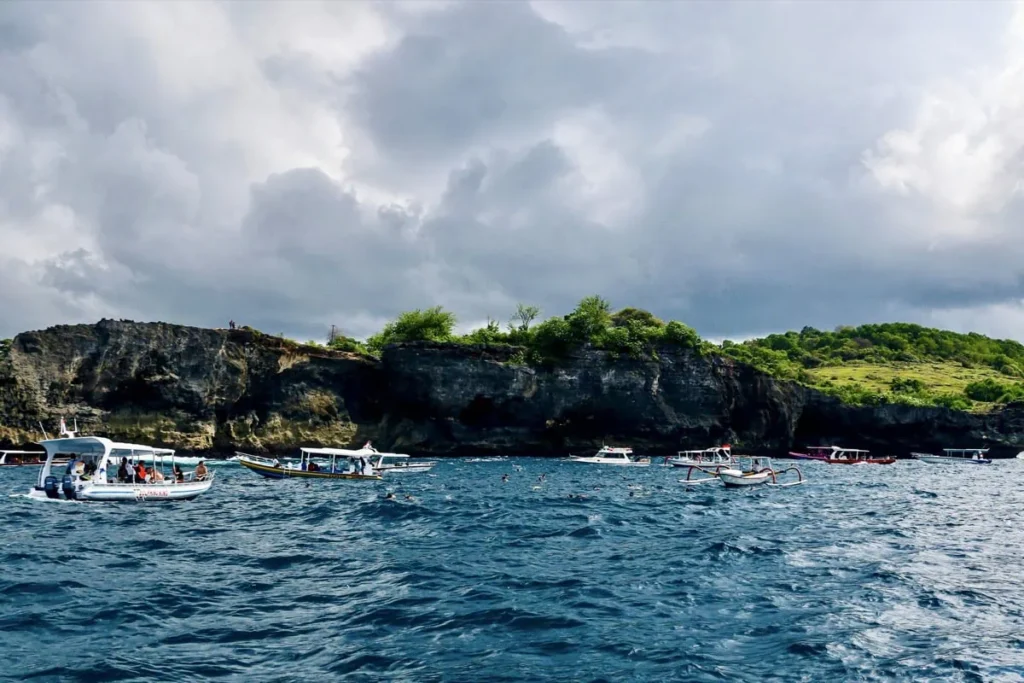
02 – Manta Point: Best Chance to See Manta Rays
If you want the best chance of seeing mantas, this is the spot. It’s not subtle about it. Everything about the place feels more serious the moment you get close. The swell is heavier, the water’s colder, and you can tell you’re on the exposed side of the island.
This is where manta encounters feel more like proper moments instead of brief flashes. They circle the cleaning areas, do those slow, wide loops, and you get more time to actually watch them instead of just catching a silhouette.
It’s also the site that gets skipped the most due to swell, which tells you everything about the conditions.
Quick Overview
- Difficulty: Intermediate–advanced (open ocean, surge, colder water)
- Access: Boat only
- Cost: Included on some tours, mostly at a higher price point
- Visibility: Surprisingly good when calm; rough when surge kicks in
- Good for: Reliable manta action
- What I saw here: Mantas circling deeper, with longer encounters on days when they come shallow
Why It’s Good
This is where mantas actually come to get cleaned, which means they have a reason to be here and you have really good chances to see them. If conditions are calm, you can spend a good chunk of time hanging above their loops.
How to Get There
Getting to Manta Point is a longer ride, and you feel it. If your tour is willing to go here, it usually means the skipper thinks the water is calm enough that you won’t regret it.
Marine Life Highlights
- Groups of mantas move through in slow circuits
Best Time to Go
Early morning, if the swell direction is kind. If your boat hesitates, trust that.
Snorkeling Tips for Manta Point
- Expect cooler water, a rash guard actually helps here
- Don’t get too close to the rocks, the surge has a rhythm you need a minute to read
- If mantas are circling deeper, stay patient, they often rise suddenly for a few loops
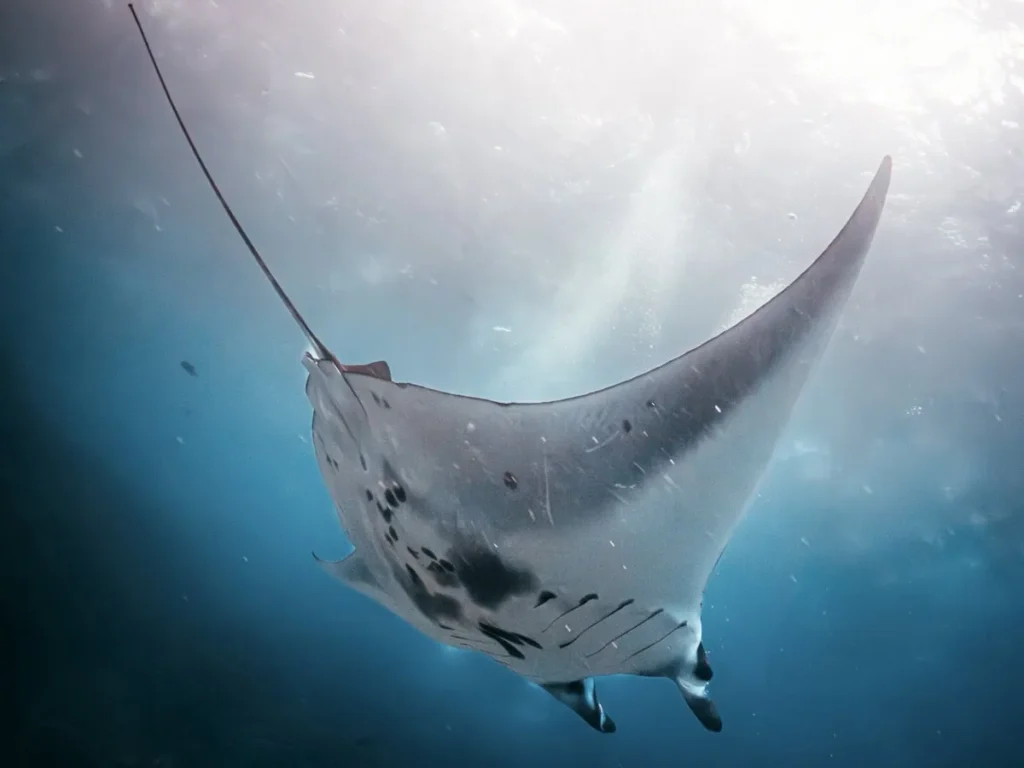
03 – Crystal Bay: Relaxed Snorkeling Bay in Nusa Penida
Crystal Bay is the spot I usually recommend when someone wants a calm, easy snorkel without dealing with Nusa Penida’s wilder side. I’ve been here on days when the surface was almost flat and the visibility was so clear you could see the sandy bottom from the boat. I’ve also been here when the swell wrapped around the bay and made everything feel a bit more restless — still doable, just not the postcard version.
When it’s calm, it’s genuinely a great snorkel. Colourful reef fish right off the shore, patches of coral that light up in the morning sun, and enough space to drift around without feeling crowded.
Quick Overview
- Difficulty: Beginner–intermediate (depends fully on swell)
- Access: Shore or boat
- Cost: IDR 5,000 (€0.30 / $0.35) for parking; gear rental available
- Visibility: Good on calm mornings, average when swell picks up
- Good for: Easy snorkeling, casual swims, families
- What I saw here: Lots of reef fish, occasional turtles, nice reef patches close in
Why It’s Good
Crystal Bay is one of the few places on Penida where you can actually snorkel from shore without needing a boat. The bay is partially protected, so you get calmer water if the swell isn’t wrapping around the headlands. It’s also a straightforward place to ease into the ocean without immediately being thrown into Penida’s usual currents.
How to Get There
You can reach it by scooter or car from almost anywhere on Nusa Penida. The road down is paved, parking is easy, and the beach sits right in front of you. Most snorkeling tours also stop here, but the easy shore access is what makes it stand out.
Marine Life Highlights
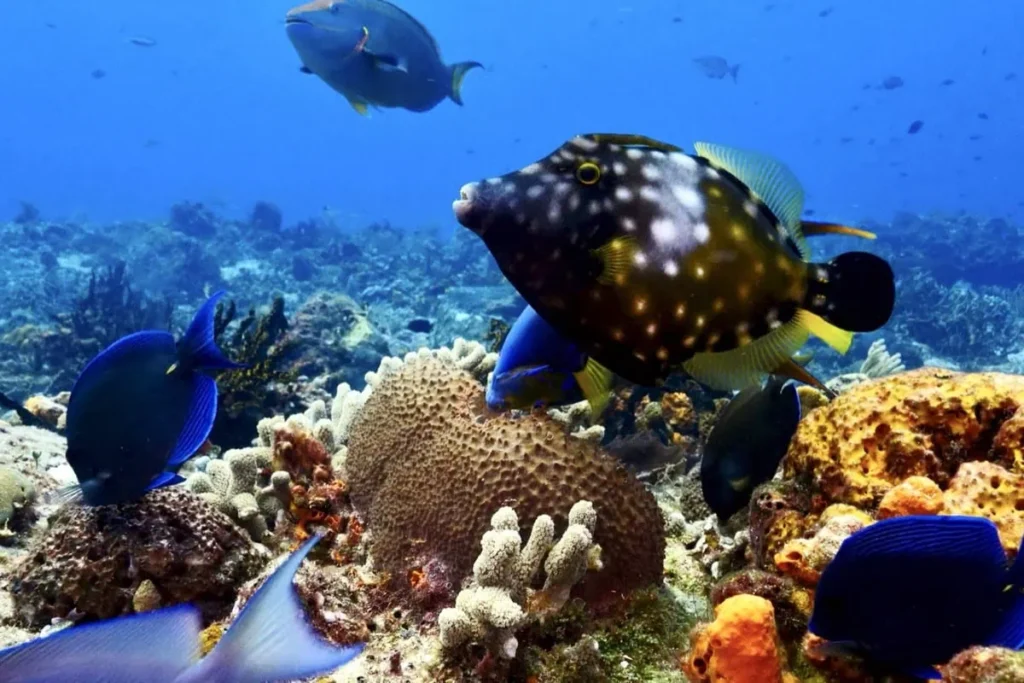
- Clownfish, parrotfish, and lots of bright reef fish
- Occasional turtles cruising through
- Sandy bottom with coral bommies
Best Time to Go
Go early in the morning before 10 am for the best conditions. Once mid-day wind kicks in, the bay gets choppier and visibility drops.
Snorkeling Tips for Crystal Bay
- Stay inside the main bay. The channel toward the open ocean gets significantly stronger currents, even on calm days.
- Check the swell first. If waves are rolling all the way into the bay, skip it — it won’t be enjoyable to snorkel, and the visibility won’t be great with that much water movement.
- Go early for the clearest water and before the beach crowds start to arrive.
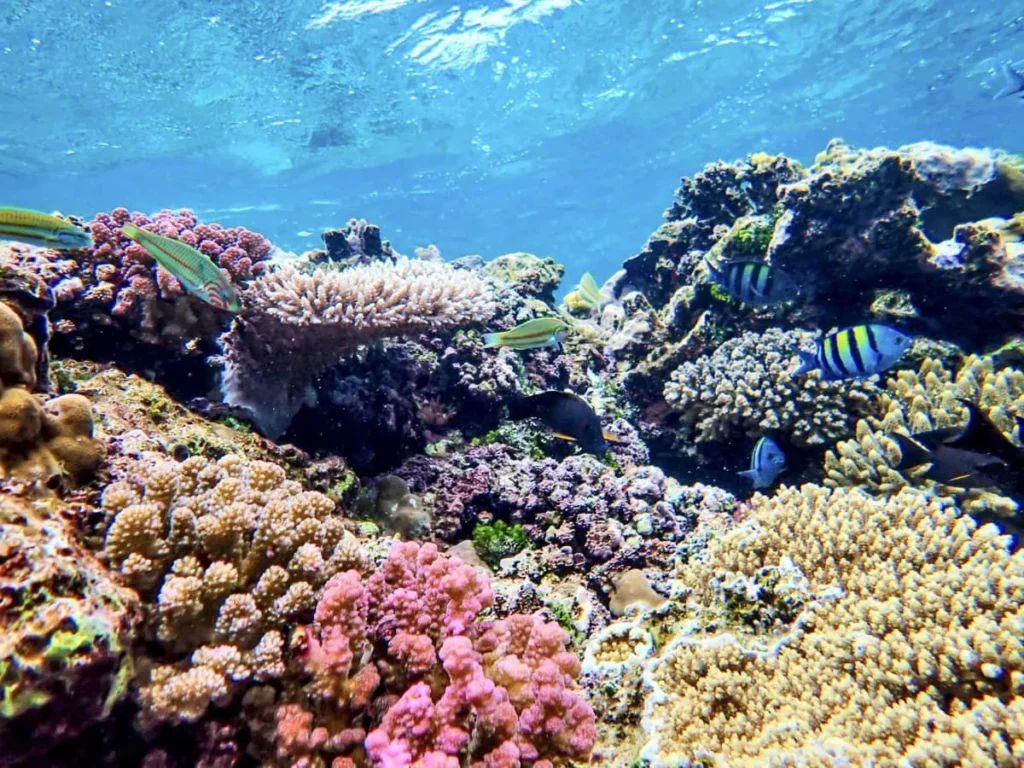
04 – Gamat Bay: Clear Water & stunning Reef
Gamat Bay feels like the opposite of Crystal Bay. It’s small, steep, and has that “drop-off right under you” feeling the moment you get into the water. I’ve snorkeled here on days when the visibility was incredible with that clear, deep blue water where everything looks super sharp. It’s easily one of the best snorkeling spots in Nusa Penida when the water behaves.
But Gamat Bay is not a spot for beginners. Even on calmer days, the water moves in little surges that you need to be comfortable with. If you’re confident in the ocean, it’s a great spot. If you’re not, it’ll feel like work.
The reef here is beautiful: scattered coral heads, small overhangs, and schools of fish drifting in and out of the drop-off. It’s not as famous as the manta spots, but on a good day it’s one of my favourite snorkeling spots in Penida.
This whole stretch of reef is also popular with divers because the wall drops into deeper, clear water. If you’re into diving too, I covered Toyapakeh and other favourites in my post on the best dive sites in Nusa Penida.
Quick Overview
- Difficulty: Intermediate (surge + quick changes in current)
- Access: Boat only
- Cost: Included in most multi-stop snorkel tours
- Visibility: Often very good when conditions are calm
- Good for: Confident snorkelers who want clear water and nice reef
- What I saw here: Bright reef fish, healthy coral patches, great visibility
Why It’s Good
Gamat Bay has that classic Penida look underwater with a mix of shallow coral, a sloping reef, and then the big blue drop. Everything feels close and alive, and when the sun hits the corals you get beautiful colours. It’s also usually less crowded than the manta stops, which gives you more space to actually enjoy the reef.
How to Get There
You need a boat to get to Gamat Bay. Most snorkeling tours stop at Gamat Bay after hitting the manta spots. The ride from Penida is short and from Lembongan it’s an easy hop across the channel.
Marine Life Highlights
- Butterflyfish, parrotfish, and lots of reef fish
- Nice coral variety in shallow patches
- Bigger fish cruising the drop-off on calm days
Best Time to Go
Late morning is usually the sweet spot: enough sunlight to light up the reef, but before the wind creates surface chop.
Snorkeling Tips
- Stay close to the reef side of the bay. The middle can feel more exposed.
- Watch the surge. It’s usually manageable, but you feel it more here than in places like Crystal Bay.
- Take your time near the shallows. The coral and fish life here are surprisingly colourful when the sun is out.
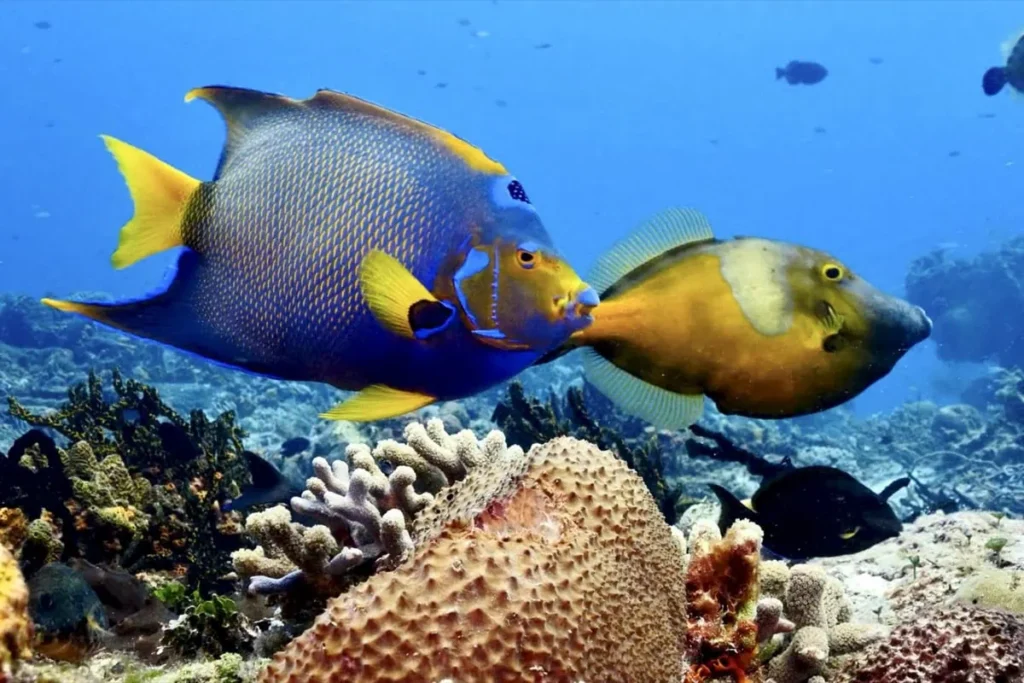
05 – Wall Bay / Wall Point: Drift Snorkeling with Tons of Fish
Wall Bay (or Wall Point) is one of those spots where you realise immediately that Penida isn’t just about manta rays. The reef drops off into a proper vertical wall, and the moment you drift along it, you see how much life is tucked into the coral.
This place feels full of life with fish everywhere, moving in and out of the wall like traffic. And yes, locals aren’t wrong when they say this is one of the fishiest spots around the island.
On some days, you also get surprises out in the deeper channel, and I’ve heard of mantas cruising past here. The whole area feels connected to the bigger blue.
It’s still very much a drift snorkel, though, so you need to be comfortable letting the water take you where it’s going.
Quick Overview
- Difficulty: Intermediate–advanced (steady drift, quick depth changes)
- Access: Boat only
- Cost: Usually part of multi-stop snorkel routes
- Visibility: Often good thanks to water movement
- Good for: Confident snorkelers who like drift-style swims and lots of fish
- What I saw here: Dense fish life along the wall, bright coral sections, fast-moving schools
Why It’s Good
The wall structure creates natural shelter and feeding spots, so fish gather in big numbers. The drop-off also gives you that insane blue-water contrast with shallow water full of colours on one side, and the deep channel on the other. Even without “big” sightings, this spot feels alive from the moment you enter.
How to Get There
You can only reach Wall Bay by boat. Most snorkel tour operators combine it with Gamat Bay or Crystal Bay and boats usually drop you at the start of the wall and pick you up farther along after the drift.
Marine Life Highlights
- Tons of reef fish — more than almost anywhere else around Penida
- Colourful wall corals and sponges
- A chance (not guaranteed) of mantas passing through the deeper channel
Best Time to Go
Late morning or early afternoon when the wall gets better light.
Snorkeling Tips
- Go with the flow and drift. Fighting the current just tires you out.
- Stick close to the wall side. It’s more colourful and feels more sheltered.
- Stay within sight of your group. Everyone drifts at slightly different speeds here.

06 – Turtle Point: Easiest Snorkeling Spot in Nusa Penida
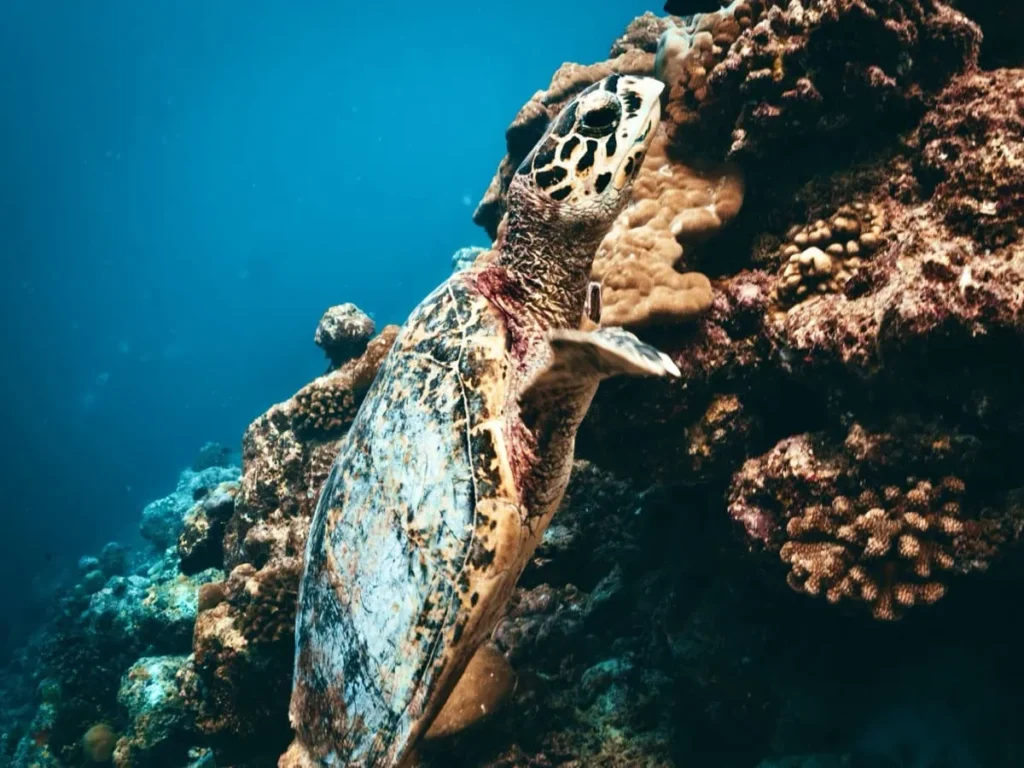
Turtle Point is the best snorkel spot in Nusa Penida for beginners. The water here is usually calmer, the depth is friendly, and the whole place has that slow, relaxed feel that makes you want to just float and watch whatever swims by. I’ve seen turtles here cruising along the bottom or coming up for air, not in crazy numbers, but enough that it feels like a solid bet if turtles are on your list.
It’s also where a lot of tours bring mixed groups, so the vibe is very “everyone’s just here to enjoy the water,” without the adrenaline of the open-ocean sites. If you’ve snorkeled the manta spots and want something gentler to end the day, this is perfect.
Quick Overview
- Difficulty: Beginner-friendly
- Access: Boat
- Cost: Included in most snorkel tours
- Visibility: Usually decent, sometimes a bit cloudy late in the day
- Good for: Easy snorkeling, turtle sightings, calm water
- What I saw here: Turtles, lots of fish, relaxed conditions
Why It’s Good
The area has a big, sandy bottom with patches of coral and plenty of space for turtles to feed or rest, so they’re not hard to spot. It’s also one of the flatter, more predictable snorkel spots on Penida’s tour loop. There’s no sudden drop-off or heavy surge here.
How to Get There
Turtle Point has boat access only, but it’s very close to the main tour routes. Most operators swing past here after Crystal Bay or Gamat Bay.
Marine Life Highlights
- Green turtles gliding around the bottom
- Good variety of reef fish
- Easy-to-see sandy patches that make spotting wildlife simple
Best Time to Go
Mid-morning or early afternoon. It holds up well even when other spots get a bit choppy.
Snorkeling Tips for Turtle Point
- Look ahead, not just down. Turtles often appear from the side or near the surface.
- Give turtles space. They’re relaxed here because snorkelers don’t chase them.
- If the surface gets busy, stay calm. Boats move slowly in this bay, and guides usually manage the groups well.
Spots to Avoid When Snorkeling in Nusa Penida
Not every pretty stretch of coastline around Nusa Penida is safe or worth snorkeling. Some places get added to tour itineraries just because they look impressive from land, not because the ocean conditions make sense. Here are the ones I recommend skipping and why.
- Kelingking (not a snorkel spot) – It’s a famous viewpoint, but definitely not a place to get in the water. The coastline here is completely exposed, the swell is heavy, and there’s no sheltered area to snorkel. If a tour advertises snorkeling at Kelingking, it’s just a photo stop.
- Broken Beach / Angel’s Billabong (also not snorkelable) – Beautiful from above, absolutely not safe below. The waves here slam straight into the cliffs and surge through narrow gaps. It looks dramatic for photos, but nobody snorkels this area.
- The channel outside Crystal Bay – Crystal Bay itself is lovely on calm days, but the channel leading out of the bay has a strong outbound current. Stay well inside the main bay. The line between the headlands is a natural “do not cross” point.
- Manta Point on rough days – Manta Point is incredible when it’s calm, but useless when the swell comes in. The surge gets heavy and visibility drops fast. If your tour operator hesitates about going there, trust them. This spot only works on the right days.
- Gamat Bay when the swell wraps around – Gamat is one of my favourites in good conditions. On the wrong day, though, the surge pushes you around more than you think. If you see whitewater breaking on the outside edges, it’s not the day for Gamat Bay.
- Toyapakeh (unless you’re very confident) – Toyapakeh has an amazing reef, but it’s better as a dive site than a snorkeling spot. The currents can rip through here, the depth drops quickly, and boats move through the channel constantly. It’s not a relaxed snorkel.
- Any “secret spot” a random vendor adds – Occasionally, tours advertise unnamed “hidden snorkel spots.” These are usually just exposed coastline with nothing to see and no protection from swell. I’d recommend you stick to the established sites, the island already has more than enough good snorkel spots that offer a great day in the water.
If you’re planning your trip and want to mix snorkeling with other highlights around the island, I also put together a guide to the best things to do in Nusa Penida, which covers viewpoints, beaches and the spots that are actually worth the drive. It’s a good overview if you want to plan out a full day or two on the island.
Snorkeling Tours vs Going on Your Own
Nusa Penida isn’t one of those islands where you can’t just walk into the ocean anywhere and expect a good snorkel.
I’ve done snorkeling tours here and I’ve gone out on my own a few times. And honestly, if you’re here to actually snorkel and not just splash around, you’d better go with a tour.
The coastline is too open and too dynamic to rely on shore spots alone. And a good skipper makes all the difference between an OK snorkeling experience and a great one. That’s why snorkeling tours are so common here, and they make sense for most people.
Joining a Snorkeling Tour
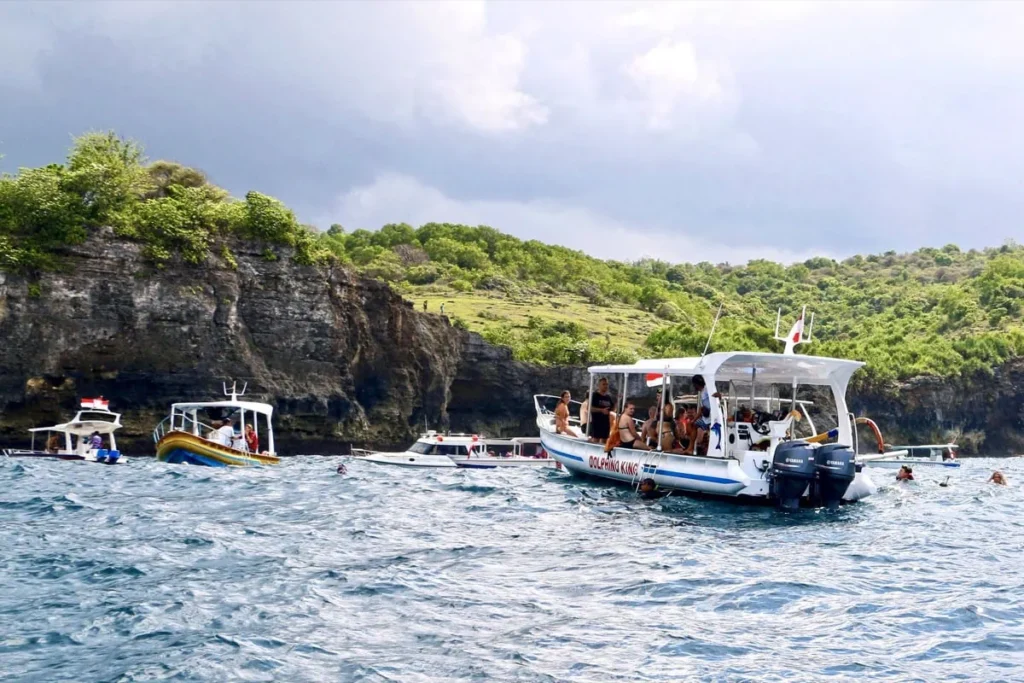
If you want to see mantas or reach the better reef spots, a tour is the easiest and most reliable option. They handle the boat, the timing, the conditions, and they know which sites are actually working on that specific day.
Why you should go with a reliable operator:
- They adjust the route based on swell and visibility
- They’ll skip bad spots (like Manta Point on rough mornings)
- They know when Crystal Bay or Gamat are actually calm
- They keep an eye on currents so you don’t have to
- You waste zero time figuring out logistics
When tours make the most sense:
- You want the best chance of seeing mantas
- You’re visiting for one day and don’t want to gamble with conditions
- You’re not fully confident reading currents
- You just want someone to handle the whole day
I went on this Snorkeling Tour to Manta Point, Gamat Bay, and Wall Bay and really loved the experience. The crew was super safe, fun, and knowledgeable, making sure we had a great day in the water. Their first stop is Manta Point and if, for whatever reason, the mantas are not around, they will try and find them at other spots before continuing to the other spots.
See Mantas
Snorkeling Tour to see mantas
This is my go-to snorkeling tour in Nusa Penida. It goes to Manta Point to give you the best chance of seeing mantas, and the early start means you get to enjoy the manta magic before the crowds show up.
Price: From IDR 450,000 (€27 / $30)
Duration: ~4 hours
Rating: 5/5 ★
Includes: Snorkel gear, a local guide who knows the water, and GoPro photos
Typical route: Manta Bay, Gamat Bay, Wall Bay
Most tours include fins, a mask, drinking water, and sometimes snacks. The gear quality isn’t always amazing, so I prefer bringing my own mask, but the rest is usually fine.
Snorkeling Nusa Penida Independently
Nusa Penida isn’t the easiest place to snorkel on your own, simply because most of the good sites sit along exposed coastline with currents. That said, you can snorkel independently, you just need to be picky about where.
Where snorkeling on your own actually makes sense:
- Crystal Bay on a calm morning
- A couple of tiny beach coves that are fine for a relaxed swim (not “proper” snorkel sites)
And that’s basically it. All the other spots like Manta Bay, Manta Point, Gamat, Wall Bay require a boat and someone experienced to read the water.
When going independently works:
- You’re staying on Penida and just want a quick morning snorkel
- The conditions are clearly calm
- You already have your own snorkel gear
Snorkeling Gear Tips
I’ve seen enough snorkel gear around Nusa Penida and Lembongan to know that the quality swings wildly. Some operators keep things in great shape, others hand out snorkels with half-chewed mouthpieces and masks that have broken seals. If you want to actually enjoy your day in the water, I recommend you bring a mask and snorkel and rent the rest.
Mask + Snorkel (bring your own)
This is the combo worth bringing from home.
- Masks: Fit is everything. A rental mask that leaks or fogs will ruin your snorkeling experience faster than bad visibility.
- Snorkels: Rental snorkels often have stiff or worn-out mouthpieces, which makes it annoying to relax at the surface. I always bring my own snorkel for exactly that reason.
These two take up barely any room in your bag, and the difference in comfort is huge.
Fins (rent them)
Fins matter in Penida because the water moves around a bit, especially at the manta spots and along the walls. But they’re bulky to travel with, and the rental fins around the island are usually fine. You might need to try a couple of sizes, but once you find the right fit, they get the job done.
Rash Guard or Wetsuit Top
The water can be cooler than you expect, especially at Manta Point. A long-sleeve rash guard keeps you warm, protects your skin, and saves you from reapplying sunscreen every hour.
Dry Bag
The boat deck gets wet, and everything shifts around when the boat moves. I recommend you bring a small dry bag to keep your phone and valuables dry.
Life Jacket / Snorkel Vest
Tour operators here provide life jackets. If you’re confident in the water, you won’t need them. But if you’re unsure, better use them, the water around Penida is not exactly beginner-friendly.
GoPro (optional)
People lose cameras here all the time – and usually don’t get them back. If you bring your action camera, make sure it’s attached to you.
Safety Tips for Snorkeling Nusa Penida
Nusa Penida isn’t a gentle, floaty snorkel destination. The water here has personality, and the conditions change faster than most visitors expect. You don’t need to be an expert swimmer, but you do need a bit of awareness. Here’s what actually matters:
1. Nusa Penida is known for its currents
Most of the time you’ll feel a steady push and you should move with the water, not against it. Sites like Gamat Bay and the walls have a natural drift. Let it take you, otherwise you’ll exhaust yourself.
2. Visibility can change within minutes
Penida is famous for this. A spot can go from “beautiful and clear” to “where did the reef go?” quickly. Don’t panic — just stay close to your group and follow the guide’s cues.
3. Lots of boat traffic
Nusa Penida’s waters are busy, especially at Manta Bay. Boats are constantly repositioning, people are getting in and out, and things shift around quickly. Always look up before surfacing and stay aware of where your boat is.
4. Keep your distance from the reef
Penida’s coral is fragile, and some of the shallow sections look tempting to stand on when you’re adjusting your mask. Don’t. You’ll damage the reef and you’ll likely scrape yourself too. Float, kick gently, and give the reef space.
5. Watch your energy
Snorkeling in Nusa Penida can be tiring, especially if you’re doing a multi-stop tour. Drink water, take a break on the boat between spots, and don’t push through tired legs in moving water.
6. Know your level and your limits
This is the most important one. For manta and wall sites, you should be happy floating in deeper water, kicking gently in current, and getting in and out of a boat ladder without panicking. If that doesn’t sound like you, stick to the calmer bays on a good day. There’s no shame in staying with the easier bays, you’ll have a much better experience there.
If you want a deeper breakdown of currents, conditions and marine life around the island, I go into all of that in my full Nusa Penida diving guide. Even if you’re only snorkeling, it gives you a good sense of how the water behaves here.
FAQ: Snorkeling in Nusa Penida
Get More Nusa Penida Tips to Help You Plan
- Start with my complete guide to diving in Nusa Penida, it covers conditions, currents, and everything you should know before going.
- For a closer look at the underwater highlights, my breakdown of the best dive sites in Nusa Penida walks you through each spot and what to expect.
- Not diving every day? I’ve also put together a guide to snorkeling in Nusa Penida, with the safest sites, when to go, and how to avoid the crowds.
- And for a dry day, check out my best things to do in Nusa Penida covering beaches, viewpoints, and the easy spots worth checking out.
- And if you’re planning a longer dive trip around the island, don’t miss my full breakdown of the best places to dive in Bali.
Did you know that by booking through links on this site, you support this blog at no additional cost to you. Thank you!
