

Sipadan is a unique diving paradise, consistently ranked among the top 10 best dive sites worldwide year after year – and with good reason!
Jacques Cousteau once described Sipadan as an “untouched piece of art” and it is more than just a diving spot. Diving in Sipadan is like immersing yourself in another world – a world filled with fascinating marine life and breathtaking underwater landscapes that never fail to astonish even experienced divers.
However, precisely due to this unique underwater world, tight restrictions and a complex permit system for divers are in place.
In this blog post, I not only share my personal experiences from two weeks filled with diving adventures in Sipadan but also provide valuable information on how you can plan your own unforgettable dive trip to Sipadan.
You’ll find details about the underwater world of Sipadan, how to navigate the jungle of diving permits, and an overview of the costs associated with this unique adventure.
01 – What makes Sipadan so special?

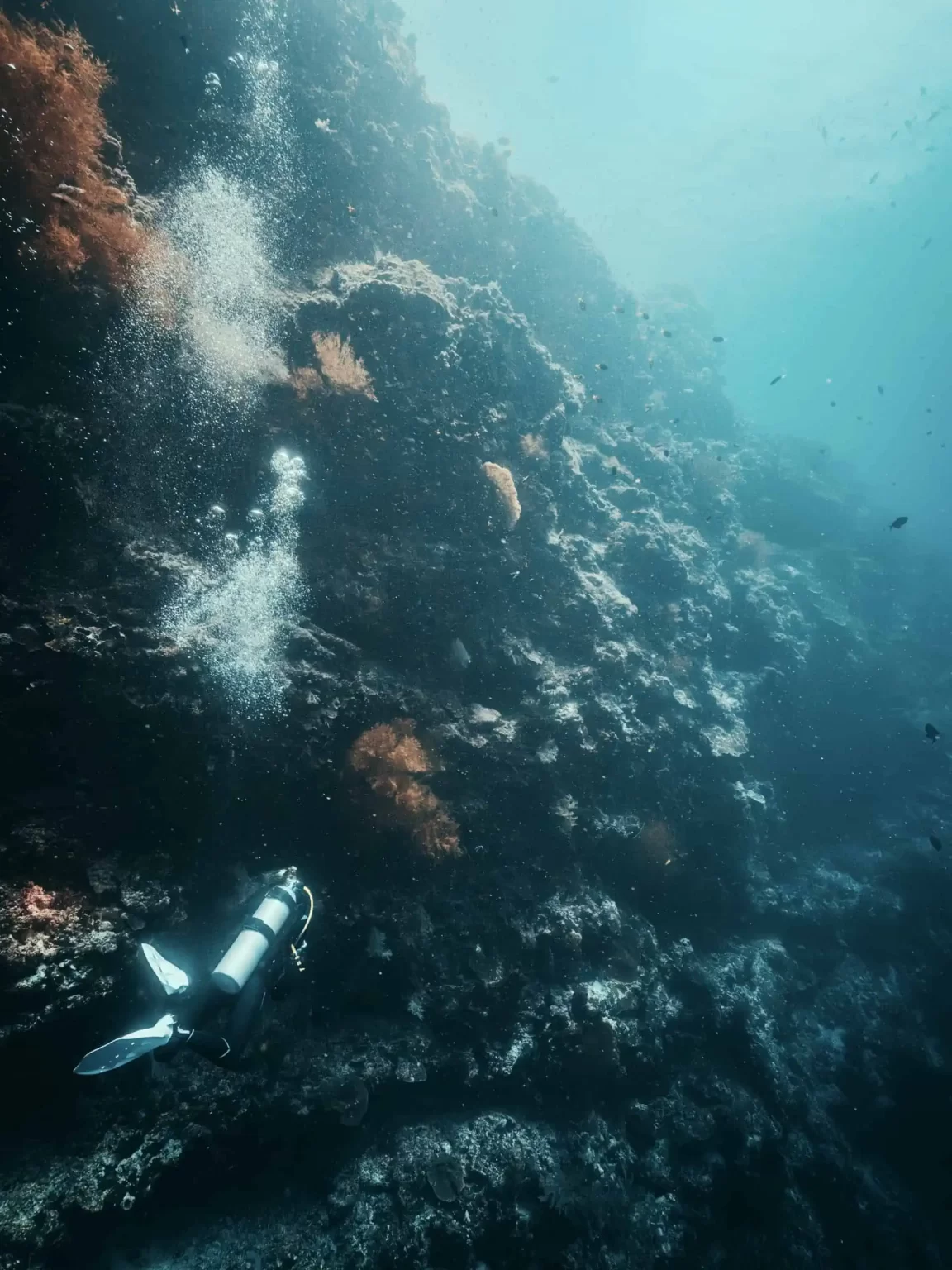
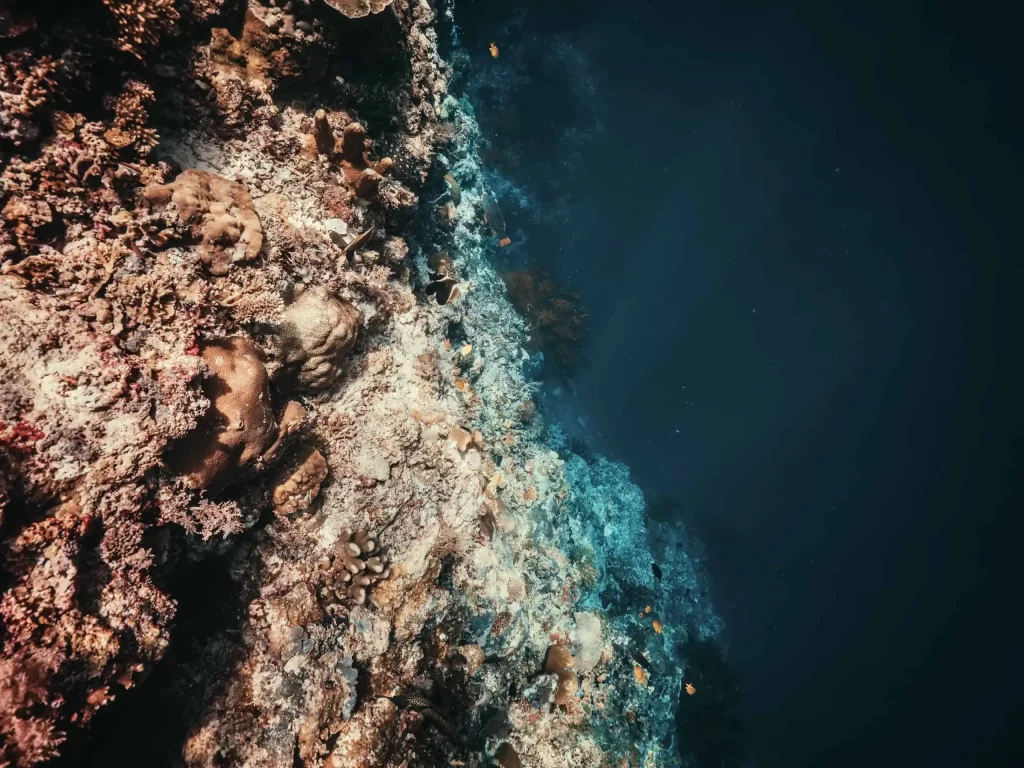
Sipadan is an island that emerged over millennia from an extinct volcano in the Celebes Sea, offering a breathtaking diversity of marine life. Strong ocean currents and walls plunging up to 2000 meters deep make Sipadan a meeting point for pelagic marine creatures.
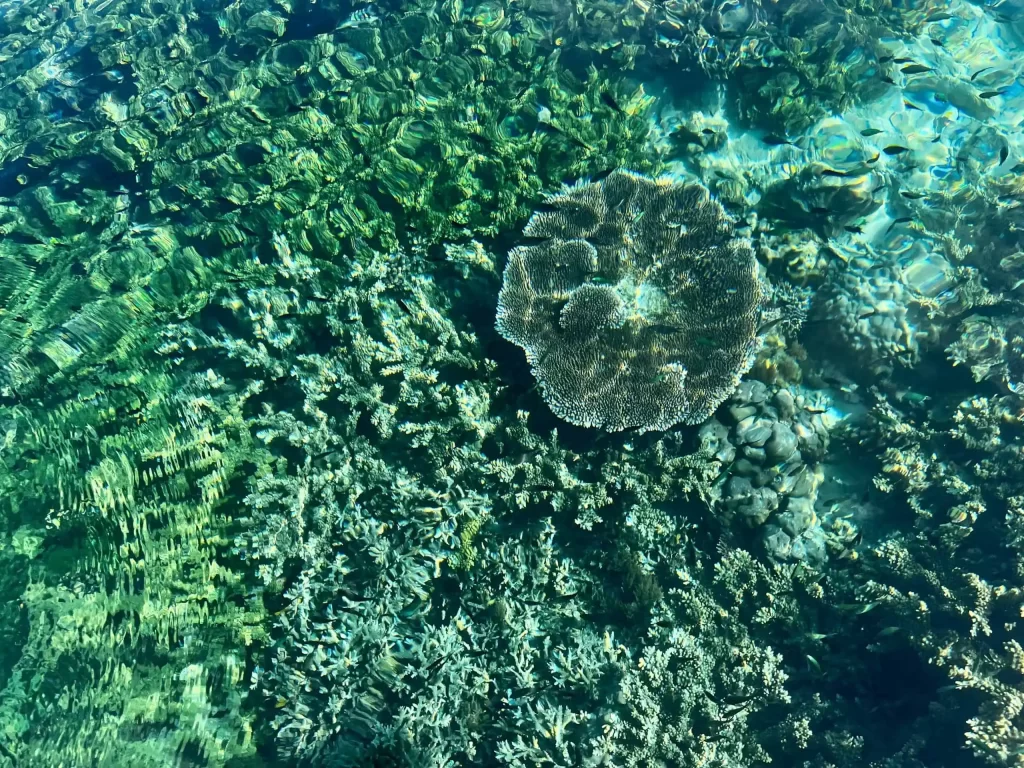
Situated in the heart of the Coral Triangle, the island is surrounded by a 500-meter protection zone where all fishing activities are prohibited. The result? A unique underwater world featuring over 3,000 species of fish, crustaceans, and invertebrates, along with 600 species of corals and an abundance of sponges.
The beauty of Sipadan lies in its diversity – Jacques Cousteau himself referred to Sipadan as an “untouched masterpiece.” From tiny nudibranchs and colorful coral fish to massive schools of bumphead parrotfish and spectacular formations of barracuda, all the way to majestic whale sharks, curious reef sharks, and friendly turtles.
Sipadan offers a phenomenal diving experience.
02 – Which marine life can I encounter?

Thanks to serious efforts to protect the environment, Sipadan’s marine life is pretty much off the charts. Everywhere you look, there’s a bunch of marine creatures waiting to be spotted.
As soon as you dip into the water, you’re blown away by the sheer number of green turtles and hawksbill turtles hanging out in Sipadan. They come here to mate and you can easily see more than twenty of them on a single dive. I stopped counting after my first 10 minutes in the water – there were just too many turtles.
And let me tell you, if you’re diving around Sipadan, you’re practically guaranteed to bump into sharks. You’ve got the smooth gliding whitetip reef shark and the grey reef sharks cruising in packs on the deeper plateaus. If you’re lucky, you might even catch a glimpse of hammerhead sharks popping up from the deep for a show you won’t forget.
But it’s not just sharks taking over the scene; eagle rays and devil rays are common too. And when the currents bring in some plankton-packed water, you might run into manta rays and those grand whale sharks at different dive spots.
The thousands of barracudas that regularly gather and form a spectacular tornado-like formation is a seriously impressive sight as well. And a massive school of bumphead parrotfish cruising through the shallow waters of various dive spots offers another one-of-a-kind experience.
Take a moment to turn away from the open sea and explore the colorful reef, and you’ll uncover a wealth of smaller marine residents and macro creatures. From vibrant snails and nudibranchs to quirky hermit crabs and majestic lionfish, to curious moray eels – Sipadan offers a fascinating variety even for lovers of the tinier sea creatures. With a trained eye, you might spot well-camouflaged octopuses and scorpionfish.
Check out this video from Into the Blue for a good sneak peek at the marine life waiting for you on your dives in Sipadan:

03 – The best dive sites

BARRACUDA POINT
Barracuda Point stands out as one of the most impressive dive sites worldwide, and it’s no wonder it’s my favorite spot in Sipadan. Prepare for a unique diving adventure.
The dive kicks off as a classic wall dive, transitioning into an 18-meter deep sandy channel often traversed by strong currents. Here, you’ll encounter reef sharks drawn by the currents, resting at the channel’s bottom. Drifting with the current over the reef alongside them is an absolute thrill – my personal highlight.
Yet, the real spectacle is the Barracuda Tornado. Thousands of these silver fish create a spinning, tornado-like structure, at times so colossal it obscures the sun. Diving into this tornado and observing barracudas circling around you and your buddy is a one-of-a-kind experience you shouldn’t miss!
In the shallower areas of Barracuda Point, Sipadan’s most beautiful coral reefs await. Take your time here to marvel at the vibrant corals, various fish species, and countless turtles peacefully inhabiting the surroundings.
SOUTH POINT
Situated at the opposite end of the island compared to Barracuda Point, South Point not only introduces you to impressive coral reefs but, more importantly, the big guys.
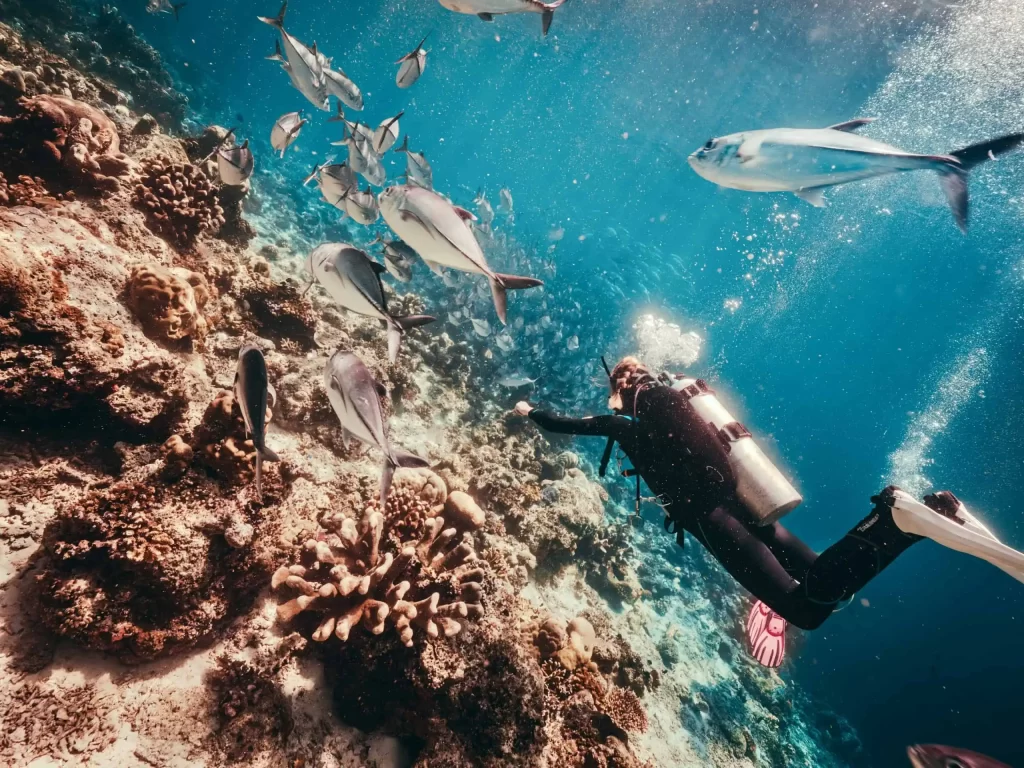
The robust currents at this dive site make it a magnet for pelagic fish. Schools of grey reef sharks are a common sight, gracefully patrolling the plateaus and creating unforgettable diving moments. In slightly deeper areas, you also have the chance to encounter thresher sharks and hammerhead sharks. Their regular appearances from the depths of the sea are a sight you’ll cherish forever.
In addition to sharks, you also stand a good chance of encountering various rays like eagle rays, devil rays, or even manta rays.
Nearing the end of your dive, another highlight of South Point awaits you. In the shallower waters, you’ll come across a massive school of jackfish. You can dive into the school and spend a leisurely 10-15 minutes with them – they stay in place. This gives you ample time to capture the perfect photo.
But also the shallow coral reef with its diverse corals and colorful fish is more than worth exploring. During my safety stop, I always felt like I was in an aquarium.
DROP OFF
This captivating dive site sits right off the coast of Sipadan and was often described as the world’s best shore dive. Just a few meters from the beach, the wall of Drop Off plunges an impressive 600 meters straight into the depths of the sea. The topography of this dive site is simply breathtaking.
Drop Off is where wall dives in Sipadan showcase their true splendor. Visibility can reach up to 40 meters, meaning you’re not only surrounded by vibrant corals but also have the opportunity to observe grey reef sharks and hammerhead sharks on the plateaus at 60 meters deep.
But that’s not the only highlight of Drop Off. At the end of the dive in the shallower areas, you might encounter an impressive school of bumphead parrotfish. They like to cruise over the coral near the entrance of the Turtle Cave, searching for food. Diving amidst these colorful giants is a unique experience.
TURTLE CAVE
Turtle Cave is a massive cave at a depth of 18 meters that runs through the island. It earned its name from the turtle skeletons discovered by cave divers during exploration. Jacques Cousteau himself filmed the turtle skeletons in this cave for his documentary “The Ghost of the Sea Turtle.” You can marvel at some of them on the sandy floor of the cave during a dive.
The mysterious passages of the cave also host rare fish and an exceptional macro world. Tiny shrimp and crustaceans are tucked away under almost every rock. Being a macro enthusiast, I fell in love with this cave after just a few meters.
At times, you might even encounter whitetip reef sharks and giant trevallies gracefully gliding through the narrow passages.
Diving in Turtle Cave requires specialized cave diving training. However, even if you can’t venture deep into the cave, just exploring the entrance areas provides an exciting and unique experience. Looking out from the cave to the open sea offers an impressive panoramic view framed by the cave walls.
Hanging Gardens brings to mind the legendary Hanging Gardens of Babylon. Underwater, this dive site unfolds as a terraced landscape covered with soft corals in various colors. Gorgonian fans conceal a variety of macro life, including gobies, sweetlips, anthias, moray eels, and jewel fairy basslets.
Additionally, you may come across green and hawksbill turtles serenely gliding through the vibrant underwater scenery. Dozens of blue-spotted rays gracefully navigate the coral reef, searching for sustenance.
WHITETIP AVENUE
Whitetip Avenue owes its name to numerous encounters with whitetip reef sharks, who favor this location as their preferred route. This dive site not only offers an impressive backdrop of colorful corals and gorgonians but also a constant presence of these graceful predators.
The dive starts along a shallow reef that suddenly drops to depths exceeding 600 meters. Whitetip Avenue then guides you along the reef walls, adorned with crevices, ledges, and terraces. Within these reef structures, numerous marine creatures hide, including groupers, angelfish, lionfish, boxfish, triggerfish, clownfish, and schools of colorful coral fish.
However, the highlight of this dive site undoubtedly lies in the regular encounters with whitetip reef sharks.
04 – A typical day diving Sipadan
Your diving day in Sipadan kicks off early in the morning. You’ll board a speedboat from where you are staying and head to the paradise island of Sipadan.
Upon arrival, you step ashore and register at the Sabah Parks office. Make sure to have your ID and diving certification handy. I had both in digital form on my smartphone, and that worked seamlessly. Ensure your documents are on your phone, not in the cloud though, as the internet connection on Sipadan is weak to nonexistent.
They’ll check a list to confirm your diving permit for the day and verify your status as a registered diver.
After registration, you discuss the planned dives and dive sites with your guide. Simultaneously, you receive explanations about the regulations for diving in Sipadan National Park.
Following this, you return to the boat and prepare for your first dive. After your initial diving adventure in Sipadan, you come back to the island for a relaxed lunch break.
Picnic benches are available, and your dive operator usually brings lunch packs, often featuring a variation of chicken with rice and vegetables. Post-lunch, your second dive in Sipadan awaits.
It’s not allowed to do both dives at the same site, but that’s no issue given the abundance of sights. Most dive operators offer three dives per day, but you’re only permitted two in Sipadan. Fortunately, there are other top-notch dive spots in the Semporna region. The third dive of the day often heads to the neighboring island of Mabul. After the final dive, you return to where you stay via speedboat.
05 – What diving conditions can I expect?

Sipadan offers fantastic diving conditions throughout the year. Here are some key factors to consider for your diving adventures:
Visibility: Visibility is a crucial factor that can significantly impact your dives. Generally, all dive sites in Sipadan provide good visibility, averaging between 15 – 30 meters. In the months from March to June, visibility can even peak at 20 to 40 meters. During the rainy season from December to February, visibility might be slightly affected but often remains within the range of 10 to 20 meters.
Water Temperature: The water temperatures around Sipadan are consistently warm throughout the year, typically ranging between 27 and 30 °C. Even in the cooler months from December to February, the water temperature rarely drops below 26 °C.
Currents: Sipadan is famous (or infamous) for its strong currents. These not only provide exciting drift dives but can also pose challenges at certain locations. The currents vary from day to day and are influenced by tides.
DIVE CONDITIONS BY MONTH
Diving conditions in Sipadan can vary depending on the season:
MID-FEBRUARY TO JULY
During these months, you can expect perfect conditions. The days are hot and sunny with a clear sky. Visibility ranges from 15 to 30 meters and the sea is calm.
AUGUST
In August, conditions undergo a slight change. Southern winds may reduce visibility to 10 to 20 meters and bring some waves. Therefore, surface conditions might be a bit rougher. Nonetheless, you can still enjoy fantastic underwater adventures with unforgettable encounters.
SEPTEMBER TO NOVEMBER
From September onwards, conditions improve again. Visibility returns to the range of 15 to 30 meters, and the sea calms down. These months once again offer optimal conditions for incredible dives.
DECEMBER TO FEBRUARY
Officially the rainy season, December to February sees minimal rainfall. Nevertheless, visibility can decrease to 10 to 20 meters, and temperatures may be 2 to 3 degrees cooler. Northern winds can bring some waves.
| FEB-JUL | AUG | SEP-NOV | DEC-FEB | |
|---|---|---|---|---|
| Water Temperature | 28-29°C | 26-28°C | 28-29°C | 26-28°C |
| Visibility | 15-30 meters | 5-20 meters | 15-30 meters | 5-20 meters |
| Waves | ~ | ~~ | ~ | ~~ |
06 – The best time to dive
The months from March to June are considered the best time for diving in Sipadan. During this period, visibility reaches its peak, up to an impressive 40 meters. Additionally, there is abundant sunshine, and the sea remains calm. However, many divers also praise the period from September to early December.
I spent two weeks diving in Sipadan in October, and the conditions were perfect. The visibility was excellent, ranging from 30 to 40 meters, and the sea was incredibly calm, it felt like being on a lake.
Please note that Sipadan is closed for divers and all tourist activities every November for a month to give the sensitive marine environment a break. You can always find the latest information on the official Sipadan website.MY ADVICE: AVOID THE BUSY TIMES
To get the most out of your trip, it’s smart to steer clear of the busiest times and other periods when lots of tourists are around. During these times, some resorts not only get fully booked months ahead but also charge higher prices for diving.
The busy times in Sipadan are:
- July and August
- Christmas and New Year
- Chinese New Year (between January and February)
- Chinese Golden Week (1st week in October)
- Japanese Golden Week (early May)
If you plan your visit outside of these times, not only will the dive schools be less crowded, but you’ll also up your chances of snagging one of those sought-after diving permits for Sipadan.
07 – How to get to Sipadan?
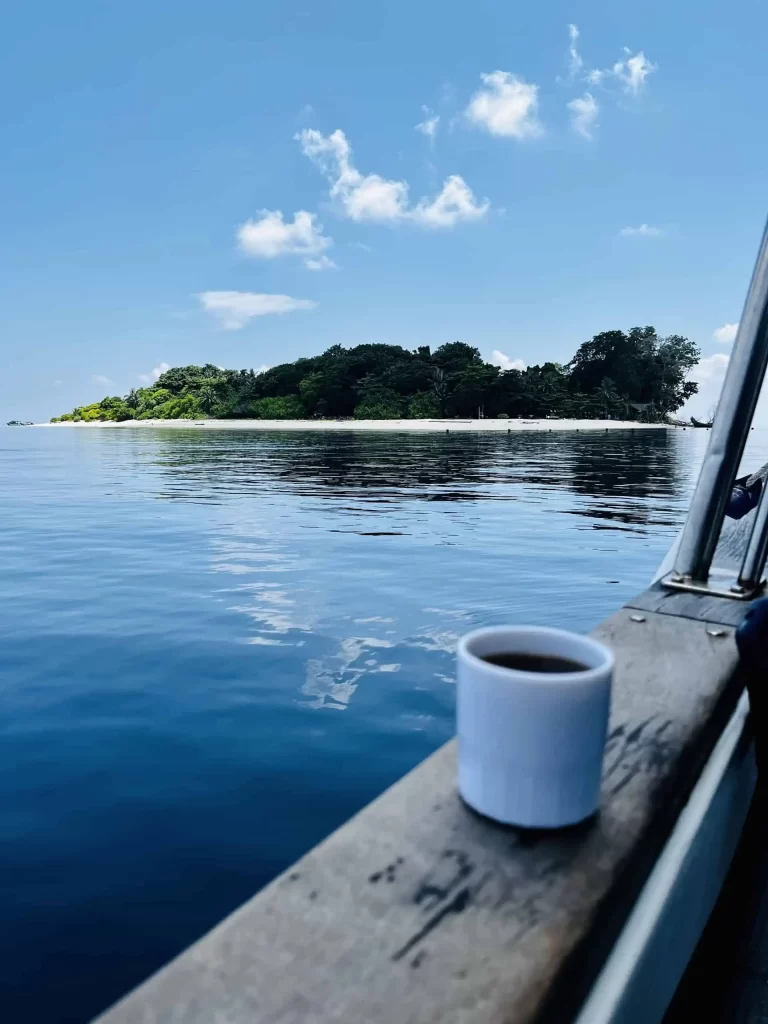
There are various ways to reach Sipadan, so let’s explore your travel options.
BY AIR
The nearest airport to Sipadan is Tawau International Airport. You can find daily affordable flights from both Kuala Lumpur and Kota Kinabalu to Tawau. Upon arriving in Tawau, it’s just a short one-hour drive to reach the town of Semporna – the gateway to the captivating diving realms of Sipadan and the surrounding islands.
A taxi from Tawau Airport to Semporna costs around 95 RM (approximately 20 €). Alternatively, you can ask your accommodation to organize a transfer for you, which is often cheaper than a taxi or may even be included in your accommodation fee.
BY BUS
For those coming from Kota Kinabalu with plenty of time on their hands, taking a long-distance bus is an option. The journey from Kota Kinabalu to Semporna, however, takes about 9 hours.
BY SPEEDBOAT
From Semporna, the journey to Sipadan takes around an hour. If you’ve chosen accommodation on one of the nearby islands, the trip to Sipadan can vary between 15 minutes and an hour, depending on the location.
08 – Can I stay on Sipadan?
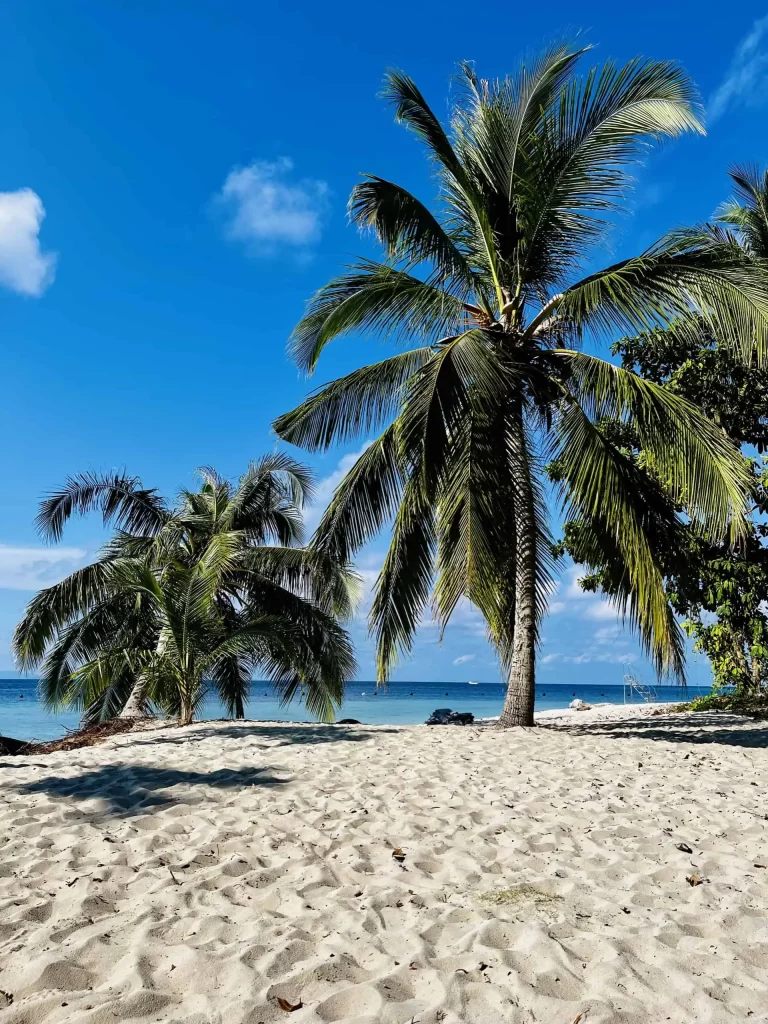
Since 2005, when Sipadan was declared a protected marine area, you can’t stay overnight on the island anymore. Instead, speedboats from nearby islands and Semporna town get you there.
SEMPORNA
For those on a tight budget, Semporna town has cheaper hotels. You can stay there and head to Sipadan for diving adventures. Semporna offers more restaurant and shop choices, but it’s not exactly a tourist hotspot.
THE ISLANDS
Most dive resorts are based on Mabul Island, just an hour’s boat ride from Semporna. But the nearby islands Kapalai, Mataking, and Pom Pom offer options as well.
Liveaboard
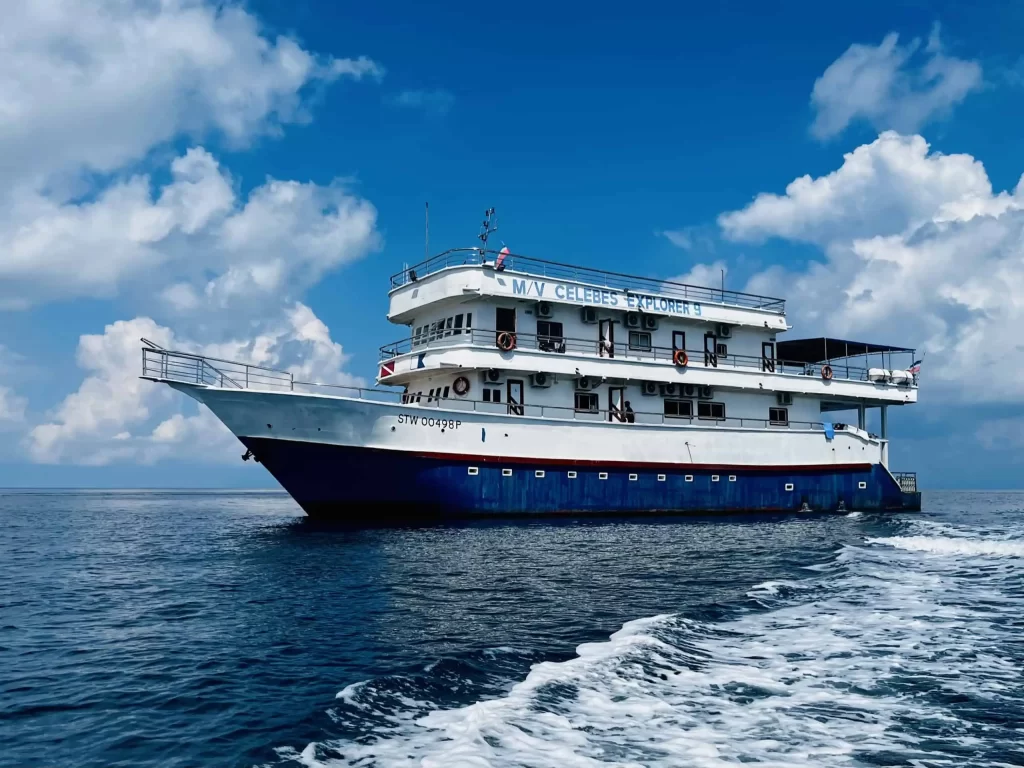
The M/V Celebes Explorer is the only liveaboard that gets daily permits for Sipadan. It has 8 rooms for a total of 16 guests and offers trips for 3, 4, or 7 nights.
09 – Diving permits for Sipadan
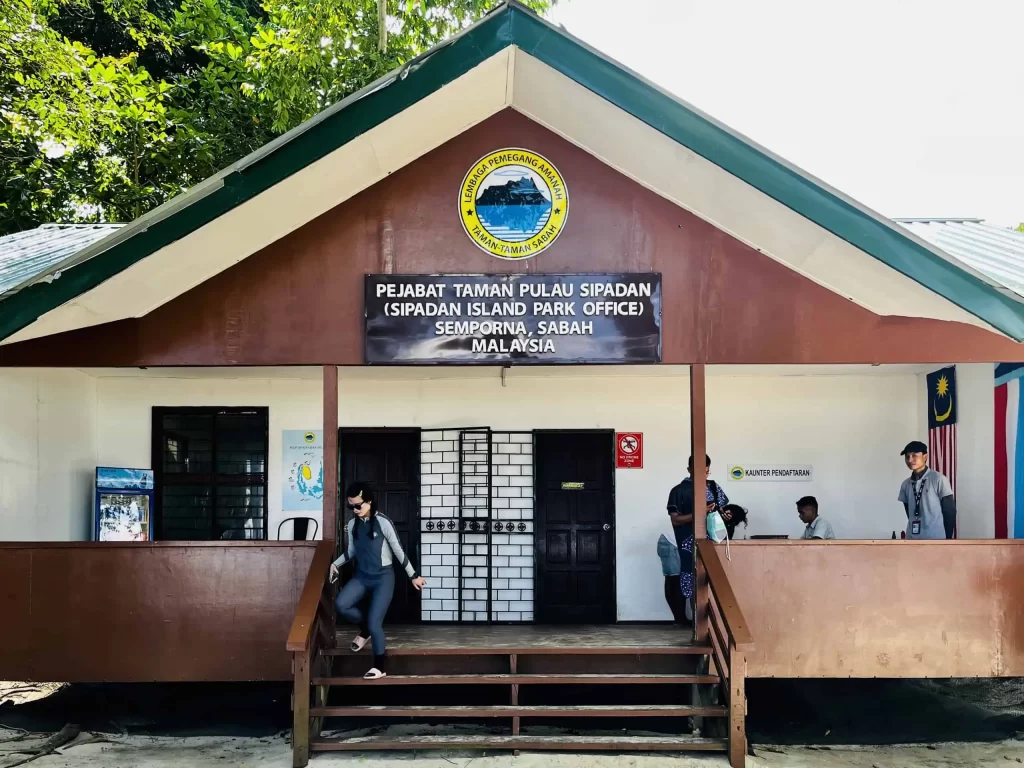
Sipadan operates as a marine protected area, allowing only 176 daily visitors. If you fancy diving in the waters surrounding Sipadan, you’ll need a permit – the sought-after Sipadan Permit. These permits, costing 450 RM (about 90 €) per day per diver, are granted by Sabah Parks, the local government authority in Sabah. The daily cap is in place to safeguard the delicate ecosystem and maintain the health of the coral reefs.
Considering that Sipadan ranks among the globe’s premier dive spots, about 1000 divers attempt to secure a diving permit each day during peak times. Hence, planning your trip well ahead is vital to guarantee you snag a permit for diving in Sipadan.
To obtain a diving permit for Sipadan, you need to hold at least an Advanced Diver certification!Each permit allows a diver to visit Sipadan for one day and enjoy two dives. However, you can’t apply for a Sipadan permit on your own – only dive resorts can apply for permits on behalf of their guests.
Currently, the 176 daily permits are divided among 24 operators. Larger resorts get more permits than the smaller ones. And every resort has its own unique set of rules for distributing their permits among their diving guests.
Here’s a list of dive resorts that have daily permits for Sipadan:
- Borneo Divers Mabul Resort: 12 permits
- Kapalai (Pulau Sipadan Resort): 12 permits
- Sipadan Water Village Resort: 12 permits
- Sipadan-Mabul Resort (with Mabul Water Bungalows): 12 permits
- Seaventures Dive Resort: 10 permits
- Celebes Explorer (Sipadan Liveaboard): 10 permits
- Mataking (The Reef Dive Resort): 6 permits
- Roach Reefs Resort: 6 permits
- Bharman Sipadan: 6 permits
- Uncle Chang (Borneo Jungle River Island Tours): 6 permits
- Scuba Junkie (Dive Semporna) (with Mabul Beach Resort): 6 permits
- North Borneo Dive: 6 permits
- Asiatic Travel and Tours: 6 permits
- Sen Alijah Travel and Tours: 6 permits
- Bum Bum Borneo Travel and Tours: 6 permits
- Seahorse Sipadan Scuba: 6 permits
- Arung Hayat Sea Adventure: 6 permits
- Noble Inworld Scuba Resort and Tours: 6 permits
- UC islanders Adventure: 6 permits
- Borneo Speed Dive and Tours: 6 permits
- MO Travel and Tours: 6 permits
- Dreamland Discovery: 6 permits
- Oceanic Dive Travel and Tours: 6 permits
- Luxury Megaway Tours: 6 permits
Other dive resorts in the region can only secure permits if these 24 resorts don’t use up all their spots.
Most dive resorts offer dive packages that include a permit for a day at Sipadan. These packages typically comprise accommodation plus dives (and sometimes meals).
Almost every resort requires a minimum stay, and in some cases, a specific room category to guarantee a Sipadan permit. You can find more details about individual dive packages outlined below.
10 – Dive packages & prices
Let’s be honest, diving in Sipadan isn’t exactly budget-friendly – but it’s worth every penny!
Various dive schools and resorts offer different dive packages for Sipadan. These packages typically include accommodation, dives at Sipadan, and dives at surrounding islands like Mabul, Mataking, Kapalai, or Pom Pom. The choice of islands often depends on the location of the dive center.
Open Water and Advanced dive courses are also available, but the training dives can only be done at the surrounding islands, not in Sipadan. To dive in Sipadan, you need to hold an Advanced certification.
If you’re not Advanced certified yet, you can book your course and subsequent fun dives in Sipadan together. However, I would recommend completing your dive training in Koh Tao or another budget-friendly location before coming to Sipadan for diving.
Most dive centers require a minimum stay to guarantee a diving permit for Sipadan. During the high season, this minimum stay is usually longer than during the low season. Some dive centers also offer dive trips without accommodation included.
In general, you can choose between budget-friendly backpacker bases, mid-range dive centers, and luxury resorts. Regardless of your budget, I would recommend booking your dives with one of the 24 dive centers that receive daily permits for Sipadan. All other dive providers only get Sipadan permits if these 24 dive centers don’t use up all the permits allocated to them.
Budget Dive Resorts
If you only have a small budget for diving in Sipadan, places like Mabul Backpackers, Uncle Chang, or Scuba Junkie could be your go-to options.
A package for 3 days/2 nights, including a day of diving in Sipadan, averages around 2,200 RM (approximately 420 €) at these locations.
MID-RANGE DIVE RESORTS
For mid-range resorts like Seaventures or Borneo Divers Mabul, you get a good balance of quality and price.
Seaventures, situated on a converted oil platform, offers a unique accommodation experience. A package for 4 days/3 nights, including a day of diving in Sipadan, starts at around 3,700 RM (approximately 725 €). If you stay for 5 nights, you can enjoy 2 days of diving in Sipadan.
The fee for the Sipadan diving permit is not included in the price and is 450 RM (about 90 €) per day.
Borneo Divers Mabul provides dive packages with accommodation in luxury villas and chalets on Mabul. A package for 4 days/3 nights, including a day of diving in Sipadan, costs around 4,700 RM (about 930 €). The fee for the Sipadan diving permit is included in the price. If you stay for 4 nights, you can book a second day in Sipadan.
LUXURY RESORTS
For divers seeking the utmost in comfort and luxury, exclusive resorts are available. Luxury dive resorts provide not only exquisite accommodations but also tailor-made dive packages with personalized service.
The Sipadan-Mabul Resort offers dive packages, including stays in luxurious chalets. The packages start from 6 days / 5 nights, including one day at Sipadan, with prices starting at 7100 RM (approximately €1400). The fee of 450 RM for the dive permit is not included in the price. Additional days at Sipadan can be booked depending on availability for an extra cost of 780 RM (approximately €150) per day.
The Mataking Reef Resort offers various accommodations, from premium rooms to chalets and beachfront villas. The dive packages here do not include trips to Sipadan; separate day trips must be booked. A package for 4 days / 3 nights without Sipadan costs approximately 5500 RM (about €1100) in the lowest room category. The cost for a dive trip to Sipadan depends on the group size, with 1050 RM (approximately €205) per person, including the dive permit, for 2 divers.
The most luxurious resort in the region is arguably the Mabul Water Bungalow Resort, with its luxurious bungalows built over turquoise waters. Dive packages, including one day at Sipadan, are available for stays from 6 days / 5 nights upwards, starting at 10700 RM (approximately €2100). The dive permit fee of 450 RM is not included in the price. Additional dive days at Sipadan can be booked for a surcharge of 780 RM (approximately €150) per extra day.
PERSONAL TIP: UNCLE CHANG’S DIVE RESORT
I stayed at Uncle Chang’s Dive Resort in Semporna during my 2-week stay. The accommodation is about a five-minute drive outside the city, and it takes about an hour by speedboat to reach Sipadan. For me, it was the perfect balance between tranquility and proximity to shops and restaurants.
Moreover, Uncle Chang’s is one of the few resorts that does not require a minimum stay to get permits for Sipadan. I could dive at Sipadan every other day.
11 – Is diving in Sipadan safe?
Yes, diving in Sipadan is just as safe as other destinations.
Since the tourist kidnappings in 2000, the region around Semporna and Sipadan has had a poor reputation for safety, especially for Western travelers.
The Malaysian government has taken decisive steps to ensure safety in the region. Since 2013, there have been no more kidnappings. Military posts and patrols have been established at crucial tourist locations like Mabul, Sipadan, and Sibuan. Additionally, the coast of Semporna is intensively monitored by the military, and regular checks are conducted on the open sea during travel to the islands.
I personally never felt unsafe during my stay in the Sipadan region. The visible presence of the military and effective security measures contribute to a sense of security. Nevertheless, you should always stay informed about the current safety regulations and follow the recommendations of local authorities.
12 – Tips for your diving adventure in Sipadan
Here are some personal tips to make the most of your diving adventure in Sipadan:
- Plan ahead: Sipadan is a popular diving spot, and the daily dive permits are limited. Plan your trip early to secure a permit and explore the best spots.
- Avoid peak season: Skip the busy months for a more relaxed underwater experience. Outside the peak season, the dive boat offers a quieter atmosphere, and you’ll have better chances of getting a dive permit (or even more!).
- Quality fins for currents: Sipadan is famous for its currents, adding to the breathtaking diving experience. Bring powerful fins to keep up with your buddy in the currents. Most guides in Sipadan use freediving fins.
- Water and electrolytes: Dive days in Sipadan are long, and you often return late afternoon. The dive boats are small speedboats with limited comfort. Make sure you have enough water and consider electrolyte drinks to balance your mineral levels. The tropical sun and underwater activities can quickly dehydrate us.
13 – Marine conservation on Sipadan
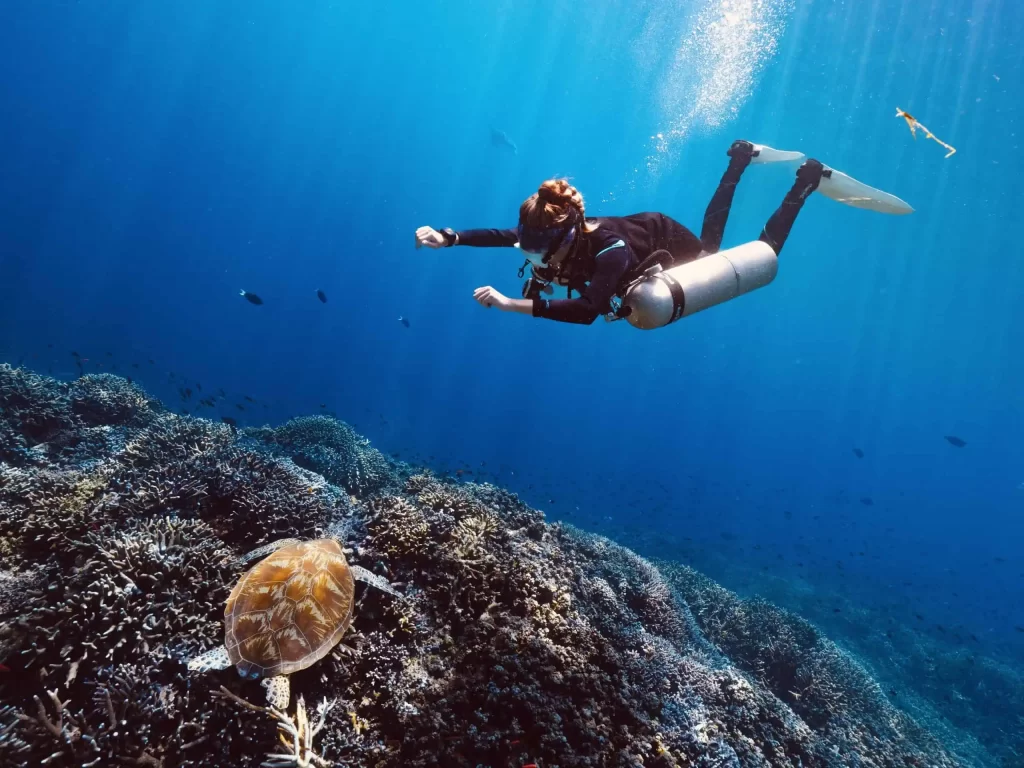
On Sipadan, crucial steps are taken to protect the delicate marine environment and promote sustainable diving activities.
- An essential measure is the annual closure of Sipadan for one month. During this period, Sipadan is inaccessible to divers, snorkelers, and all other tourist activities to give the sensitive marine environment a break. In recent years, the island has been closed for the entire month of November. You can always find the latest information on the exact closure times on Sipadan’s official website.
- The Marine Park of Sipadan also enforces strict rules for diving. All divers must be at least Advanced certified, aiming to protect the reef from unintentional damage by inexperienced divers. Additionally, wearing gloves is prohibited to discourage divers from touching the sensitive underwater environment.
- As the island is a protected area, the number of daily visitors is limited. Anyone wishing to visit Sipadan, whether for snorkeling or diving, requires a permit. Only 176 permits are issued per day, ensuring that the pressure on the reefs and marine life is minimized by restricting the number of divers and tourists. Also, every diver is only allowed 2 dives per day in Sipadan, and both dives must take place at different dive sites.
- Another significant contribution to conservation is the turtle hatchery, managed by Sabah Parks rangers. The goal of this station is to protect endangered sea turtles and promote their survival. To safeguard the baby turtles as much as possible, the hatchery is not accessible to the public. By tracking the released turtles in Sipadan, we know that they can swim as far as the Philippines or even Australia. Thus, the hatchery helps protect the marine ecology of other countries as well.
14 – FAQ about Diving in Sipadan

What are the requirements for diving in Sipadan?
To dive in Sipadan, you need 1) an Advanced Open Water Diver certification and 2) a diving permit for Sipadan.
How do I get a diving permit?
You can’t apply for a diving permit for Sipadan yourself, only a dive center can do that for you. Dive centers in the region offer various dive packages, some of which include guaranteed diving permits. Compare different providers before booking.
Can beginners dive in Sipadan?
No, to dive in Sipadan, you need to have at least an Advanced Open Water Diver certification. All dive centers offer courses on the surrounding islands, allowing you to combine your Advanced course with subsequent dives in Sipadan on one vacation.
Can I dive in Sipadan without certification?
No, you need at least an Advanced Open Water Diver certification to dive in Sipadan. This rule aims to protect the reef from unintentional damage by inexperienced divers and ensures safety, considering Sipadan’s challenging currents.
When is the best time for diving in Sipadan?
March to June and September to early December are considered the best months for diving in Sipadan.
How deep is the sea around Sipadan?
The island of Sipadan emerged from an extinct volcano, with walls plunging up to 2000 meters into the depths.
Are there sharks in Sipadan?
Yes! Thanks to the currents around Sipadan, you can see sharks on almost every dive. Gray reef sharks, whitetip reef sharks, nurse sharks, and even hammerhead sharks are regularly spotted.
Is Sipadan safe to dive?
Yes, diving in Sipadan is as safe as in other destinations.
Is there a liveaboard in Sipadan?
Yes, the M/V Celebes Explorer is the only liveaboard ship that obtains daily permits for Sipadan.
Are there night dives in Sipadan?
No, night dives are not allowed in Sipadan. The island is open to divers every day from 6:30 am to 4:00 pm.
How many days do I need for diving in Sipadan?
It depends on the season and the chosen resort. In general, I would recommend at least 4 nights to increase your chances of getting a diving permit for Sipadan. In the off-season, this might even get you to dive in Sipadan twice.
15 – Diving in Sipadan: In a Nutshell

I spent two weeks diving at various sites around the island, and expressing these experiences in words is truly challenging. Sipadan is something you must experience for yourself – no description could do justice to this underwater paradise. Every single dive is a highlight in its own right.
If you want to witness the unique magic of the sea, praised by none other than Jacques Cousteau, there is no better place than Sipadan. Plan your diving vacation in Sipadan carefully in advance to ensure you secure a diving permit (or even several).
I’ve discovered a new favorite dive spot in Sipadan and have already booked my next trip to this underwater paradise.

Hi Doris!! 🙂
Ich hab mir gerade deine Blogposts über Sipadan durchgelesen.. Echt super Infos – DANKE! 🙂
Ich bin gerade am überlegen im Jänner (ist nicht der beste Zeitpunkt, I know.. aber geht leider nicht anders…) ein paar Tage dort tauchen zu gehen.. Bin gerade am Recherchieren eben.. und ich wollte jetzt mal bei Uncle Chang anfragen, über welche Mail/Whatsapp hast du sie kontaktiert? Bekomme nämlich leider keine Antwort…
Wäre mega lieb 🙂
Danke und liebe Grüße,
Raphaela
Hi Raphaela,
freut mich, dass dir die Infos weiterhelfen! Und keine Sorge, Jänner ist auch noch mega gut, gibt ja keinen wirklichen Monsun! 🙂
Soweit ich weiß, arbeitet Uncle Chang gerade an einer neuen Website inkl. Buchungssystem. Ich schick dir eine Mail mit mehr Infos zum Kontakt 🙂
Liebe Grüße,
Doris