
Have you ever heard of scuba diving in Jordan? No? Neither had I.
When hearing of Jordan most people think of the breathtaking landscape, centuries-old culture, and oriental food. A relaxing beach holiday or even a scuba diving trip is not what generally comes to mind.
I have to admit, I would not have thought about Jordan as my next diving destination if my boyfriend and I had not been invited to an underwater photography contest in Aqaba. And after 10 days of scuba diving in Jordan, I can say we are captivated by its underwater world. Jordan offers crystal-clear waters, breathtaking underwater scenery, and spectacular wrecks. This is why Jordan should be one of the top locations on any diver’s bucket list.
Needless to say, we also dedicated a day to exploring Jordan on land. During a day trip to Petra and Wadi Rum, we had the opportunity to immerse ourselves in Jordan’s cultural heritage amidst its breathtaking landscapes.
01 – Diving in Aqaba
Jordan has access to the Red Sea, which is an international hotspot for scuba divers. Although Jordan’s coastline is only 30km long it offers more than 25 divers dive sites. Aqaba is the only coastal city in Jordan and makes for a great gateway for diving adventures.
The Gulf of Aqaba offers spectacular sights. Abdullah II. bin al-Hussein, the king of Jordan, is a passionate scuba diver himself and very involved in marine conservation. To provide divers with unforgettable scuba diving experiences he sank several wrecks to serve as artificial reefs. Many of these wrecks, several tanks and a plane among others, are by now encrusted by a diverse array of coral and therefore have already become part of the reefs.
In addition, Jordan’s waters boast exceptional biodiversity. The Gulf of Aqaba is a bit saltier than the Red Sea and is home to more than 200 different species of coral and over 1000 different species of fish. If you are a fan of colorful marine life like me, you struggle to get back out of these waters. Lionfish, puffer fish, parrot fish, octopuses, anemone fish, seahorses, and nudibranchs are waiting at every corner.
Buoys are installed on all dive sites to avoid anchoring and help preserve the reefs. Most of the dive sites can be enjoyed within shallow waters which makes them perfect for beginners. More demanding dive sites and deeper adventures are waiting for advanced and technical divers.
If you plan a scuba diving trip to Aqaba you have two options to get there: you can fly to Amman (Queen Alia International Airport) and then take a bus or taxi down to Aqaba (approx. 4h drive). Or you can fly directly to the small airport of Aqaba (King Hussein Internation Airport) which is only a 15 min drive from the city center. Flights to Aqaba are a bit more expensive than flights to Amman. However, if you factor in the costs of transportation from Amman to Aqaba plus the extra time spent, flying directly to Aqaba is generally the better option.
02 – The 3 best wreck dives in Jordan
Jordan has quite a variety of dive sites on its 30 km coastline. The highlights are for sure the stunning wrecks that have already become part of the colorful reef. If you go scuba diving in Jordan you shouldn’t miss these 3 wrecks. Every one of them is breathtaking in their very own way.
Cedar Pride
The Cedar Pride was a 75 m-long Lebanese freighter that caught fire in the harbor of Aqaba and was badly damaged in 1982. In 1985, after sitting in the harbor for 3 years, King Abdullah II. decided to scuttle it in the course of a coral conservation project to serve as an artificial reef.
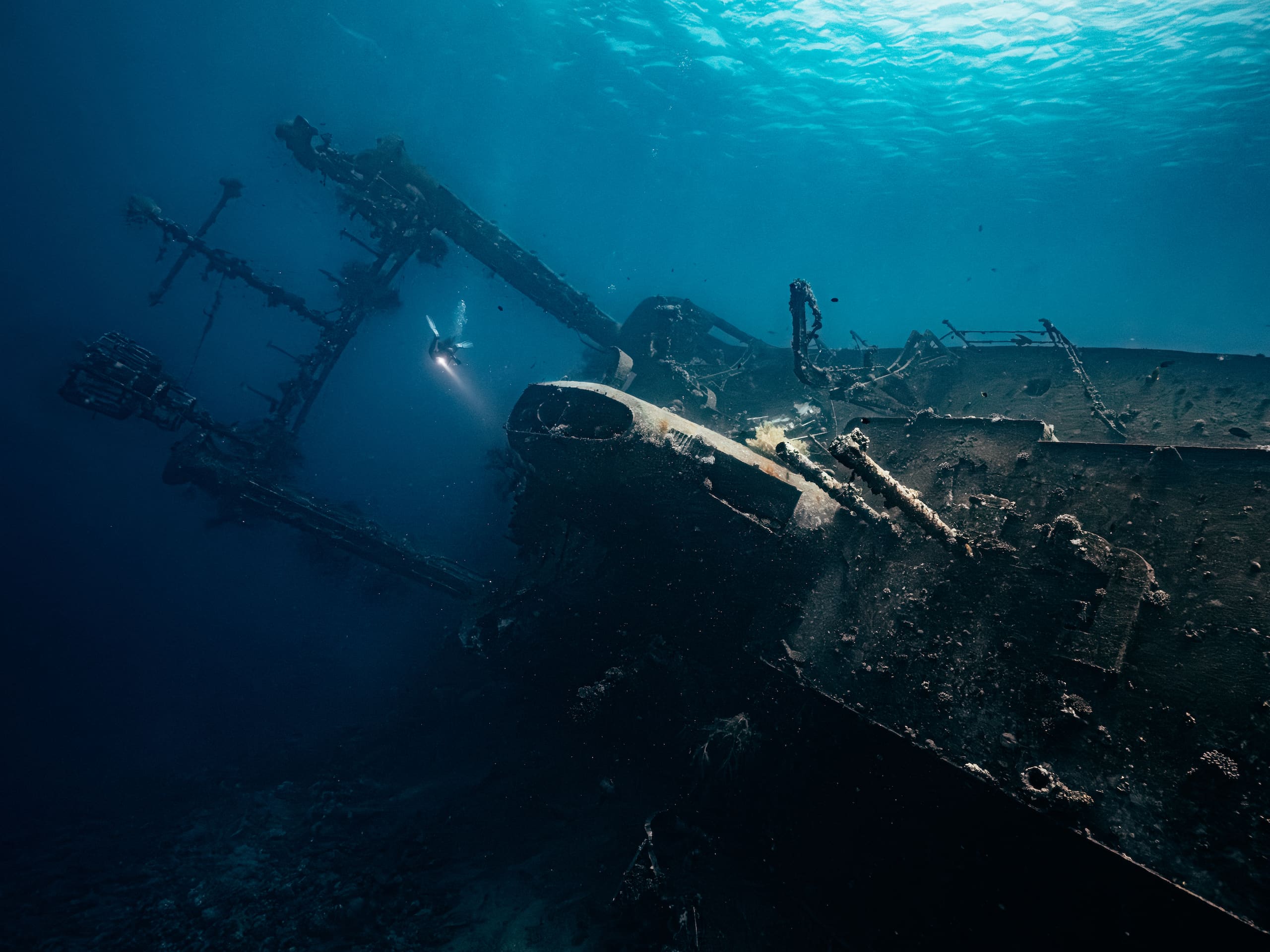
Today the Cedar Pride is one of the most famous and most photographed wrecks in the Read Sea and probably the most popular dive site in Jordan. She lies at a depth of 28m on her port side surrounded by a colorful reef and is overgrown by various hard and soft corals.
The wreck and its structures are very well preserved. The bow, the superstructure, the railing, and the massive propeller are clearly recognizable and invite you to go explore. The crow’s nest is particularly eye-catching with its colorful array of hard and soft coral.
No matter which direction you turn, there are plenty of small and big marine creatures to see. The typical reef fish like parrotfish, butterfly fish, and angel fish can be found swimming around the reef in search of food. A frogfish is sitting perfectly camouflaged at the end of the mast, waiting for prey to pass by. If you take your time, you might even find tiny pipefish, puffer fish, and colorful nudibranchs.
We came to take pictures so here are a few impressions:
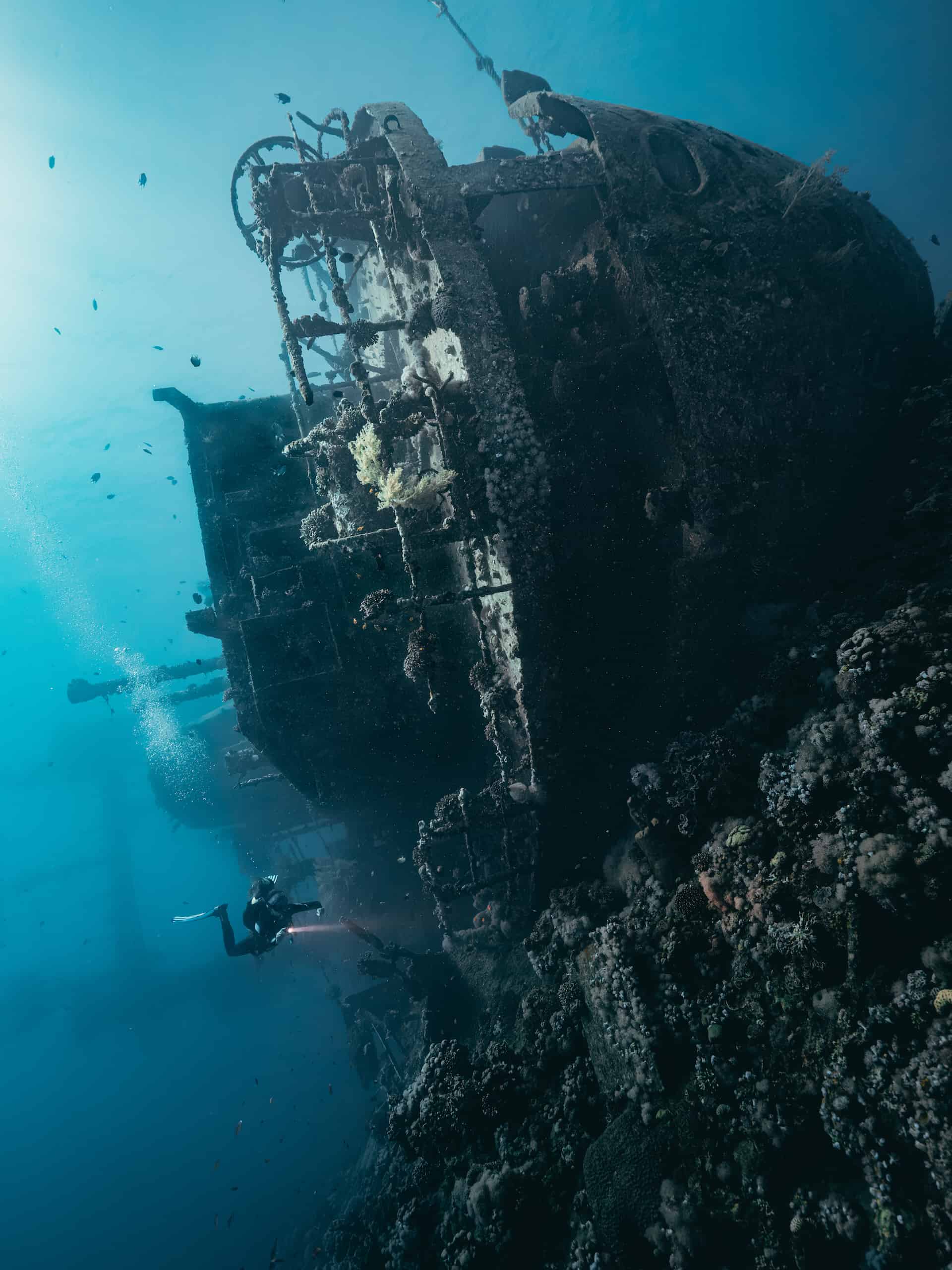
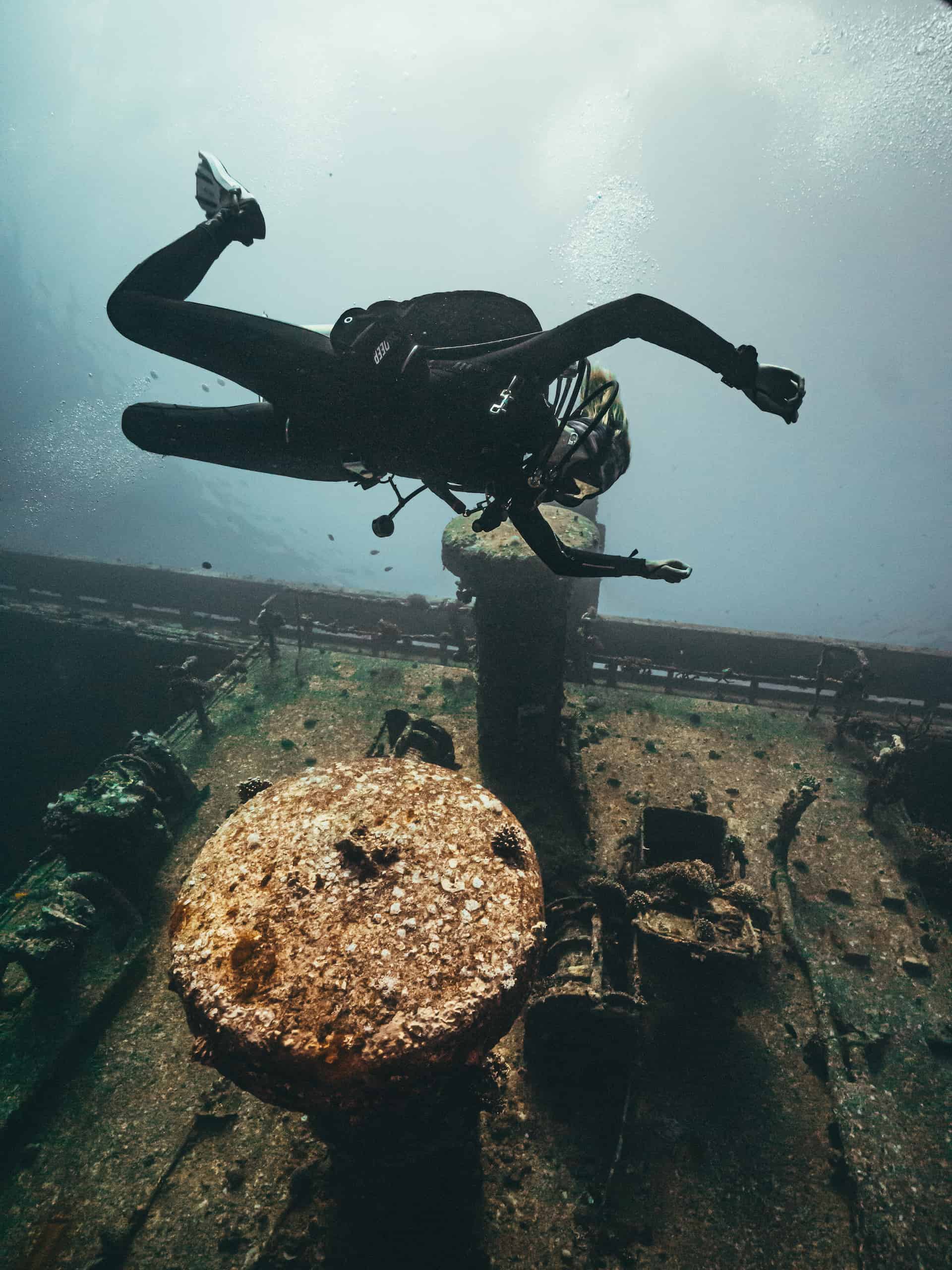
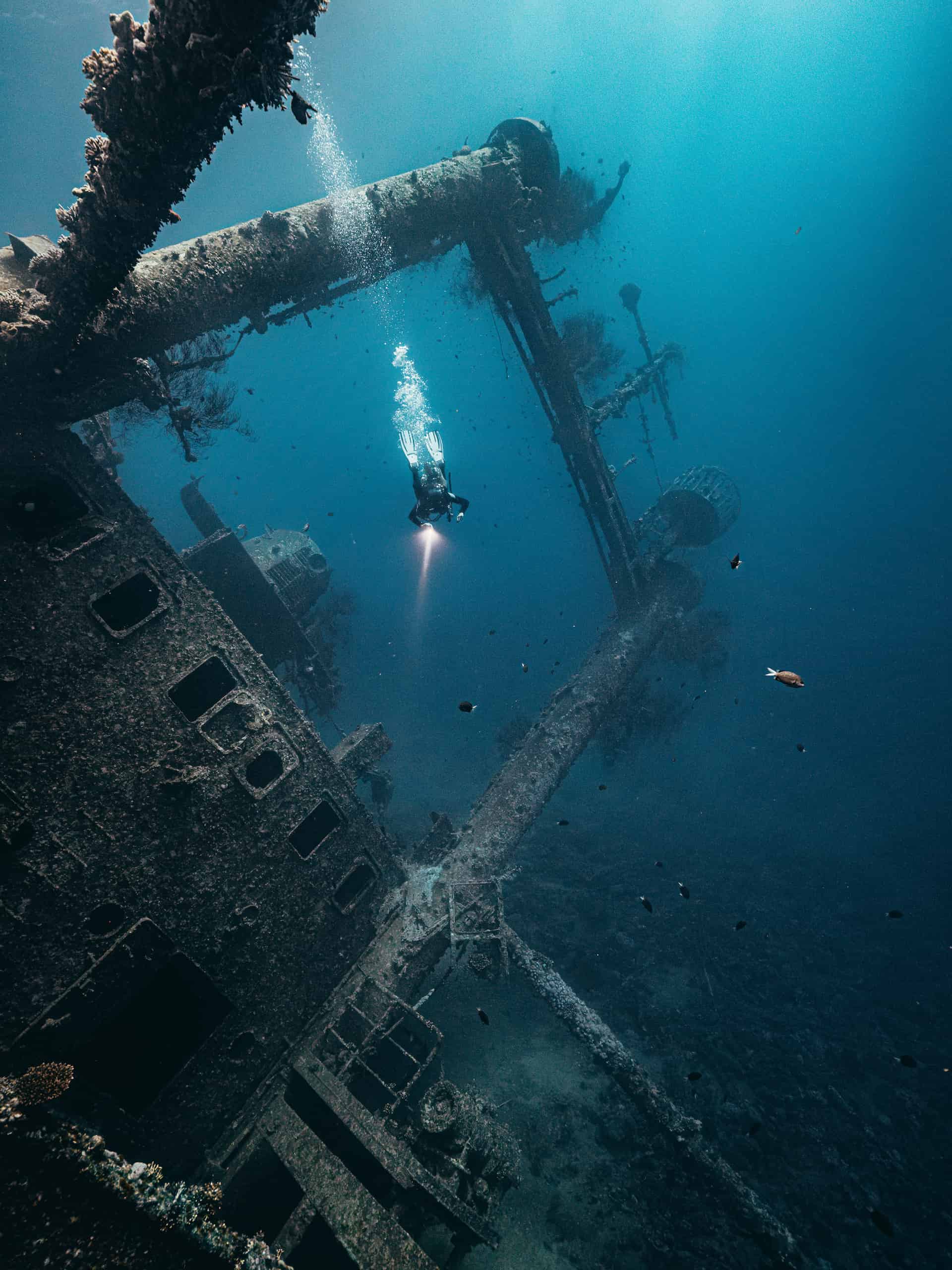
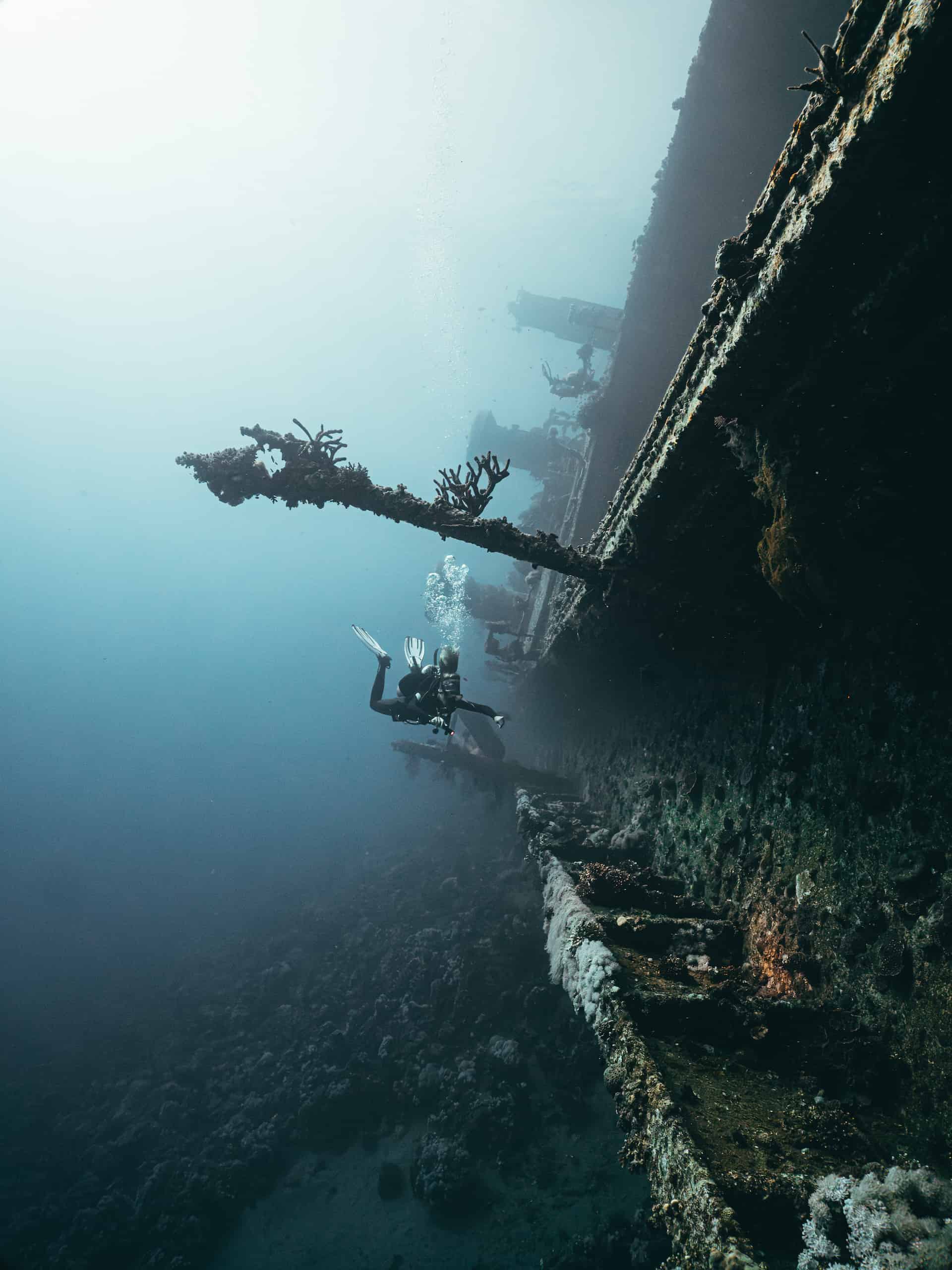
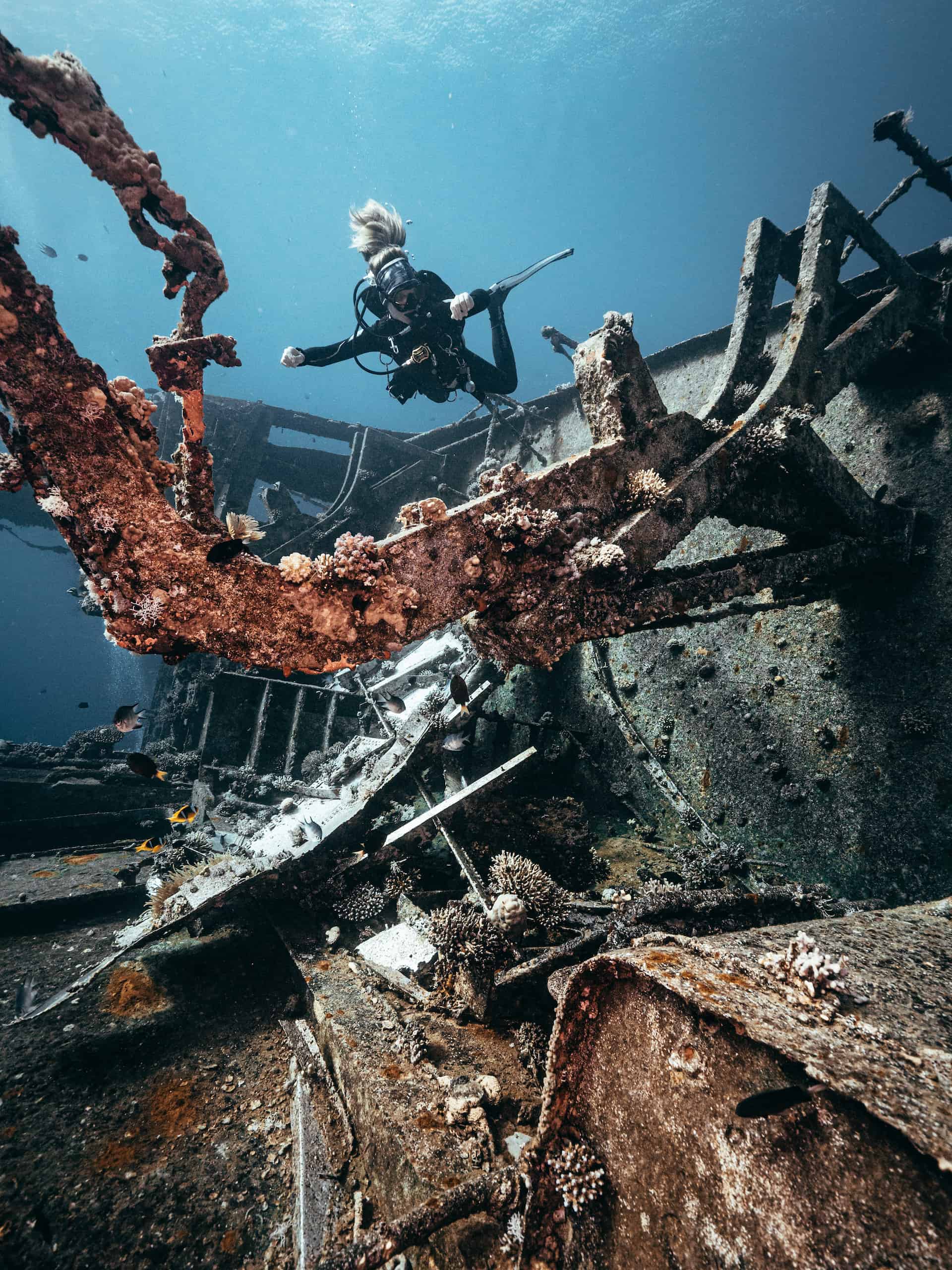
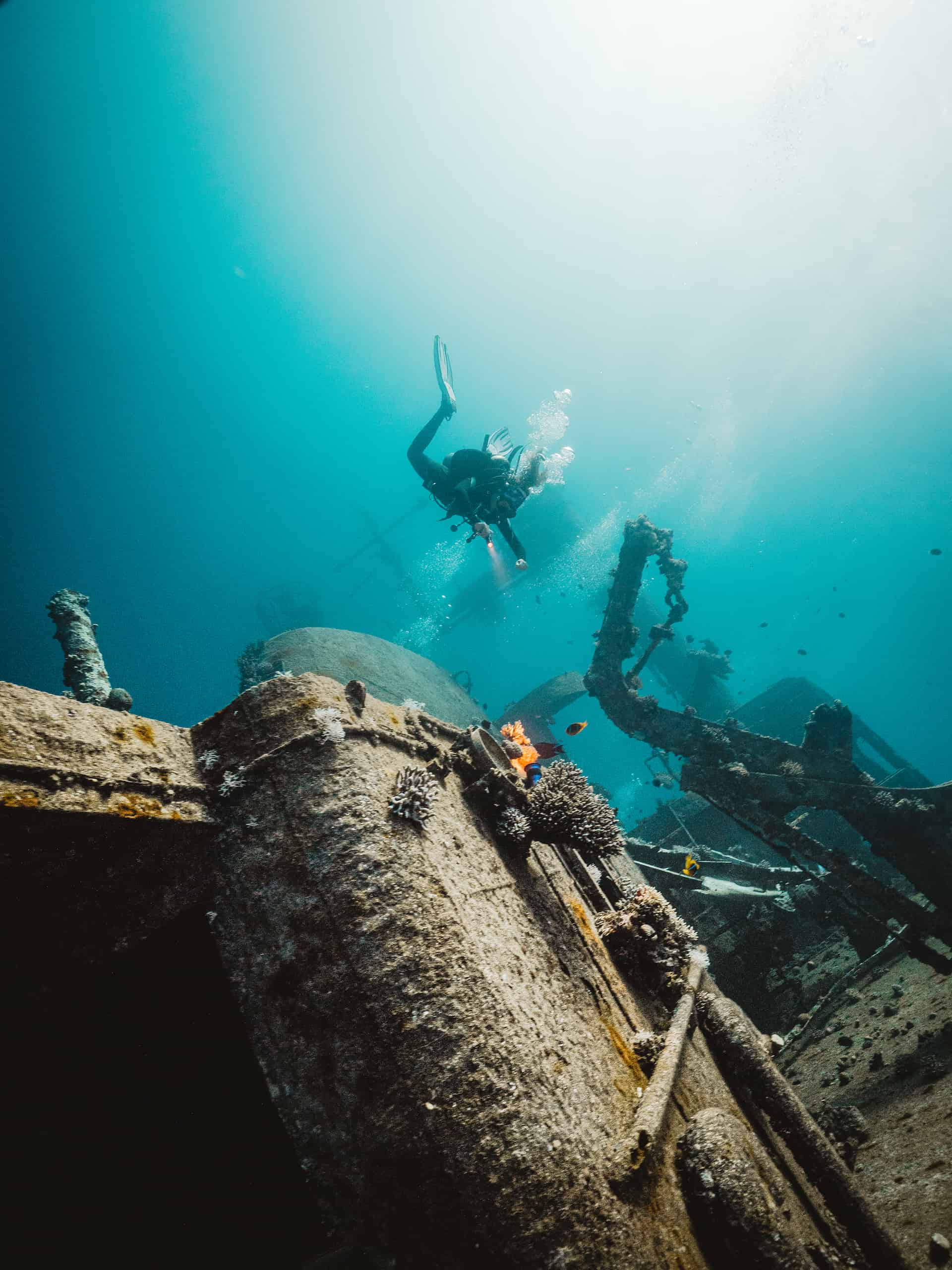
In total, I did 3 dives at Cedar Pride, but I still haven’t seen everything there to discover. If you plan to go scuba diving in Jordan make sure to get at least two dives at the Cedar Pride into your itinerary, you won’t regret it!
Lockheed L-1011 Tristar
The Lockheed L-1011 Tristar was a wide-body airplane with a passenger capacity of 400 and was mainly used for medium and long-haul flights.
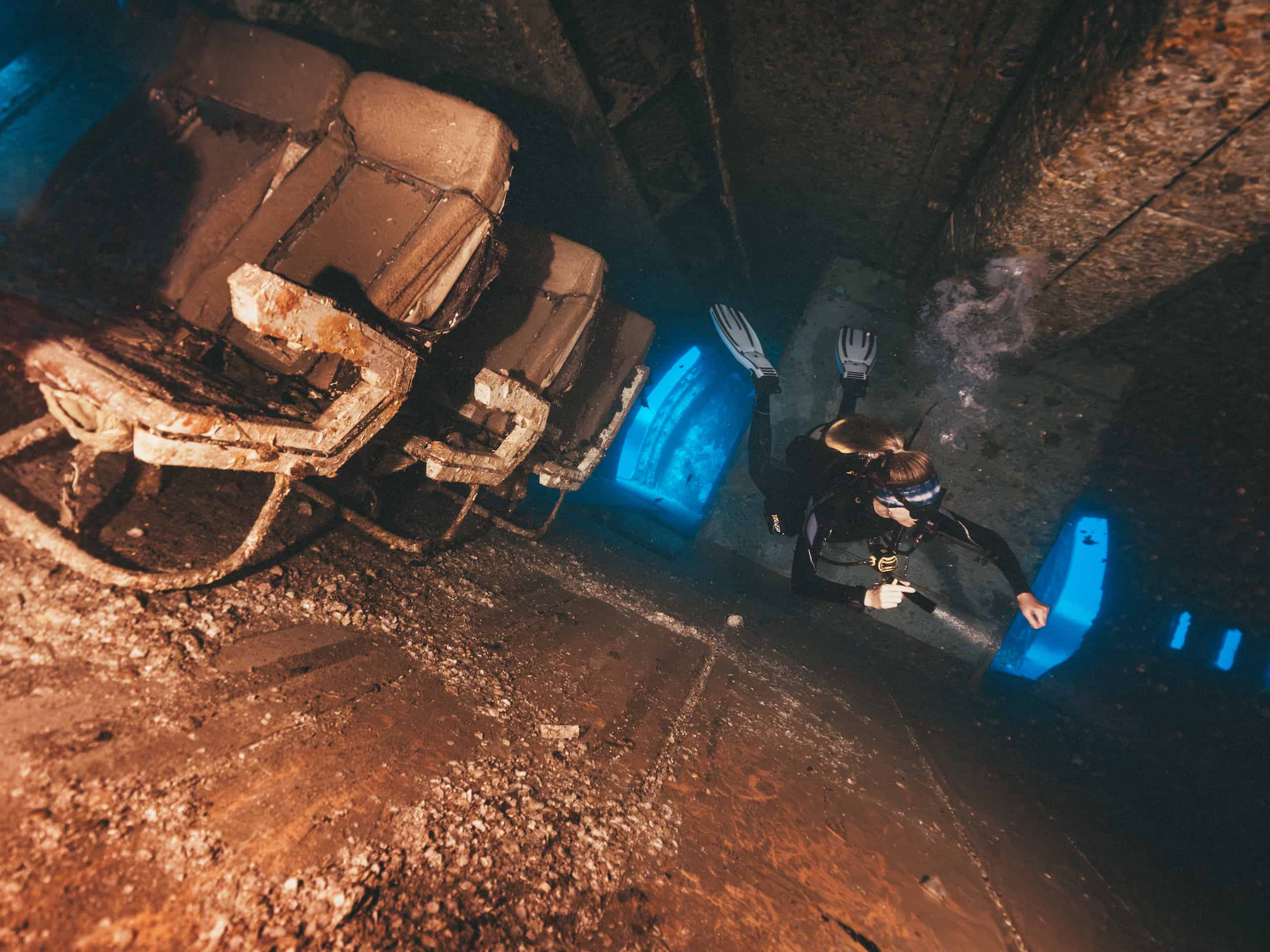
In 2019 the airplane was scuttled in the southern part of the Gulf of Aqaba in a sandy area where it should attract marine life and serve as an artificial reef. The Tristar now rests on a sloping bottom at a depth of 18 – 28 meters and therefore is better suited for advanced divers.
Thanks to its length and span of 25 m the Tristar offers a lot to explore. All 6 doors of the airplane are fully open and invite you to penetrate. Inside the airplane wreck the seats of the middle row were removed to create a wider aisle that provides more room for divers to pass through. The seats on the left and right of the airplane are still intact, just like the bathroom and the galley.
I have to admit, at first, it was a very strange feeling to dive along the center aisle of a plane wreck. The crystal clear waters combined with the angle, at which the plane rests at the bottom, make the whole experience even more surreal. But surreal in a good way, if you know what I mean.
By now you can find some coral around the Tristar airplane wreck and various fish have decided to make the insides of the airplane their home. Pufferfish like to hide under the seats around the middle doors and on the way to the cockpit you can encounter beautiful lionfish. Inside the cockpit, various switches, buttons, and control instruments can be discovered.
Our primary focus was again to take pictures of the Tristar airplane wreck, so here are a few impressions:
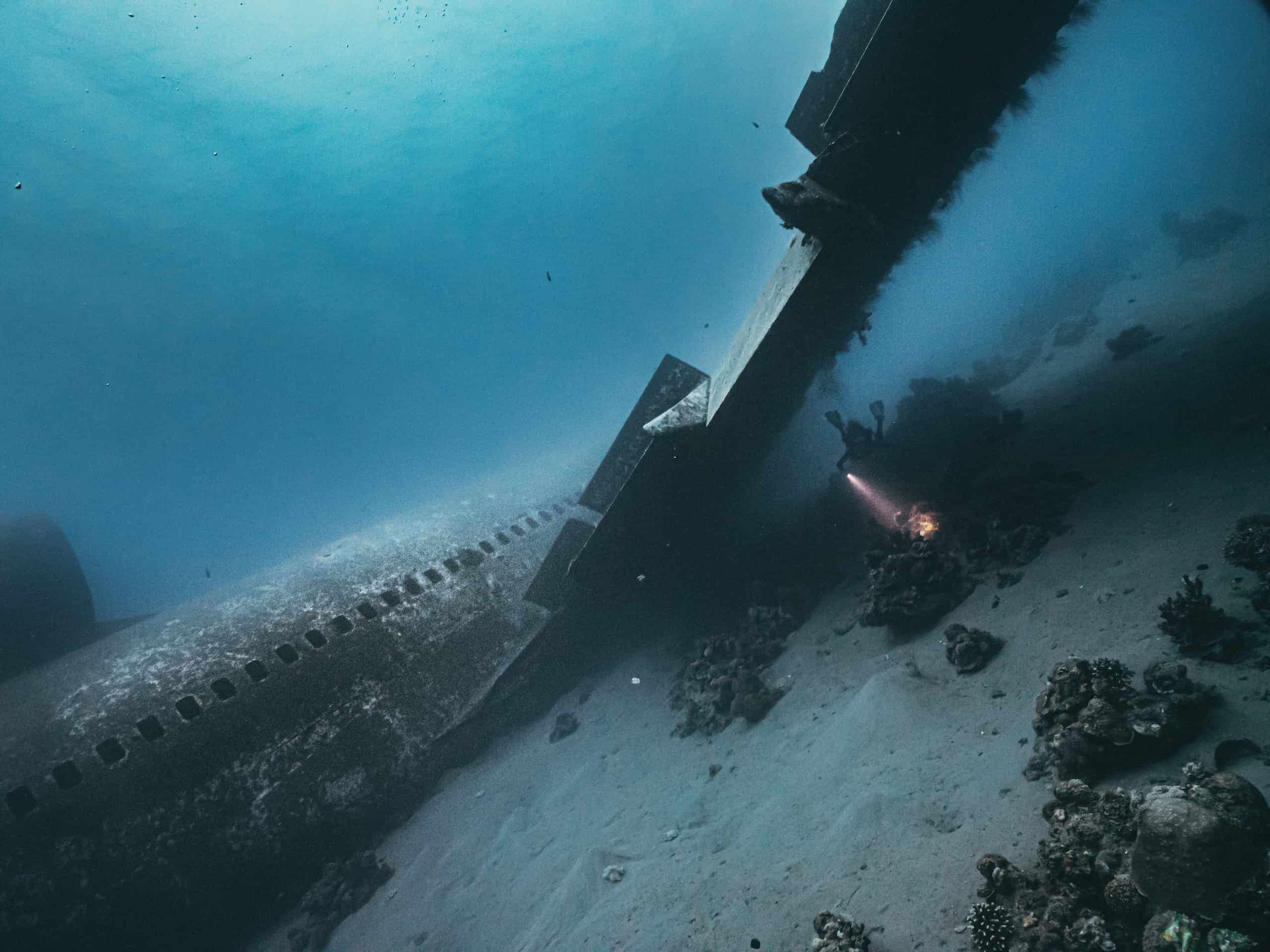
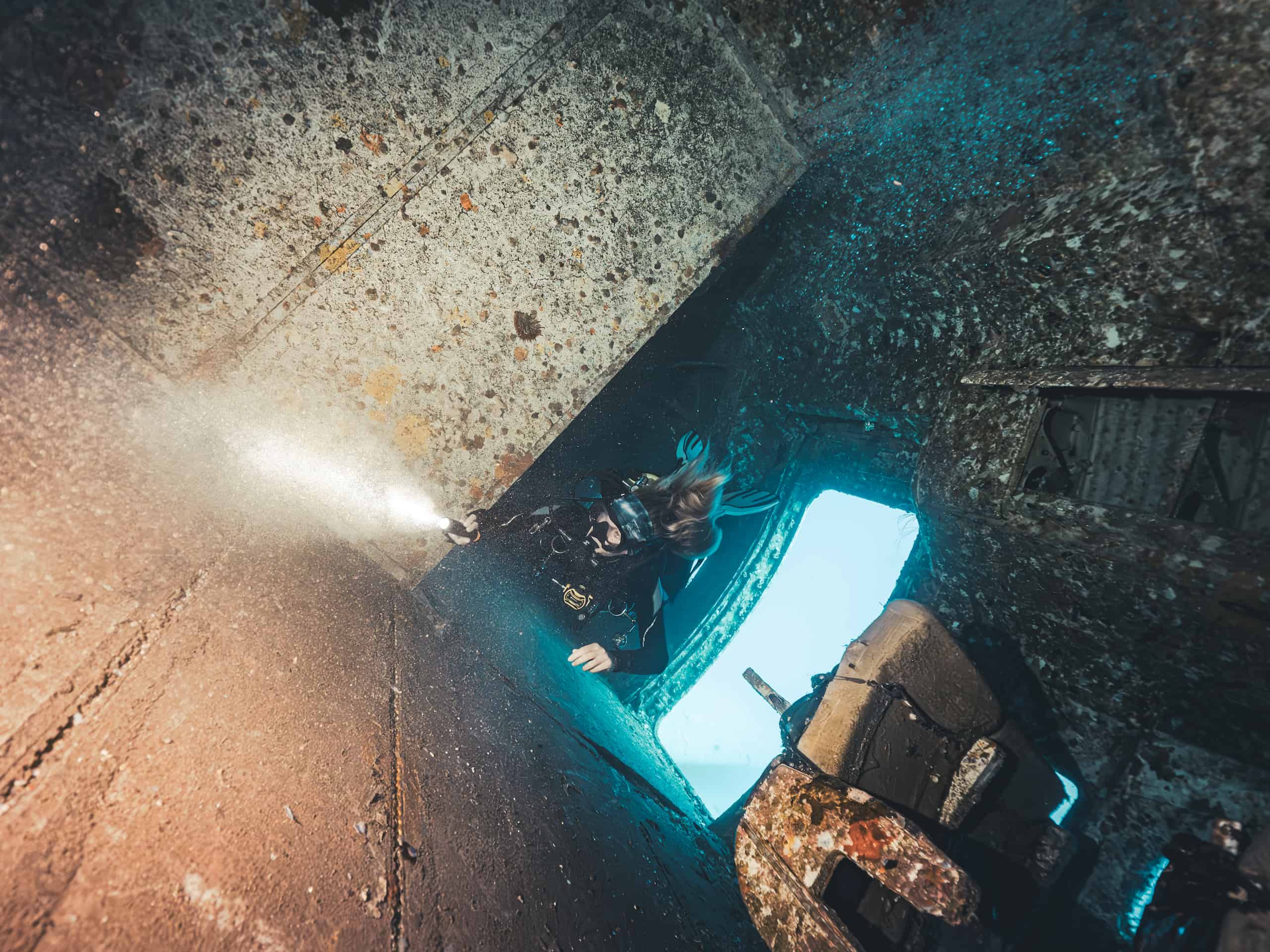
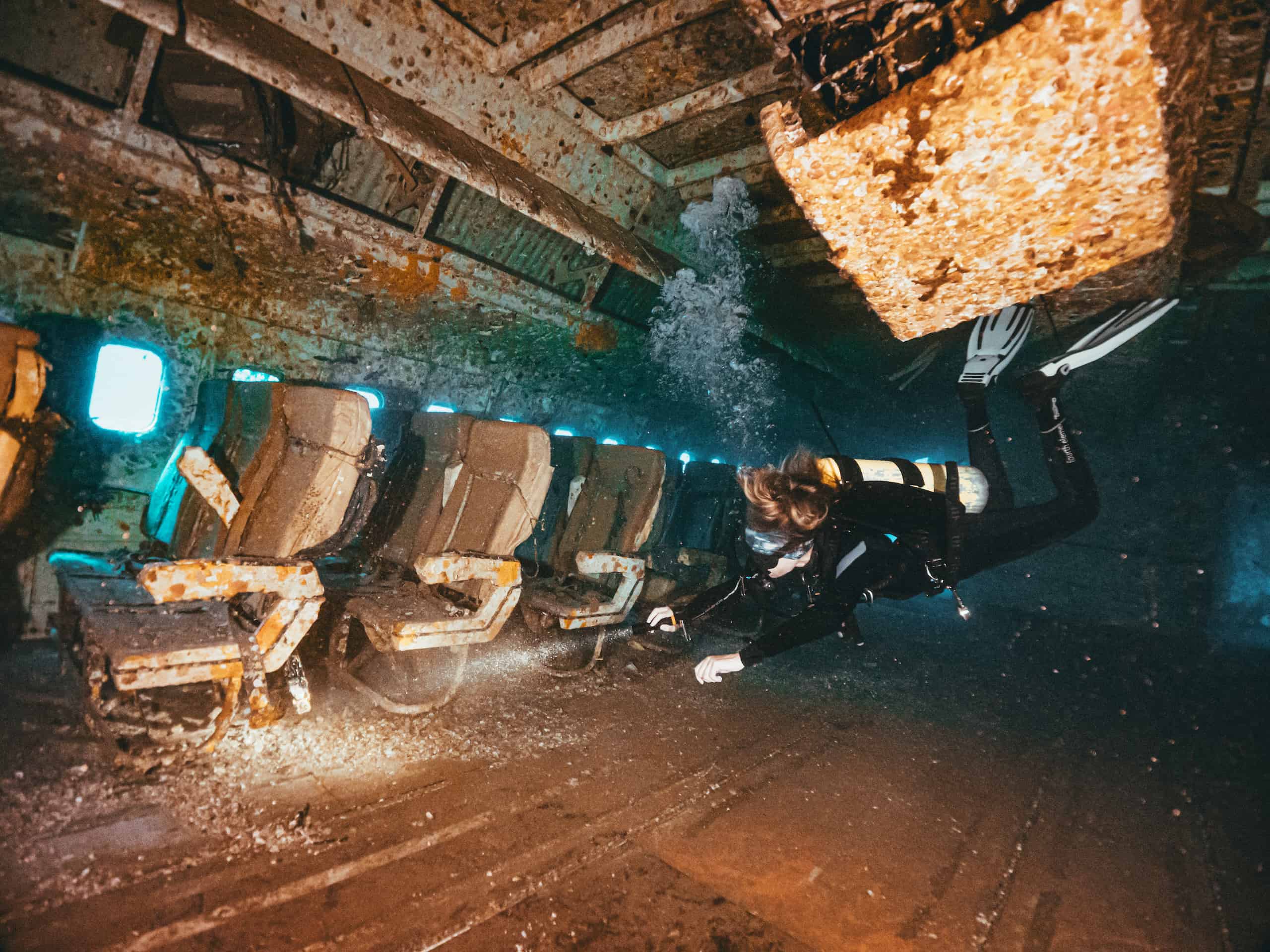
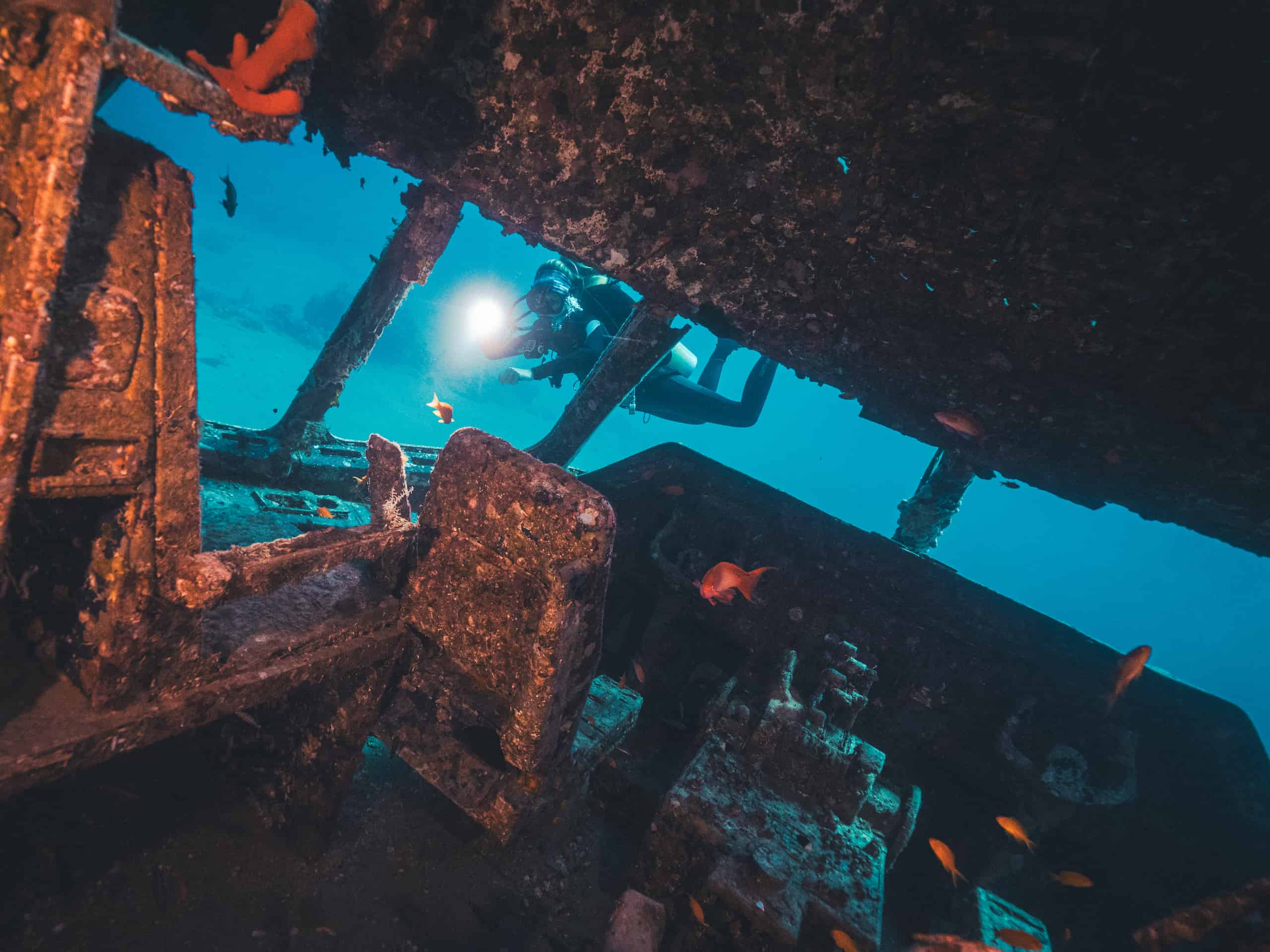
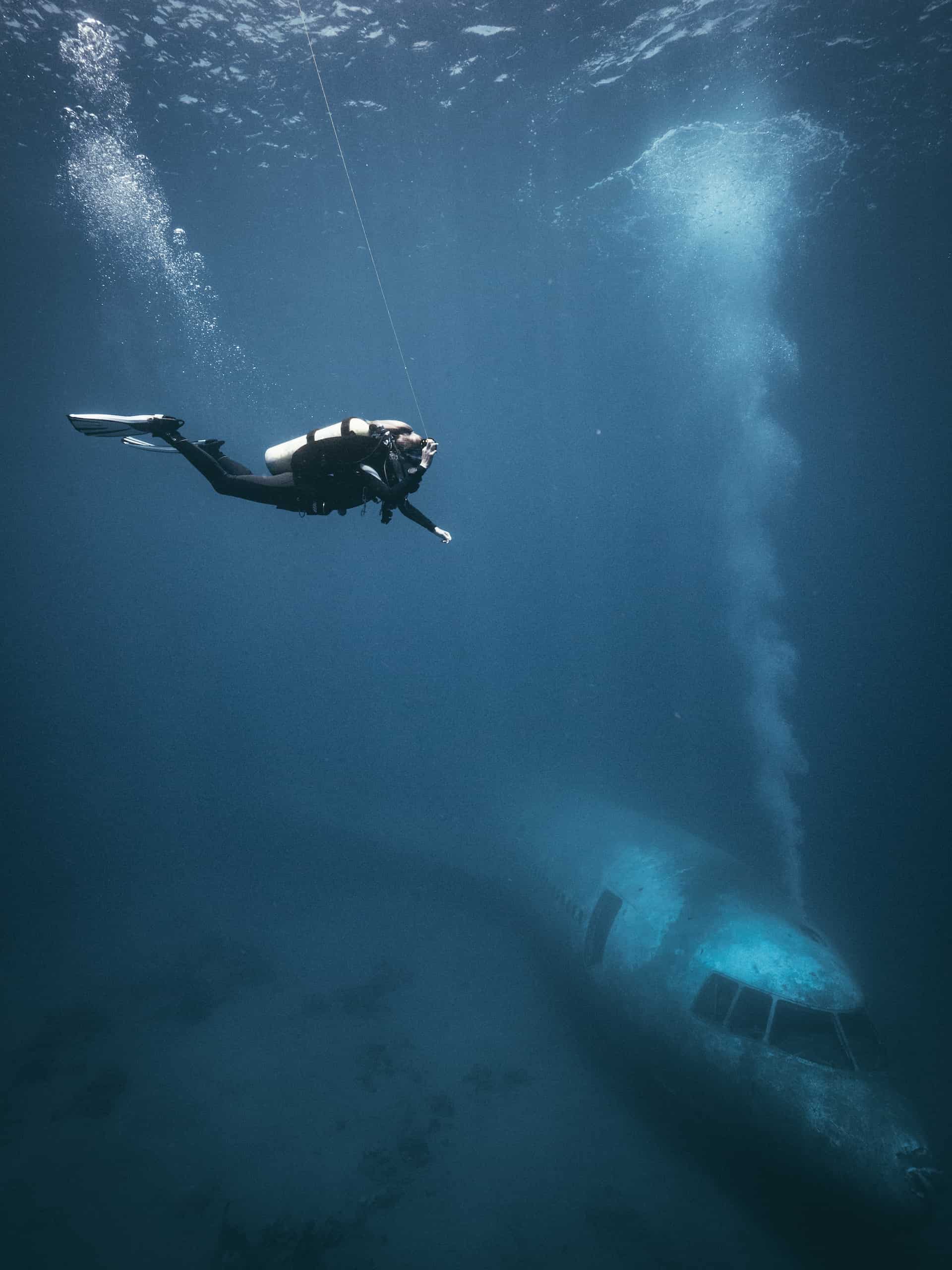
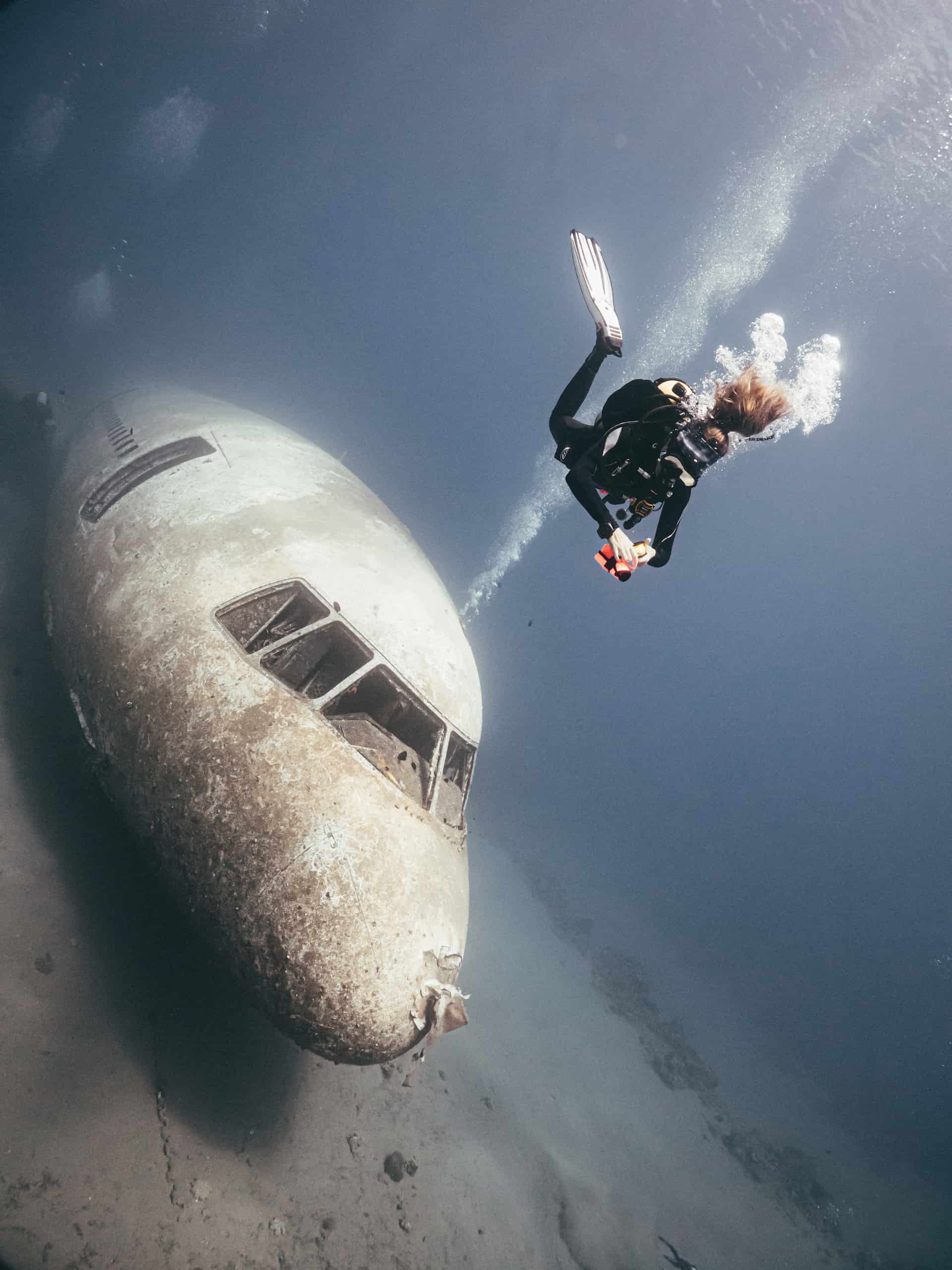
I did a total of 3 dives at the Tristar and with every dive this wreck captivated me more. I have always been a fan of shipwrecks, but a plane wreck that is still intact and safe to penetrate is a very different experience. The Lockheed L-1011 Tristar is special in many ways and my favorite spot for more advanced diving in Jordan. It is a fascinating adventure you don’t want to miss.
Military Museum
A total of 21 different wrecks are waiting to be explored in the military museum. This dive site is not a classical museum but rather a figurative bridge between Jordan’s turbulent past and peaceful future by creating new life in the ocean.
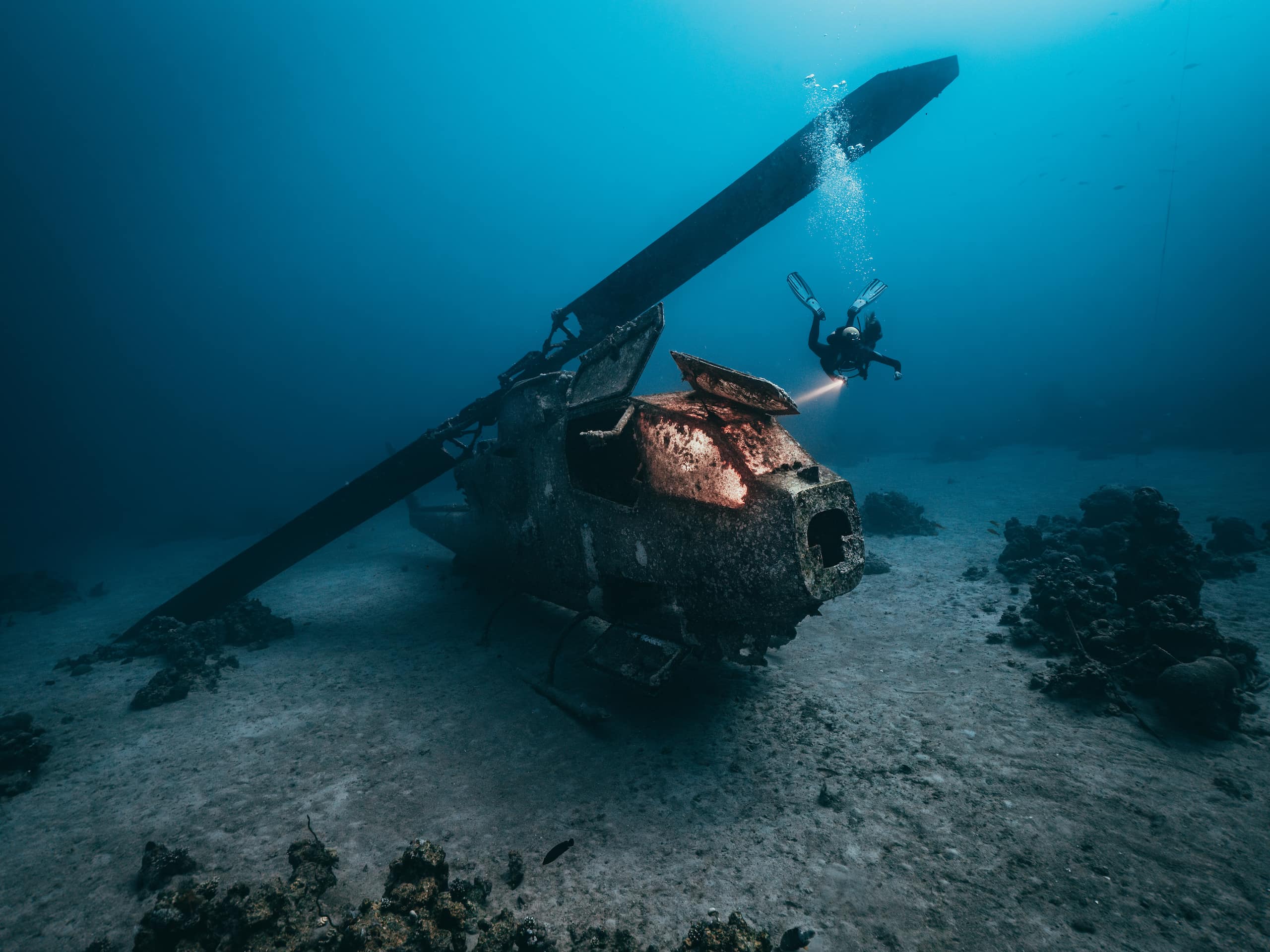
Several Jordanian authorities cooperated to create this unique and meaningful dive site. The 21 wrecks were scuttled in 2019 on a sandy bottom at varying depths and should provide divers and snorkelers a special experience while serving as an artificial reef.
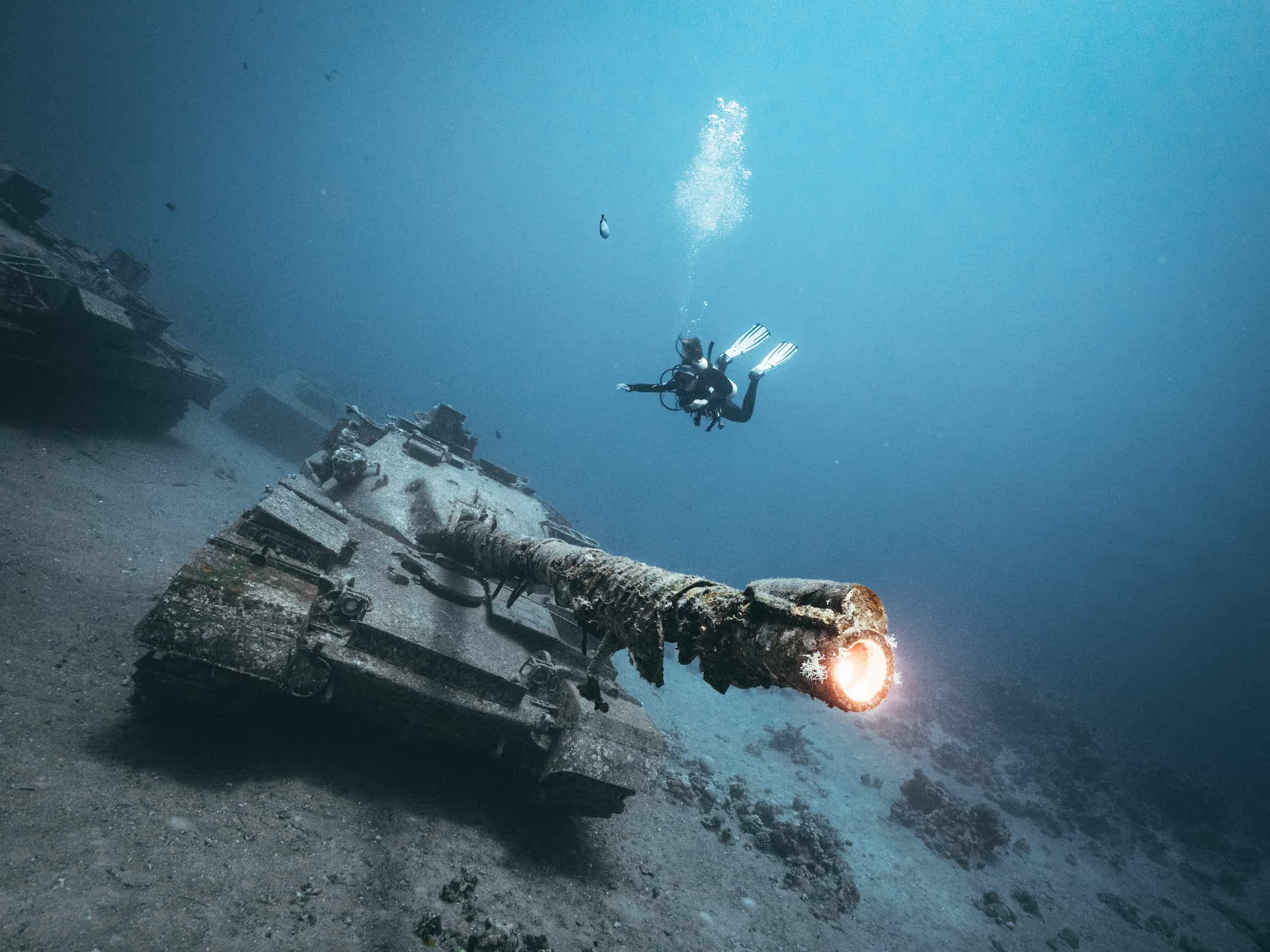
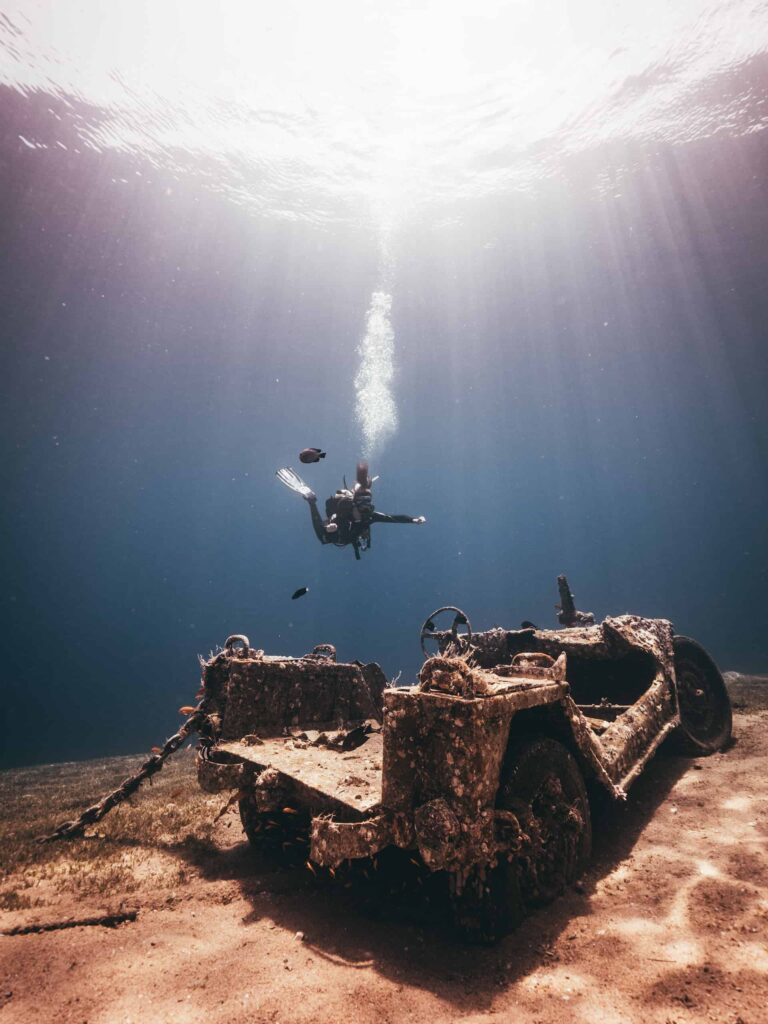
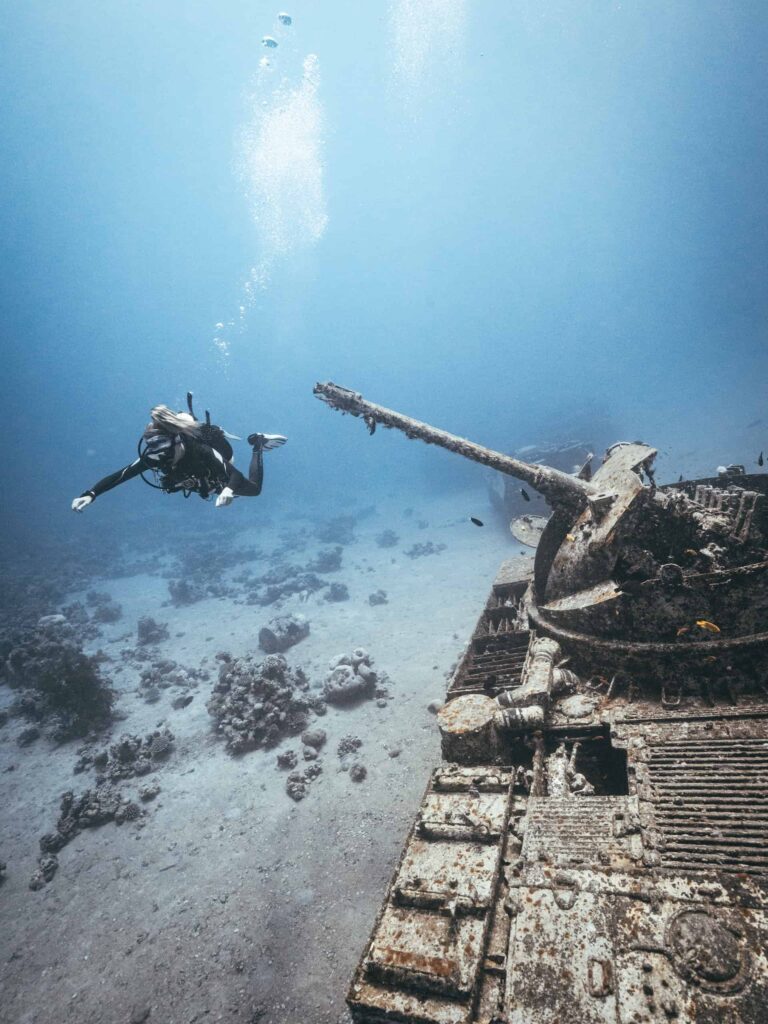
In the northern part at a depth of around 6 m, you can find Willy MB Jeeps which are inhabited by small colorful reef fish. A bit deeper at around 15 m sits an army of tanks, a personal carrier, Chieftain tanks, an infantry carrier, M42 Dusters, an armored ambulance, and a Chieftain armored recovery vehicle. By now coral has grown between the different vehicles and reef fish can be found cruising around. Most of the vehicles were used by the Jordanian military until the year 2000 and are now positioned in a battle lineup, a reminder of their past.
Descending further to around 25 m you can find a field gun as well as two Cobra attack helicopters. Coral has grown around these wrecks too and lionfish like to hide inside the helicopters.
Here are a few impressions of the Military Museum:
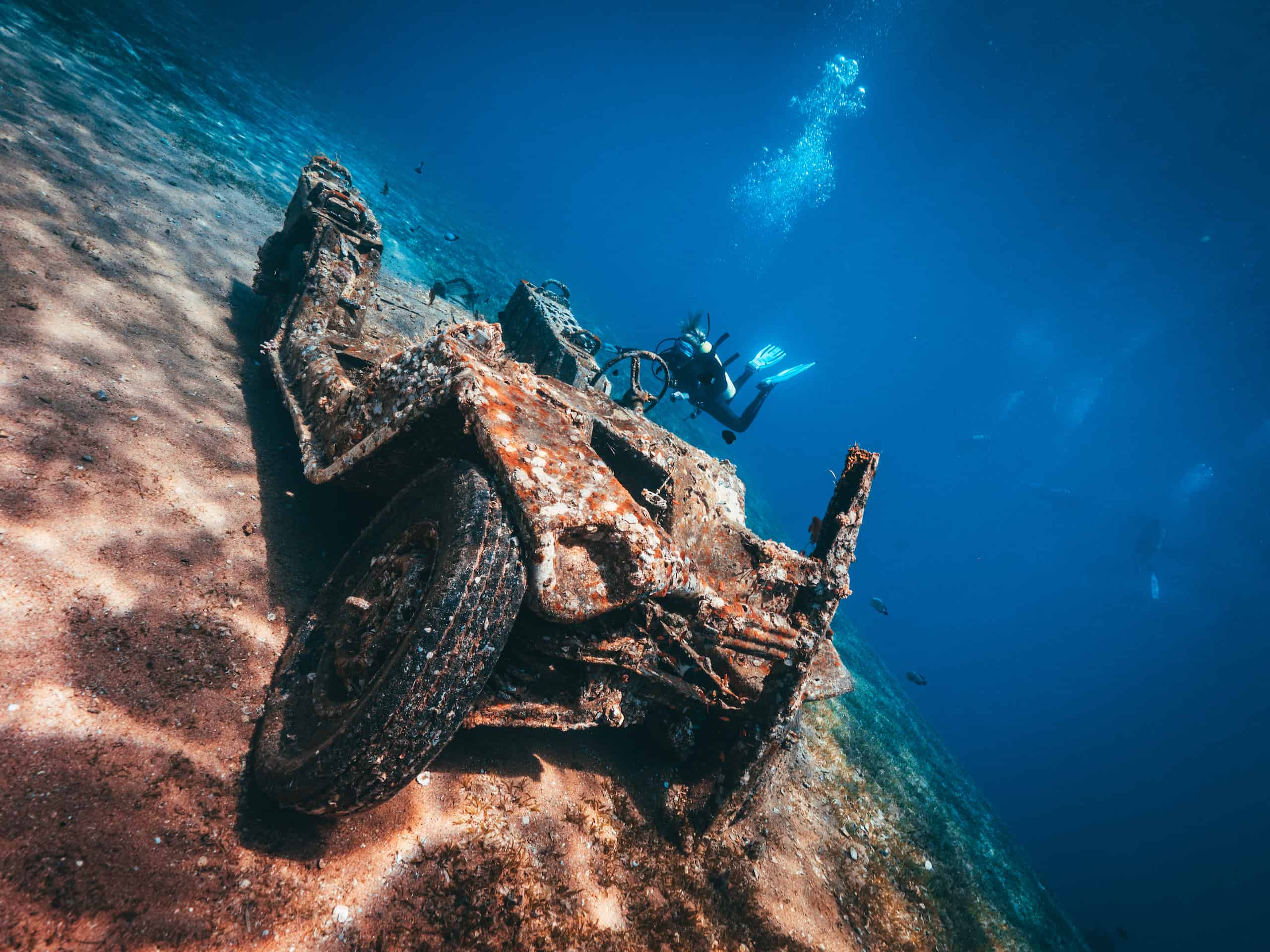
If you take a scuba diving trip to Jordan you should take the chance to explore the whole collection the military museum has to offer. Since there are 21 wrecks you should plan at least 2 dives to have enough time and air to see them all.
I did a total of 3 dives at the Military Museum and still didn’t manage to see all it has to offer. My highlight was the Cobra helicopter with its long, tilted blades, which I found very impressive.
In general, I missed the colorful reef here and there a bit. I love coral and the colorful fish that come with it, and I like wrecks that have already become part of the reef. This is not yet the case here which is why the amount of marine life is not comparable to the other dive sites in Aqaba.
03 – Best season for diving in Jordan
The scuba diving season in Jordan lasts all year and most of the time the water is crystal clear (yes really crystal clear, as if it were air!) with more than 40 m of visibility.
Jordan has hot, long summers and cool, short winters.
In spring outside temperatures are around 27-34°C and the water is 22-24°C. However, visibility can decline in March and April due to plankton blooms. Jordanian summers are hot and dry with outside temperatures around 39-42°C, the water reaches temperatures around 25-28°C.
In autumn outside temperatures are around 30-36°C. The water cools down slowly and is still 24-27°C. Winter months often bring strong winds which make outside temperatures of 20-22°C feel colder than what they are, especially when coming back onto the boat after a dive. Water temperature drops to around 21°C.
In short, the best time for scuba diving in Jordan is Mai to June and September to October with pleasant water temperatures, bearable outside temperatures, and excellent visibility.
I dove in Jordan in June, the water was 25°C and the outside temperature was around 39°C. Out on the boat, the heat is not as crushing as in the city. I personally was okay with the temperature, but I would avoid the hotter summer months.
04 – Prices for fun diving in Jordan
Although many dive sites are accessible from shore, most scuba diving in Aqaba is done by boat. A typical boat trip starts around 9 am, lunch is served after the first dive and in the afternoon a second dive follows.
Scuba diving in Jordan is quite affordable. A boat trip with two dives including a guide, tanks, weights, as well as freshly prepared lunch, drinks (water, soft drinks, coffee, tea), and towels on board is around 80 JOD (~103€). There is an option to do a third dive on the boat trip. If you travel without scuba gear, you can rent equipment for around 20 JOD (~25€) a day.
If you want to dive on multiple days package deals are available, which bring down the costs of every individual dive.
05 – Dive center recommendation
We went with Deep Blue and I cannot recommend this dive center enough! Mohammad and his team are very professional and offer outstanding customer service. Saif and the rest of the crew are very attentive and helpful and make sure you have the best time on their boat.
Deep Blue is located in Talay Bay, South Beach, at the beachfront. The boat is equipped with everything you might need or desire: bathrooms with showers, a kitchen, an inside seating area with comfy couches, a big dining area, and a sun deck with a chill lounge area. Lunch, which is freshly prepared on board every day, is diverse and absolutely delicious (better than many restaurants in the city). In addition, Deep Blue is a member of Green Fins and is very active in marine conservation.
But most important, from the very first moment I set foot on their boat I felt like part of the Deep Blue family. The crew of Deep Blue has made the experience of the underwater photography contest so special and unique and I am very excited to come back next year.
If you are planning a dive trip to Jordan and are looking for a professional dive center with high safety standards, excellent customer service, and a passion for the ocean and marine conservation this is where you want to go!
06 – Diving in Jordan: In a nutshell
After 10 days of diving in Jordan, I am absolutely fascinated by the spectacular wrecks, the diverse marine life, and the crystal-clear waters of the Gulf of Aqaba. Since some of the wrecks have been sunk in recent years it’s a great place to come back to and observe how marine life takes over these manmade structures and new reefs form.
Jordan offers plenty of unique scuba diving experiences for beginners and advanced divers alike and should be on every adventurous diver’s bucket list.
